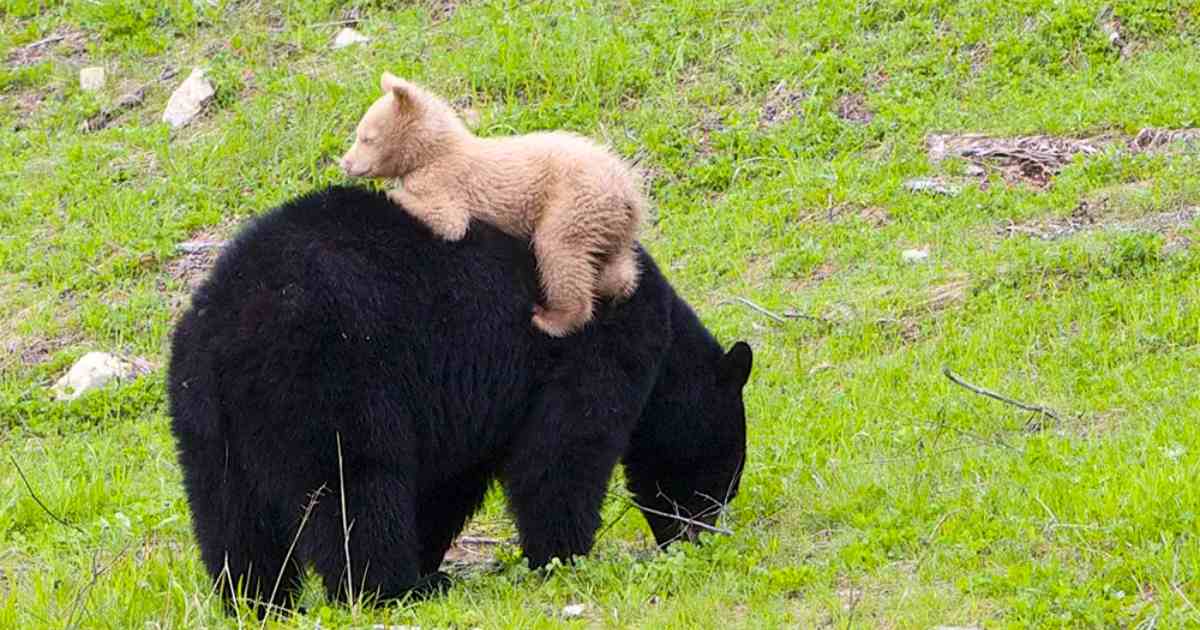
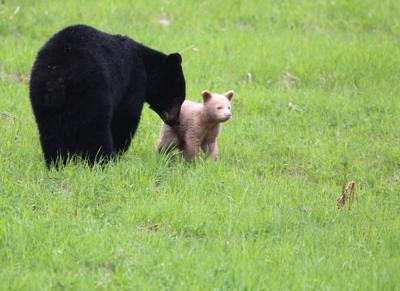
A remarkable wildlife sighting in Whistler, British Columbia, has drawn attention to a bear cub whose unusually pale coat makes it stand out from the local black bear population.
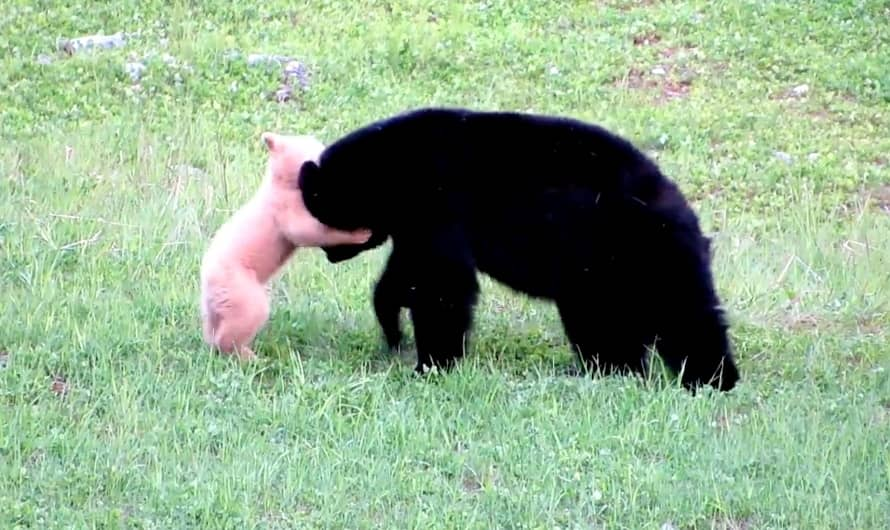
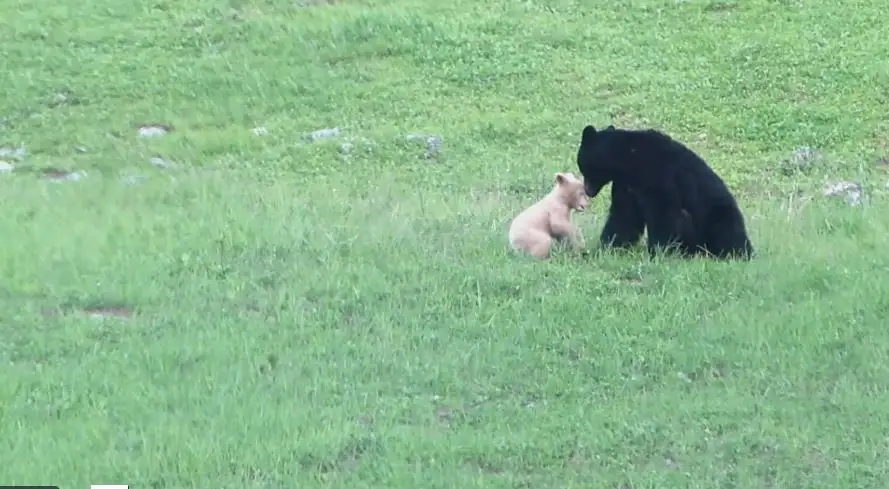
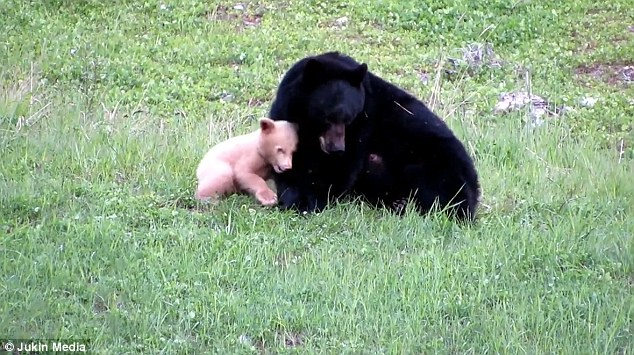
A local guide captured footage of the creamy white cub playing with its black bear mother during a tour at around 6 p.m. The sighting was later discussed by longtime bear researcher Michael Allen, who recognized just how unusual the cub’s appearance was.
After more than two decades of studying bears, Allen had seen cubs with coats ranging from black and reddish brown to chocolate brown and blonde. However, he had never encountered a cub this pale in the local population.
In his Whistler bear report, he described the cub’s coloring as exceptionally light, approaching white.
Could It Be a Rare Spirit Bear?
According to Allen, the cub is not an albino. One possible explanation is that both parents carry a recessive gene responsible for its unusually light fur.
This raised the possibility that the cub could be a Kermode bear, often known as a “spirit bear.” These bears are a color variant of the American black bear and can have creamy white or pale coats despite belonging to the black bear species.
However, the cub’s appearance alone does not confirm its genetic background.
The unusual coloring has made the young bear especially interesting to wildlife observers, but experts are also concerned about the attention it could attract.
Human Curiosity Could Become a Threat
Sgt. Simon Gravel of the Conservation Officer Service’s Squamish office said the cub had been spotted around Whistler on several occasions.
He warned that the animal’s unusual appearance could put it at risk because people might be tempted to get closer for photographs or a better look.
According to Gravel, the greatest concern was human curiosity.
Although seeing such a rare-looking animal can be exciting, approaching wildlife can create dangerous situations for both people and bears. Repeated close encounters can also encourage animals to become accustomed to human presence.
Wild bears need space to behave naturally and remain independent of people.
Give Wildlife Room to Remain Wild
Gravel urged visitors not to follow the cub or approach it for a selfie. Keeping a safe distance is especially important when a young bear is accompanied by its mother.
Local wildlife-guiding companies follow established protocols designed to prevent close encounters and reduce disturbance to the animals.
Visitors can help by observing from a distance, following their guides’ instructions, and never attempting to attract or feed a bear.
The cub’s unusual coat may make it memorable, but protecting its future is more important than capturing a close-up photograph.
Another Bear Sighting in Whistler
The pale cub was not the only notable bear sighting reported in the area.
A couple of weeks earlier, another Whistler tour company had photographed two grizzly bears at Whistler Olympic Park in the Callaghan Valley.
Jason Coleman, a guide with Whistler Photo Safaris Ltd., spotted the pair on May 29.
The sightings highlight the wildlife that lives in and around Whistler’s forests and mountain landscapes. They also serve as a reminder that these areas are home to wild animals, not simply places for visitors to explore.
For the cream-colored cub, remaining close to its mother and away from unnecessary human attention is essential.
Its extraordinary appearance may draw people’s eyes, but the best way to appreciate this young bear is to let it grow up in the wild, safely beyond reach.