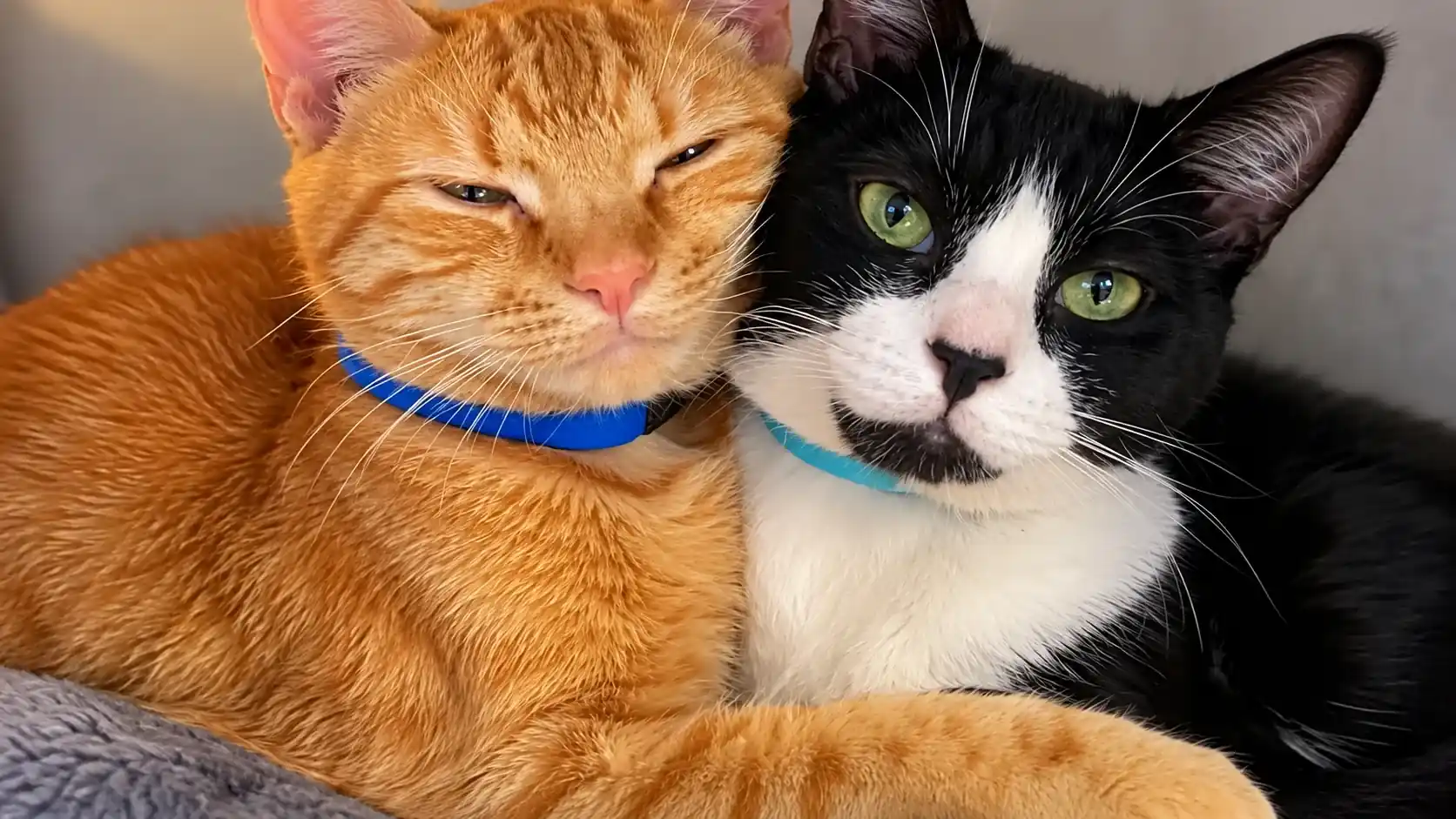
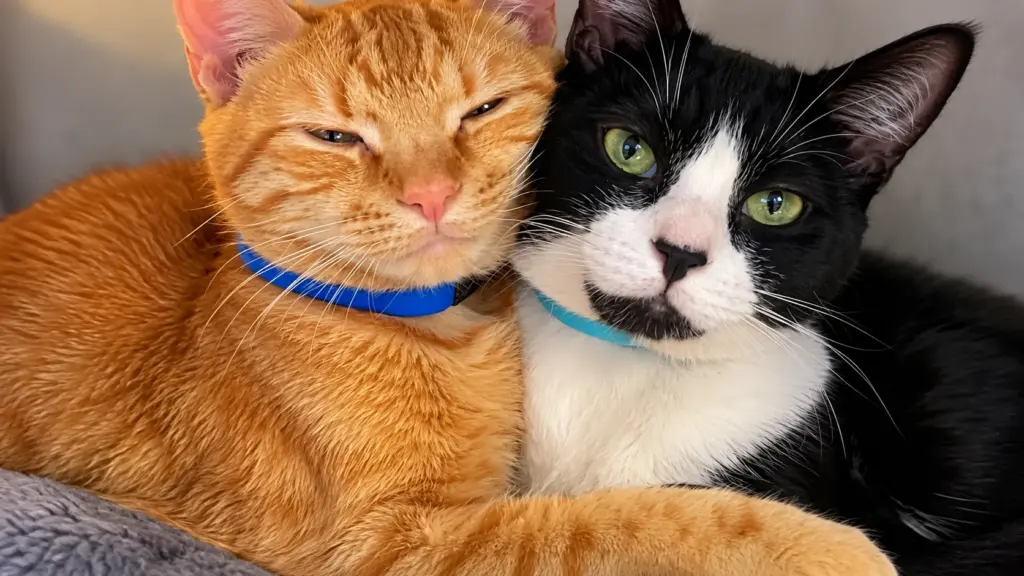
Before an animal shelter opened its doors one morning, a volunteer discovered a small pet carrier waiting outside. Inside were two cats who appeared tired and frightened. However, what immediately caught the staff’s attention was the remarkable closeness between them.
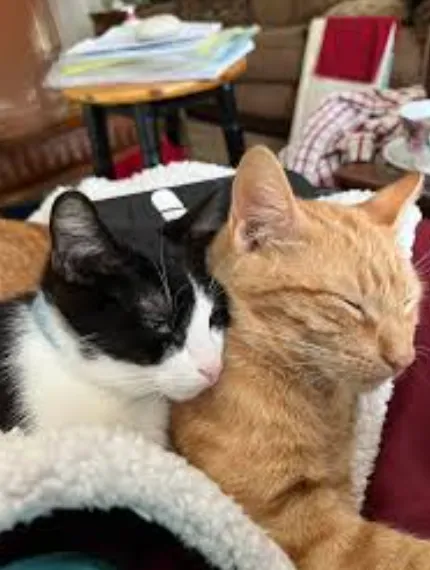
An orange tabby was curled protectively around a black-and-white tuxedo cat. Instead of moving apart in their unfamiliar surroundings, the two animals stayed close, seemingly finding comfort in each other’s presence.
Their behavior raised an important question: What made their relationship so special?
Although their earlier experiences remained uncertain, the cats clearly had companionship during a difficult transition. Their discovery reminded shelter workers that animals sometimes develop meaningful relationships that deserve careful attention.
The Special Bond Between Cats
Cats are often considered independent animals, but many develop strong relationships with other cats. Their personalities, early experiences, and living environments can influence how they interact with familiar companions.

Bonded cats may sleep beside one another, groom each other, follow similar routines, or seek each other’s company when they feel uncomfortable. These behaviors can indicate familiarity, trust, and social attachment.

When cats enter a shelter, they encounter unfamiliar smells, sounds, people, and routines. Having a familiar companion nearby may help some animals adjust to these changes.
However, every cat is different, and their behavior should be observed carefully rather than automatically interpreted as evidence of a particular emotion.
Why Keeping Companions Together Matters
Animal shelters frequently receive cats that have lived together or developed close relationships. When staff identify a compatible bonded pair, they may consider whether adoption together would support both animals’ wellbeing.
Keeping bonded cats together can preserve familiar routines and provide continuity during a major life change. Nevertheless, adoption decisions should consider each animal’s health, temperament, and individual needs.
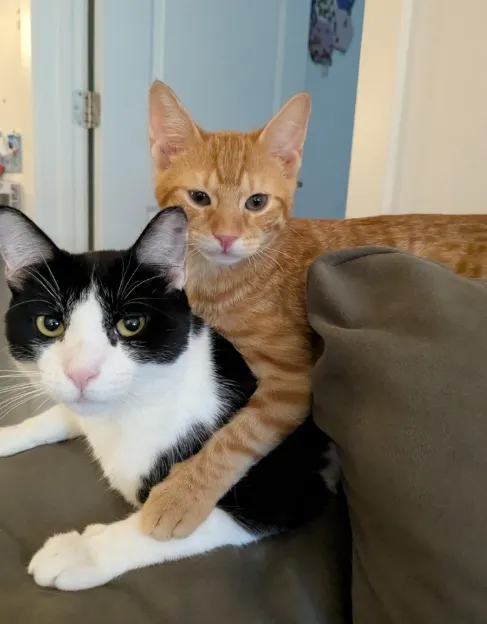
In this case, the orange tabby and tuxedo cat offered a touching reminder of why understanding animal relationships matters.
Compassion Can Give Animals a New Beginning
Companionship can be valuable, but animals also need proper nutrition, safe shelter, veterinary attention, and responsible caregivers. These essentials help protect their physical health and support their overall wellbeing.
The two cats’ discovery highlights the importance of looking beyond an animal’s immediate condition. Their relationship was another part of their story, deserving attention alongside their practical needs.
Sometimes, the most meaningful moments are surprisingly simple. Two animals remaining close together can encourage us to appreciate friendship, trust, and compassion.
Their story reminds us that every shelter animal deserves patience, understanding, and an opportunity to find a safe, loving home.