
When rescuers first saw him, he was moving in a way no dog should ever have to.
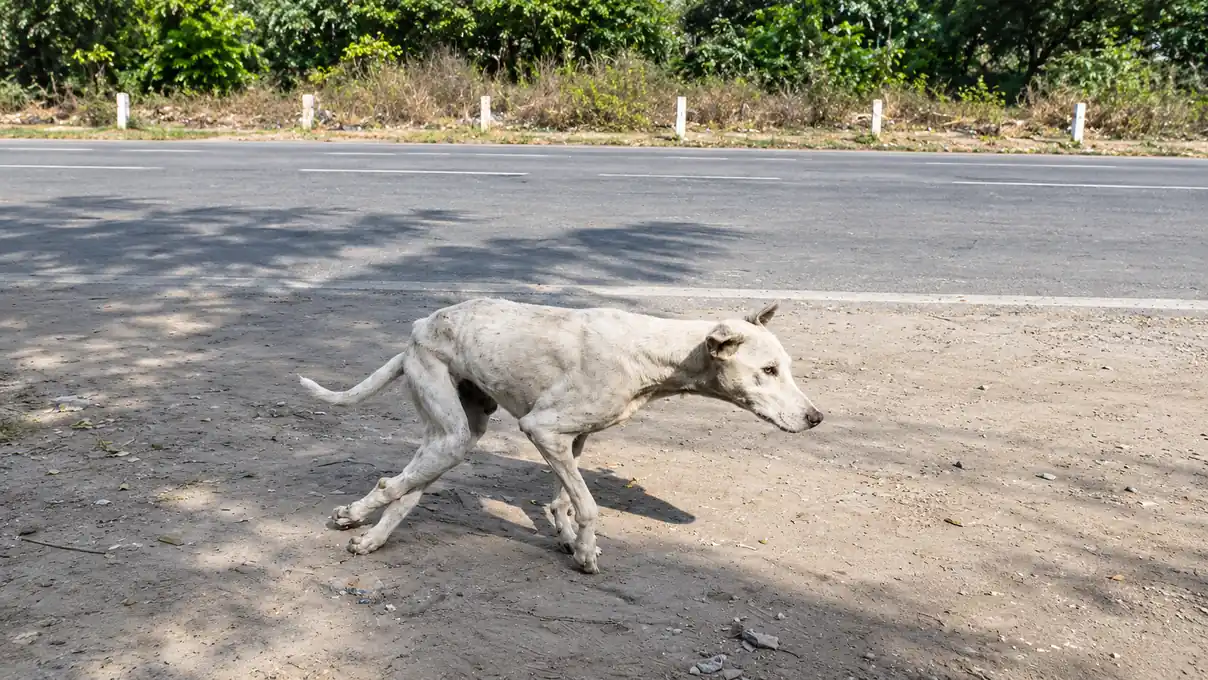
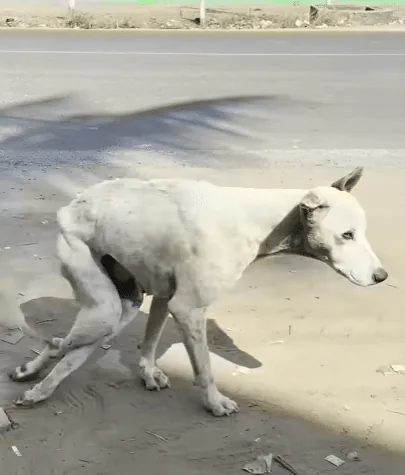
A white dog with small black patches dragged the lower half of his body across the pavement. His front legs did all the work because his back legs could no longer support him. According to local residents, an accident had left him paralyzed.
But his injury was only part of his story.
For months, he had been surviving alone on the streets.
Finding food was a daily struggle. He had to search for safe places to rest and face the dangers of traffic, hunger, and harsh weather.
Over time, the constant struggle changed his behavior.
The gentle dog he may once have been became frightened and defensive. He growled, barked sharply, and showed his teeth whenever someone approached.
It wasn’t simply aggression. It was a frightened animal trying to protect himself.
When Survival Turns Into Defense
By the time residents contacted Relief and Rehabilitation of Stray Animals (RRSA), the dog had developed a reputation for being dangerous.
But the rescuers understood that pain, loneliness, and fear can change how an animal reacts to people.
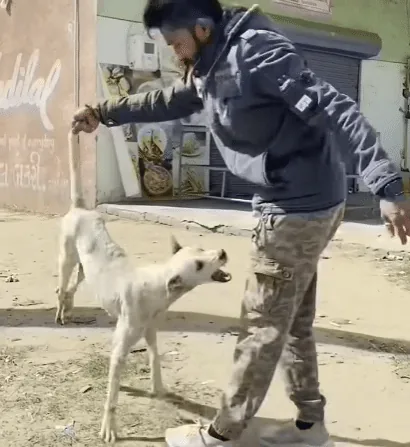
When the team arrived, the dog barked and tried to keep everyone away. He had learned that maintaining distance was the safest way to protect himself.
The rescuers knew they needed to approach carefully.
A Rescue Focused on Safety and Compassion
To protect both the dog and the rescuers, the team used a humane control pole with a soft loop. They gently secured him from a safe distance while speaking in calm voices.
He struggled at first, frightened and confused by what was happening.
Once he was safely secured, the team carefully lifted him into their rescue vehicle.
For the first time in months, he was leaving the streets behind. He would no longer have to drag himself across the pavement searching for food or shelter.
He was finally on his way to safety.
The First Night in Safety
At the RRSA shelter, a quiet space was prepared for him.
Soft bedding replaced the rough pavement. He had warmth, clean water, regular meals, and a private enclosure where he could settle without feeling surrounded.
At first, he remained alert. Every movement from a caregiver made him tense.
But nobody shouted at him or tried to force contact.
His caregivers gave him time and allowed him to become comfortable at his own pace.
Slowly, his body began to relax.
Healing Begins Beyond the Body
Medical examinations confirmed that his back legs were paralyzed. The team carefully assessed his condition and focused on his comfort, hygiene, and long-term care.
But his recovery also required emotional support.
Caregivers spent time near his enclosure every day. They spoke softly, moved slowly, and never forced him to accept attention.
Then, one morning, they noticed a small change.
Instead of growling, he watched quietly. Instead of immediately retreating, he remained where he was.
His fear was slowly beginning to ease.
Small Signs of Trust
Trust returned gradually.
His barking became less frequent. His posture grew more relaxed, and he began accepting food from a closer distance.
Eventually, he allowed a caregiver to gently touch his head.
He flinched, but he did not snap or pull away.
For a dog who had spent so long using fear to protect himself, this was an important moment.
The team understood that rebuilding trust takes patience and consistency. Every small improvement mattered.
A New Chapter Under Protection
Today, he remains at the RRSA shelter, protected from the dangers that once surrounded him.
He has a warm place to rest and receives the care he needs. He no longer has to struggle through the streets looking for scraps.
His back legs may never work again, but his life has changed in another important way.
He is learning that not every approaching hand brings harm. He is discovering that people can offer comfort instead of fear.
His journey is a reminder that an injured animal’s behavior often has a story behind it.
What people may mistake for aggression can sometimes be fear shaped by pain, loneliness, and years of struggling to survive.
This dog was not simply a dangerous street animal. He was frightened and trying to protect himself.
Now, surrounded by patience and kindness, he is slowly learning that he no longer has to fight for his safety.
He finally has the chance to rest, feel protected, and heal.