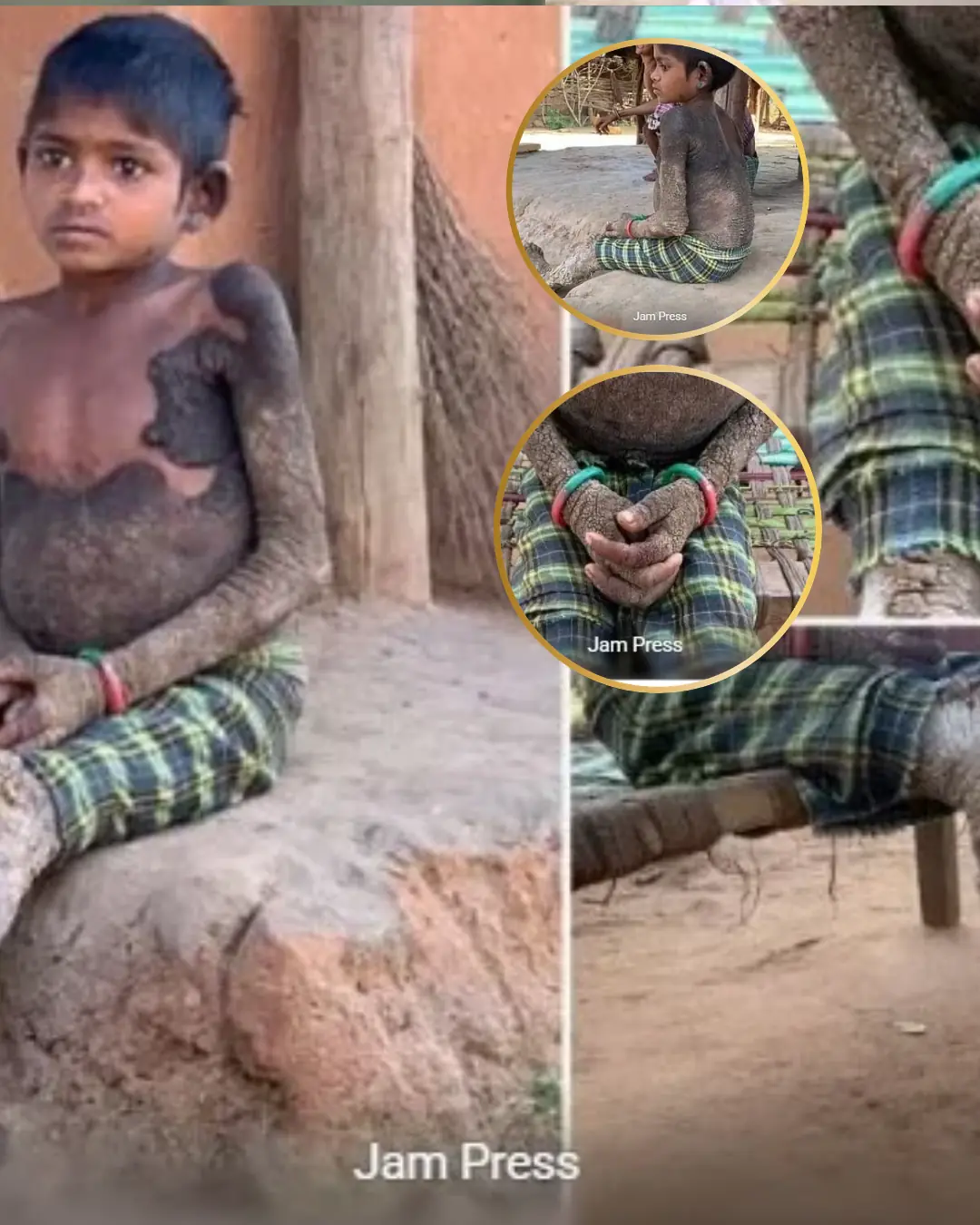
Rajeshwari was just nine years old when her unusual medical condition began attracting attention because of the dramatic changes happening to her skin. While most children her age dream about making friends, playing with classmates, and enjoying a normal childhood, Rajeshwari faces a much more difficult reality.
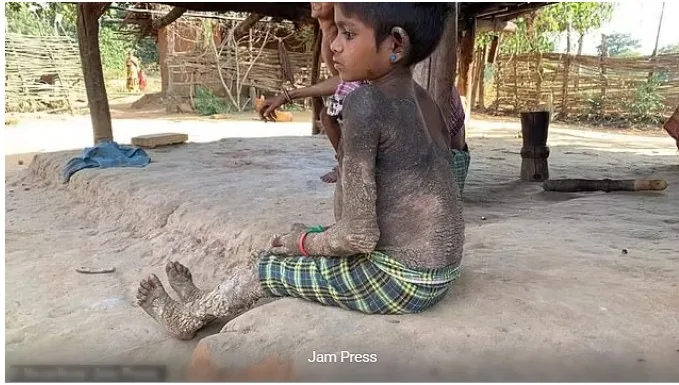
The young girl lives in India and has been diagnosed with ichthyosis, an extremely rare genetic skin disorder. Her condition causes severe changes to the appearance and texture of her skin, including redness, painful blisters, and thick layers of gray scales that gradually become hard. Because of these unusual symptoms, some media reports have described her as a child who appears to be turning into stone. However, this is simply a dramatic description of her appearance, not an actual medical diagnosis.
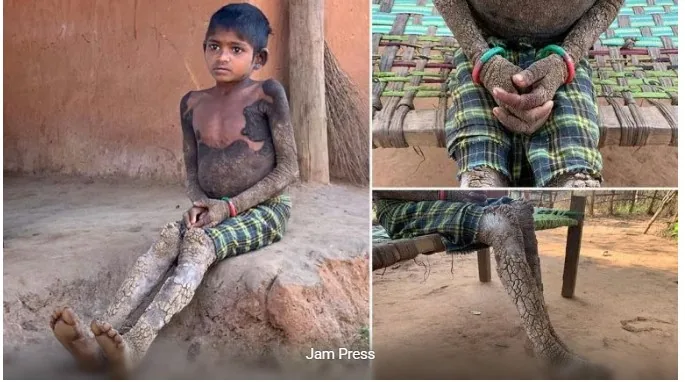
Ichthyosis affects the body’s natural process of producing and shedding skin cells. Under normal circumstances, old skin cells are replaced by new ones in a continuous cycle. However, in Rajeshwari’s case, this process does not work properly. As a result, layers of thick, dry, hardened skin accumulate across her body, creating an extremely challenging medical condition.
According to scientists quoted in reports about her case, the disorder is connected to an exceptionally uncommon genetic mutation. The rarity of this condition makes it particularly difficult for medical researchers to understand and develop effective treatments. Reports have suggested that only around 24 cases have been documented worldwide, highlighting just how unusual Rajeshwari’s condition is.
Her situation has also drawn attention from medical professionals who recognize the difficulties involved in studying such rare disorders. Satyaki Ganguly, a professor at the All India Institute of Medical Sciences in Raipur, explained that scientific progress remains limited because so few people around the world are affected by this condition.
For Rajeshwari, however, the challenges are not limited to medical complications. Living with a visible skin disorder can also make everyday social experiences extremely painful. At an age when children should feel accepted and supported, she faces the sadness of being rejected and struggling to build friendships.
The condition reportedly causes her constant discomfort and pain, while the absence of a definitive cure makes her future uncertain.
Her story raises an important question about how society treats children who look different from others. Rajeshwari deserves compassion, friendship, and the opportunity to experience childhood without judgment.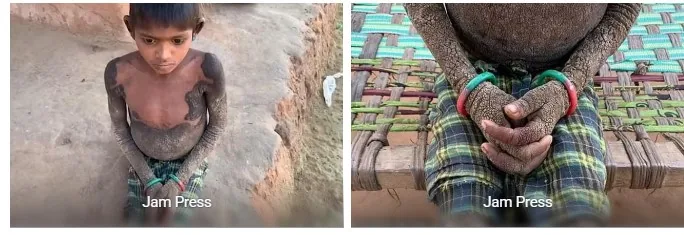
Beyond the medical mystery surrounding her rare condition, her greatest wish is something very simple: to be accepted, loved, and treated like every other child.