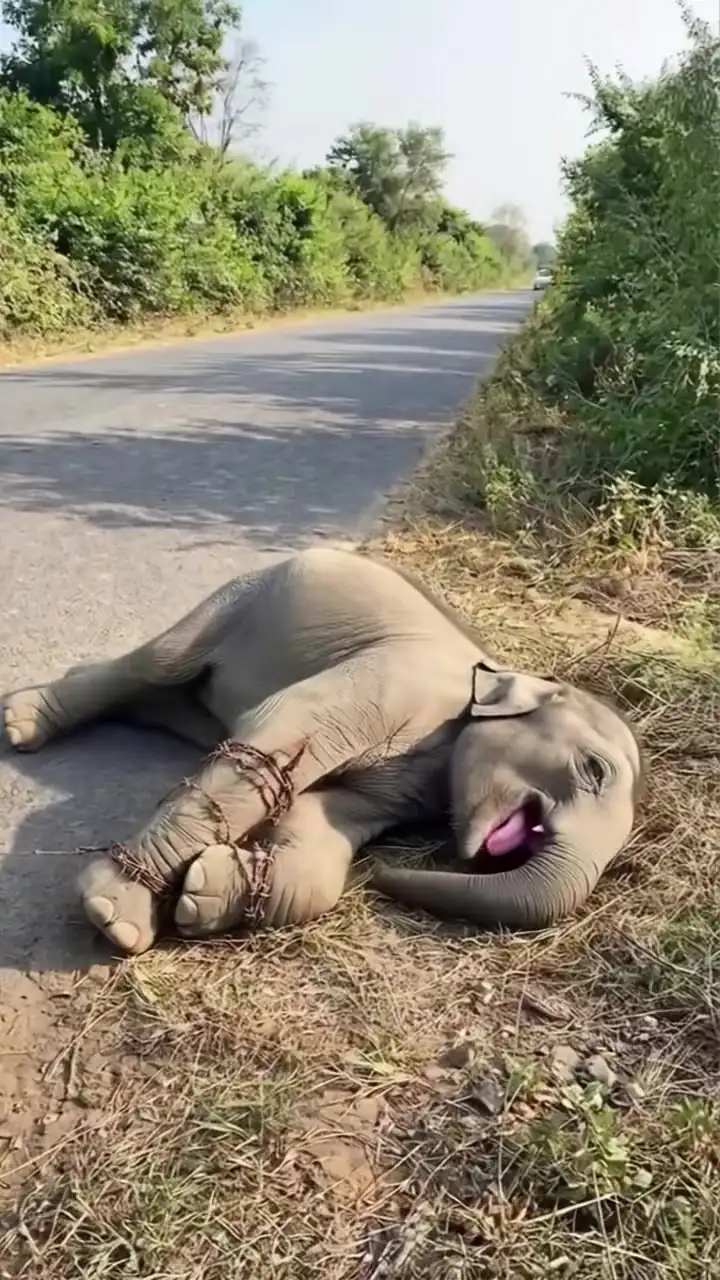
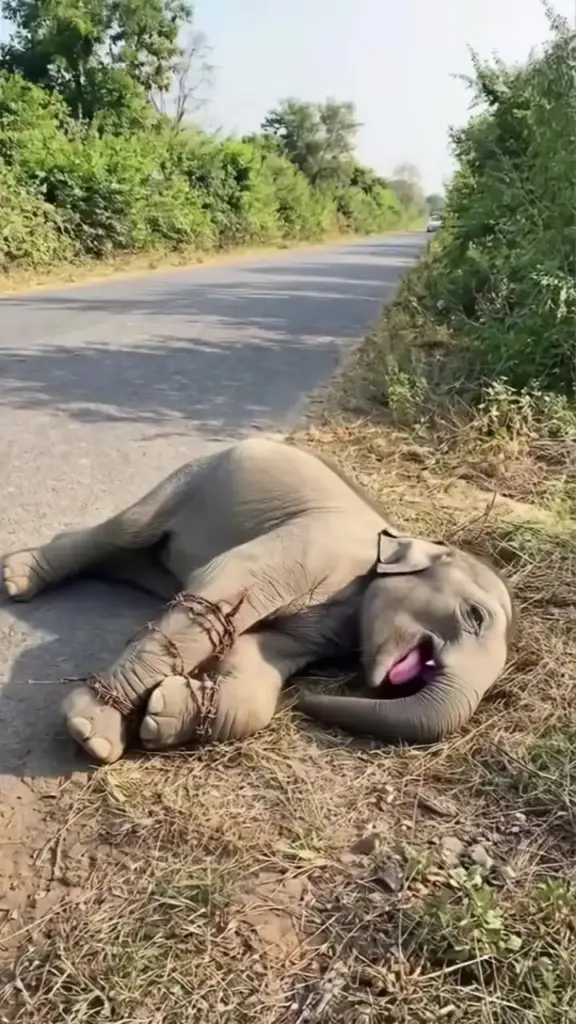
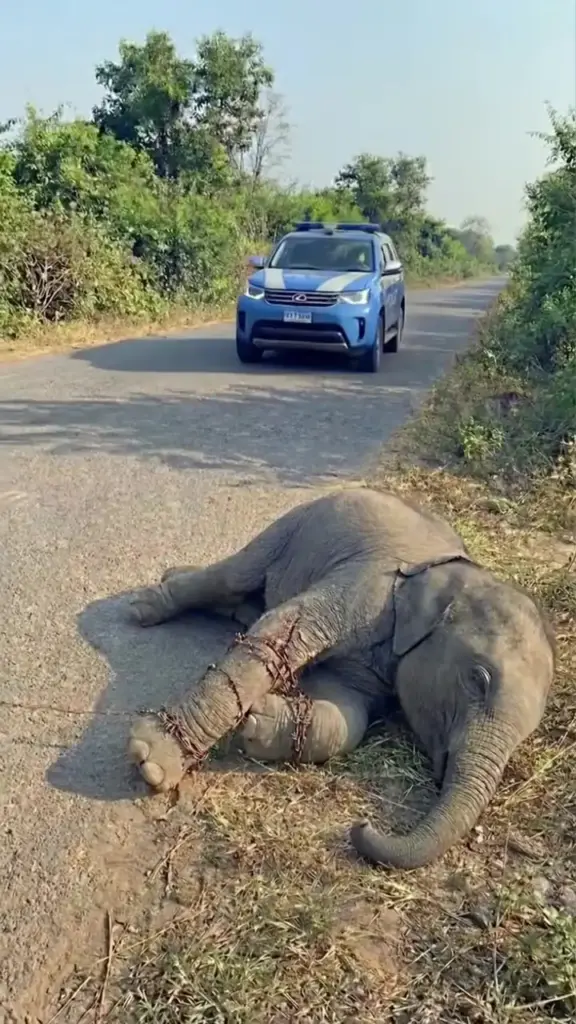
A quiet country road takes a heartbreaking turn when a young elephant is spotted lying on the grassy shoulder. Its body rests beside the pavement, and restraints appear wrapped around its legs. The animal struggles to move, its trunk curled near its face. Green bushes and trees line the road, but there is no comfort for the creature. Vehicles pass nearby, making the roadside dangerous for such an animal.
A blue police SUV approaches with its emergency lights flashing. It slows down and stops close to the elephant. A uniformed officer gets out and hurries over to examine the animal. Instead of leaving it there, he kneels beside the elephant and inspects the heavy bindings around its legs.
The officer brings out a pair of red cutting tools and begins working on the restraints. He takes his time, positioning the tool around the links and applying pressure to loosen them. The elephant remains on the ground as he continues, focused on freeing it without causing further distress. The scene is tense: every movement matters, and the animal cannot simply stand up while its legs remain trapped.
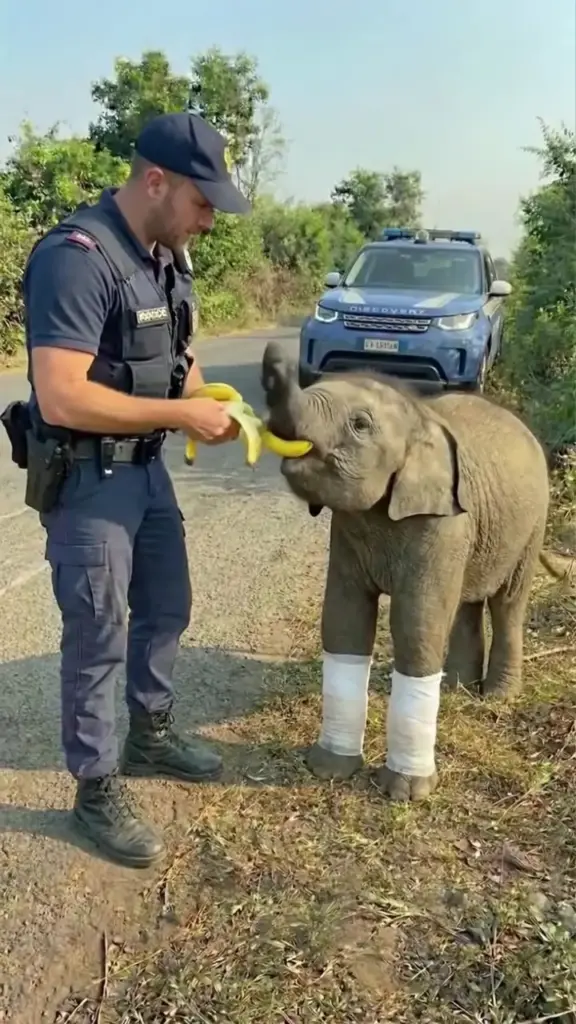
After working at the restraints, the officer manages to release them. The elephant begins to shift its body and gradually gets back onto its feet. White bandages are visible around its lower front legs. Standing again, it faces the officer, who stays close and watches its movements.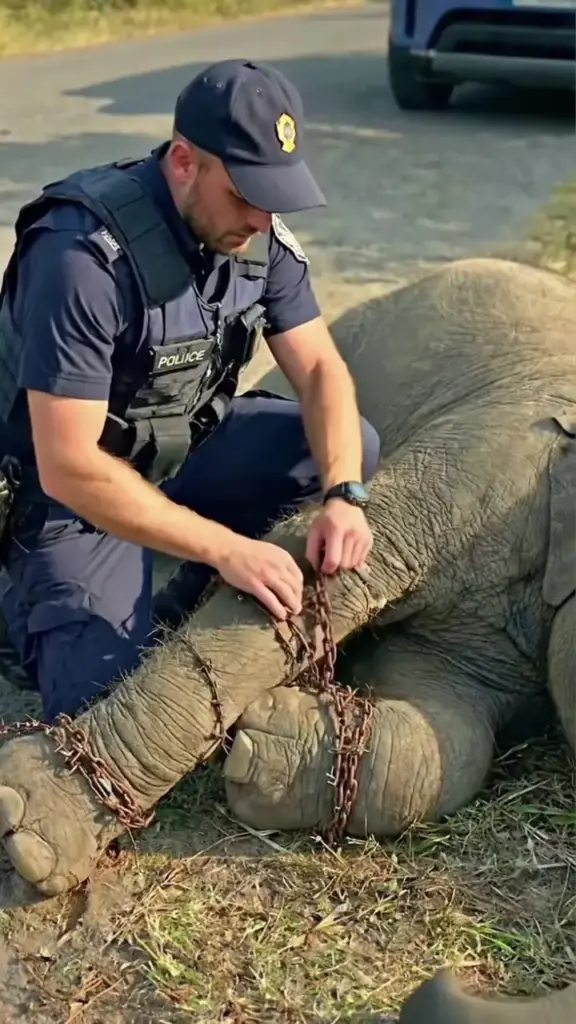
Then comes a gentler moment. The officer takes out a banana and holds it toward the elephant. The animal reaches forward with its trunk and accepts the food. He offers another piece, allowing the elephant to eat while remaining beside it. The encounter changes from a roadside rescue into a moment of trust between the animal and the person who stopped to help.
The video does not explain how the elephant became restrained, how long it had been lying beside the road, or what happened after the encounter. It shows the officer arriving, cutting away the bindings, and offering food once the elephant is standing.
What makes the footage memorable is the contrast between the elephant’s helpless position at the beginning and its ability to stand and eat by the end. An animal needed help, and someone chose not to drive past. The officer’s actions give the elephant a chance to move freely, turning a roadside scene into a moment of relief and compassion.