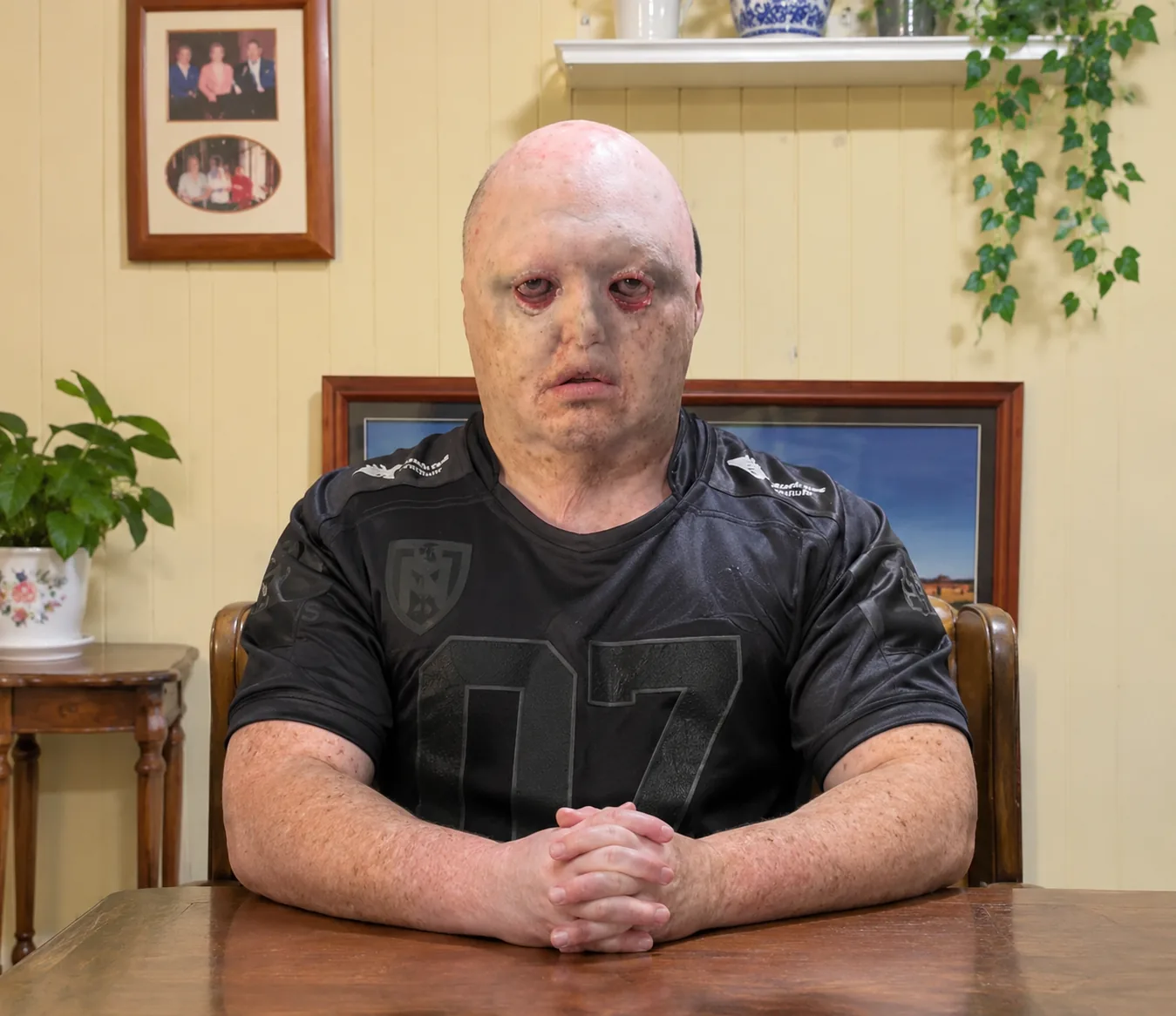
Dean Clifford, a 46-year-old Australian man living with a rare genetic condition, has found himself at the center of a disturbing social media controversy after an artificial intelligence system reportedly misinterpreted his appearance and made an insensitive suggestion about his skin.
Clifford lives with epidermolysis bullosa (EB), a serious inherited condition that makes the skin extremely fragile and vulnerable to painful wounds, blisters and injuries. In severe cases, the condition can significantly shorten a person’s life expectancy.
Recently, Dean shared a photograph of himself alongside his mother while attending a rugby match at Australia’s Suncorp Stadium. The game featured the Dolphins taking on the Melbourne Storm, and what should have been a happy family moment unexpectedly turned into an upsetting experience.
According to the account, Meta’s artificial intelligence system processed the photograph without his permission and automatically suggested that his unusual skin appearance resembled a zombie costume.
The suggestion quickly became a source of controversy, particularly after users on social media began making insulting remarks about his appearance.
For Dean, the incident was deeply offensive. Rather than recognizing the reality of a person living with a painful medical condition, the technology appeared to turn his physical differences into something associated with horror or entertainment.
The situation also highlighted a broader problem surrounding online harassment and the way people with visible disabilities are sometimes treated on social media.
Dean is much more than the condition affecting his skin. He is an ambassador, public speaker and weightlifter who has worked to raise awareness about disability and the challenges faced by people living with medical conditions.
He strongly criticized the technology company and expressed frustration toward individuals who use the anonymity of the internet to target and humiliate people with disabilities.
His experience has raised important questions about artificial intelligence, responsible technology development and the need for greater sensitivity when automated systems interact with photographs of real people.
For someone who has spent much of his life dealing with physical challenges, facing additional cruelty because of his appearance is especially painful.
The incident serves as a reminder that behind every photograph is a real human being with feelings, experiences and a story that deserves respect. Technology should help people, not contribute to discrimination or make individuals feel ashamed of conditions they cannot control.
Dean’s story also highlights why kindness and understanding matter, both online and in everyday life. A person’s appearance should never become an excuse for ridicule, and living with a disability should never mean having to tolerate humiliation.