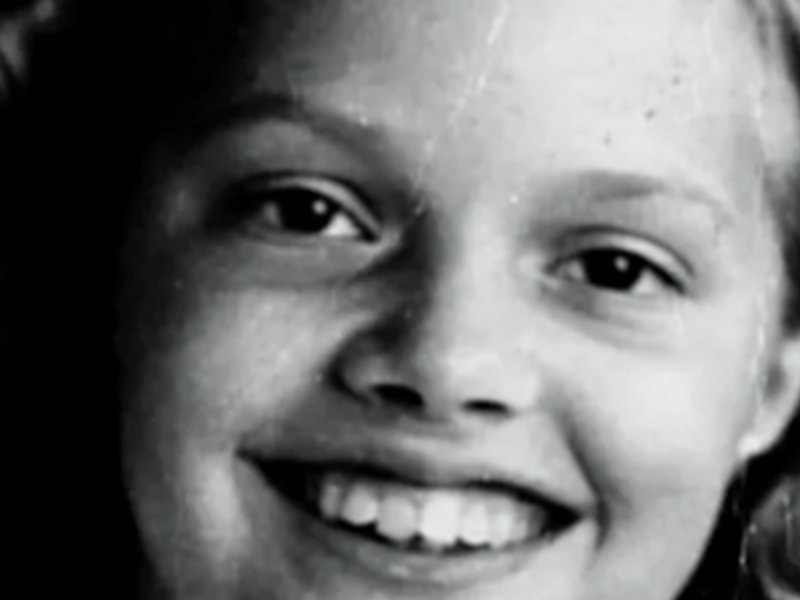
Her abdomen had grown, and she had even felt the baby moving. But one day, everything changed. The movement stopped, and her abdomen gradually began to shrink. The 42-year-old mother of three never sought medical attention during the pregnancy.
Nearly three years later, she arrived at the emergency department of Hargeisa Group Hospital in Somaliland. She complained of persistent pain and a heavy feeling in her lower abdomen, symptoms that had become worse over the previous few months.
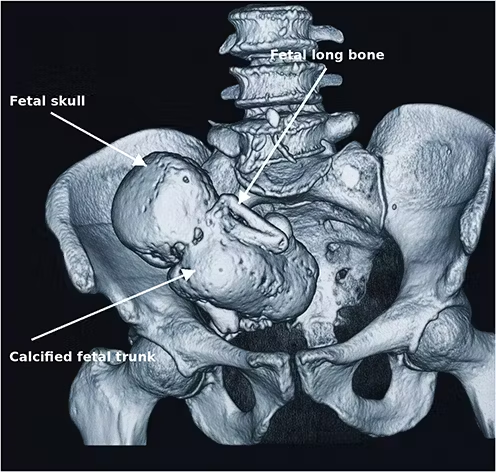
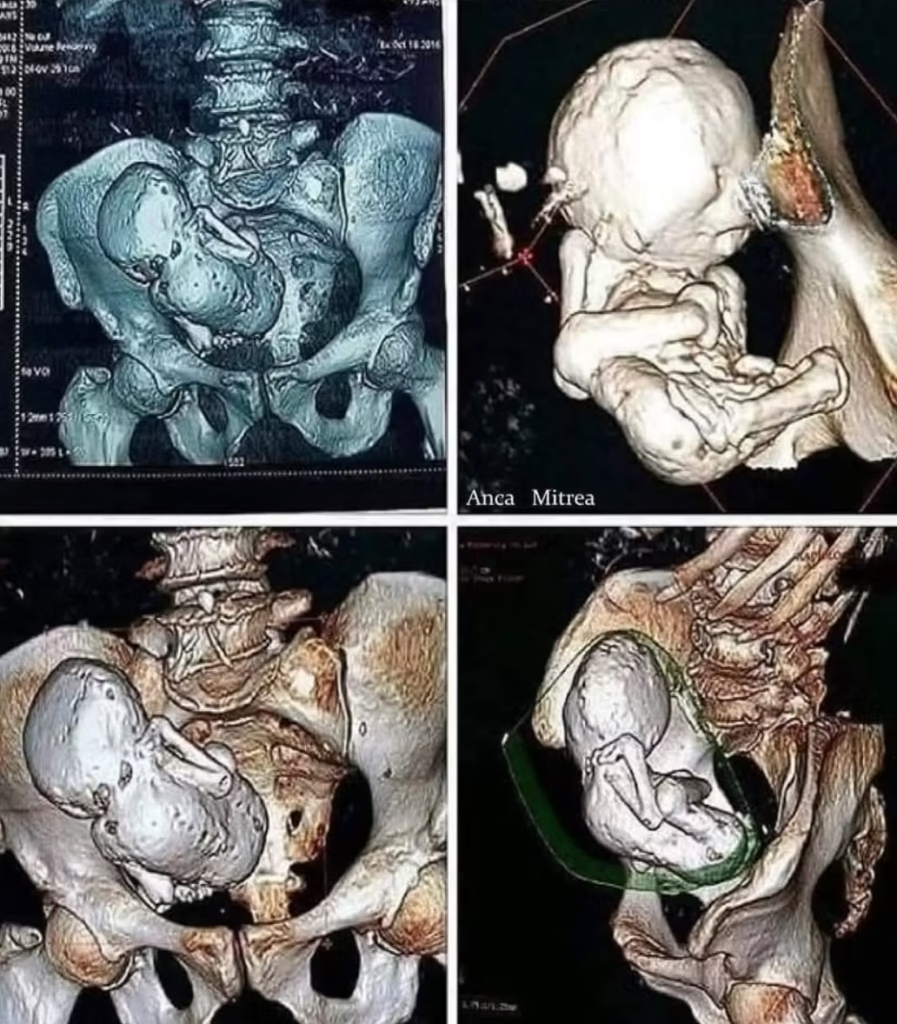
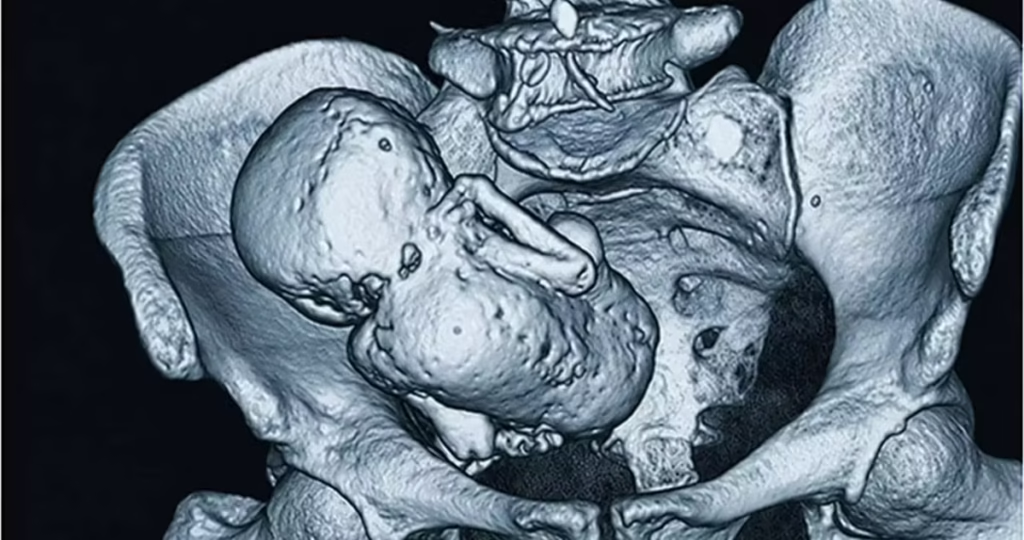
A 3D computed tomography scan revealed a calcified fetal skeleton outside her uterus. The mass measured approximately 18 centimeters and was surrounded by fibrous tissue, with attachments to the pelvic peritoneum. Doctors considered several possible explanations, including a calcified fibroid, an ovarian teratoma, and an abdominal tumor, but ruled them out.
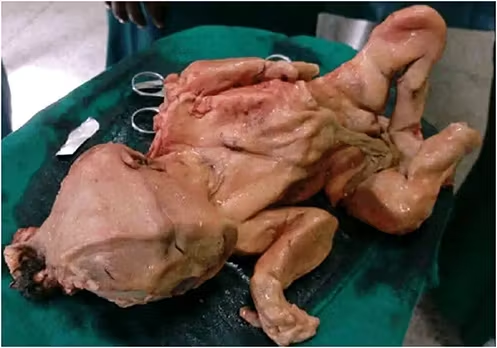
The final diagnosis was lithopedion, commonly known as a “stone baby.” This rare condition occurs when a fetus dies during an abdominal pregnancy and is too large to be absorbed by the mother’s body. Over time, the body deposits calcium around it, creating a hardened mass.
Surgeons successfully removed the mass in its entirety without damaging the surrounding organs. After six months of follow-up, the woman was no longer experiencing discomfort.