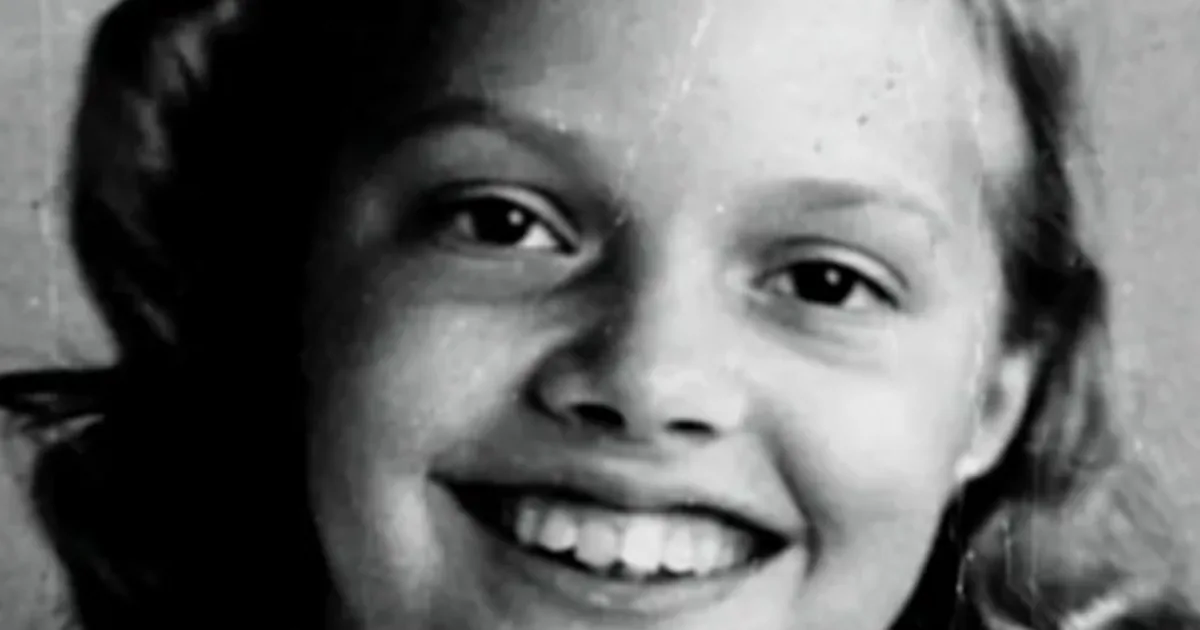
At first glance, she appeared to be an ordinary little girl, with bright eyes, blonde hair, and a shy smile.
But behind that innocent appearance was a childhood marked by abandonment, neglect, and deeply disturbing experiences that would shape the rest of her life.
Her mother disappeared
Born in 1956 in a small Michigan town, her early years were filled with instability. When she was just four years old, her 20-year-old mother left, abandoning her and her brother.
Her mother later described the decision as probably “the biggest mistake” she had ever made.
Around the same time, her 23-year-old father, who was already imprisoned for kidnapping and assaulting a young girl, died by suicide in prison.
The children were subsequently placed in the care of their grandparents. However, the home that was supposed to provide stability became another difficult environment.
Her grandmother struggled with alcoholism, while her grandfather was reportedly violent and predatory.
Reflecting on the family’s history, her mother later told The Tampa Bay Times:
“I should have . . . adopted them to strangers. We, in our family, suffered a form of child abuse. My father was verbally abusive. My mother was verbally abusive, and we were always told we were no good.”
Became wards of the state
At just 13, she became pregnant after reportedly being sexually assaulted. Rumors circulated that her own brother might have been responsible, but other accounts alleged that the perpetrator was a friend of her grandfather.
Family members later told The Tampa Bay Times that nobody believed her at the time. No police report was ever filed.
She eventually placed the baby for adoption, hoping to give him a better future than the one she had experienced.
More tragedy followed when her grandmother died. Wuornos remembered her as a “really clean and decent” woman who did not drink or swear. Not long afterward, her grandfather also died by suicide.
She and her brother, Keith, were left in the care of the state.
Her troubled teenage years continued. By the age of 11, she had reportedly begun engaging in sexual activity at school in exchange for cigarettes, drugs, and food. Isolated and struggling to survive, she eventually left school and began living on the streets, turning to petty crime and prostitution.
Over the following decade, she accumulated arrests for theft, assault, and disorderly conduct.
By her mid-20s, she had moved to Florida, where her name would soon become associated with a series of murders.
In 1989, a man’s body was discovered deep in the woods near Daytona Beach. He had been shot multiple times. Two weeks later, investigators connected the killing to a woman who had reportedly been seen hitchhiking in the area.
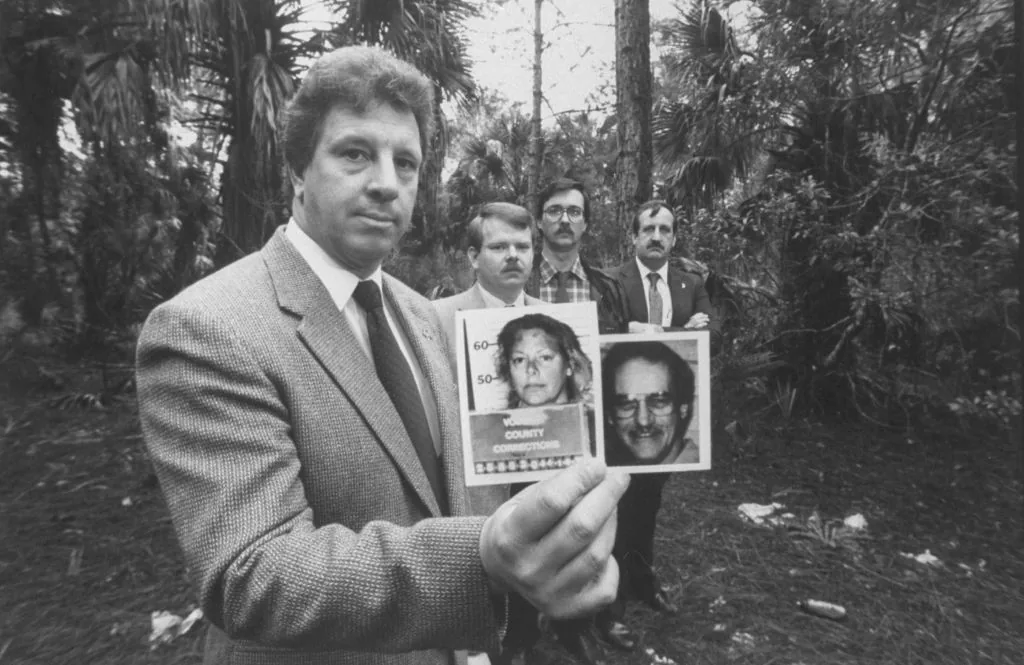
When police eventually located her, she confessed to the killing and several others. Men were being found dead across central Florida, and investigators began connecting the cases.
Wuornos maintained that she had acted in self-defense. She claimed the men had attempted to sexually assault her and that she had been fighting to protect herself.
“I’m not a man-hater,” she told the Orlando Sentinel in March 1991. “I’ve been through so many traumatic experiences that either I’m walking in shock or I’m so used to being treated like dirt that I guess it’s become a way of life.”
“Damsel of Death”
Prosecutors presented a very different account. They argued that Wuornos deliberately lured men, killed them, and took their belongings.
By the time her case reached trial, she was accused of murdering seven men within a single year. Media coverage gave her the nickname “America’s first female serial killer.”
Her name soon became infamous, with her life and crimes becoming the subject of books, documentaries, and Hollywood films.
She was Aileen Wuornos, later known as the “Damsel of Death.”
A media circus
“Wuornos is a killer who robs, not a robber who kills. She indeed appears to be very much a serial killer,” chief investigator Steve Binegar said in 1991.
Wuornos’ trial attracted enormous media attention. Throughout the proceedings, she continued to insist that the killings had been acts of self-defense against men who had attempted to harm her.
The jury rejected her defense. In January 1992, she was found guilty and sentenced to death.
After receiving six death sentences across her convictions, Wuornos made a striking statement in court:
“I am as guilty as can be. I want the world to know I killed these men, as cold as ice. I’ve hated humans for a long time. I am a serial killer. I killed them in cold blood, real nasty.”
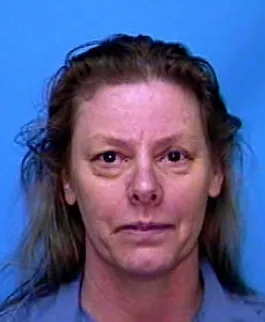
While awaiting execution on death row at Broward Correctional Institution in Florida, Wuornos repeatedly expressed frustration over delays in carrying out her sentence.
“There is no point in sparing me,” she said in July 2001. “It’s a waste of taxpayers’ money. I killed those men, robbed them. And I’d do it again, too.
“There’s no chance in keeping me alive or anything, because I’d kill again. I have hate crawling through my system.”
Last words
Wuornos was eventually executed by lethal injection on October 9, 2002. She was 46 years old.
Before her execution, she delivered a final statement:
“I would just like to say I’m sailing with the rock, and I’ll be back, like Independence Day, with Jesus. June 6, like the movie. Big mother ship and all, I’ll be back, I’ll be back.”
Her crimes horrified the public, while the details of her childhood raised difficult questions about the impact of abandonment, abuse, and neglect.
Her story continues to leave one haunting question: Was Aileen Wuornos born a monster, or was her troubled childhood part of what shaped the person she became?