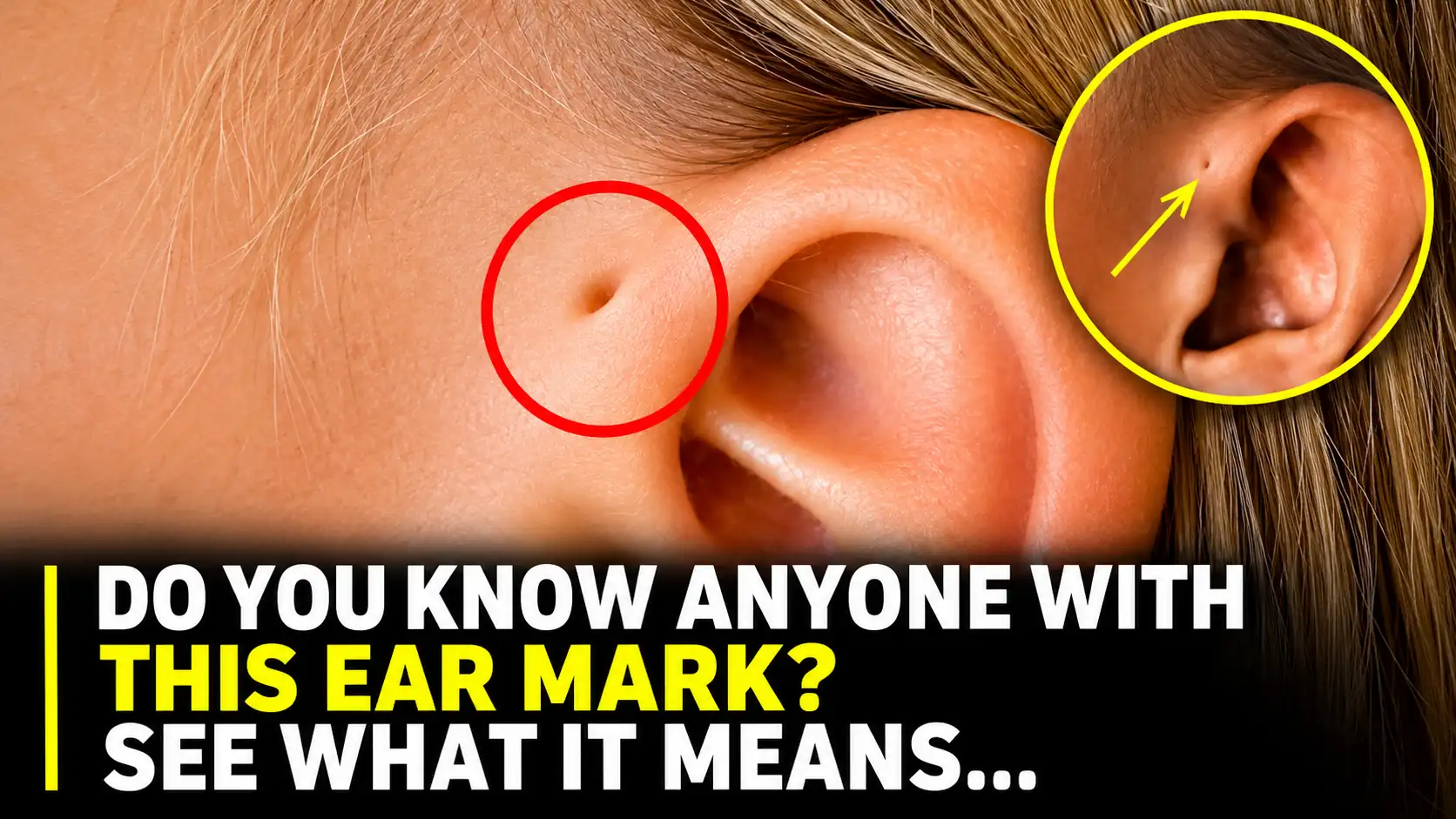
Have you ever noticed a tiny hole just in front of someone’s ear? This unusual little opening might look like a simple dimple or a small mark on the skin, but it actually has a fascinating medical explanation. Known as a preauricular pit, this tiny feature is present from birth, and many people live their entire lives without realizing they have one.
Although its appearance may seem strange, a preauricular pit is usually harmless and rarely causes serious health problems.
What Exactly Is a Preauricular Pit?
A preauricular pit, sometimes called a preauricular sinus, is a small opening located near the upper part of the ear, where the ear meets the face. It develops before birth when the structures that eventually form the outer ear do not join together completely.
This leaves behind a tiny opening that may connect to a narrow passage beneath the skin.
How Common Is This Condition?
Preauricular pits are relatively uncommon, although their frequency varies among different populations. Some people have one opening near a single ear, while others may have pits on both sides.
Most individuals experience no discomfort and may never require treatment.
When Should You Be Concerned?
While these tiny openings are generally harmless, they can occasionally become infected. Warning signs include redness, swelling, tenderness, pain, or unusual discharge around the opening.
In some cases, an infected pit may develop into a painful abscess that requires medical treatment.
Doctors may prescribe antibiotics for certain infections, while repeated infections sometimes require a minor surgical procedure to remove the underlying tract.
Should You Have It Checked?
If the opening has always been present and causes no symptoms, treatment is usually unnecessary. However, a healthcare professional should examine it if infection develops or other unusual symptoms appear.
Occasionally, preauricular pits occur alongside other congenital conditions, making medical evaluation important when additional abnormalities are present.
The surprising truth is that this mysterious little hole is usually nothing dangerous. It is simply a small difference in how the ear developed before birth.