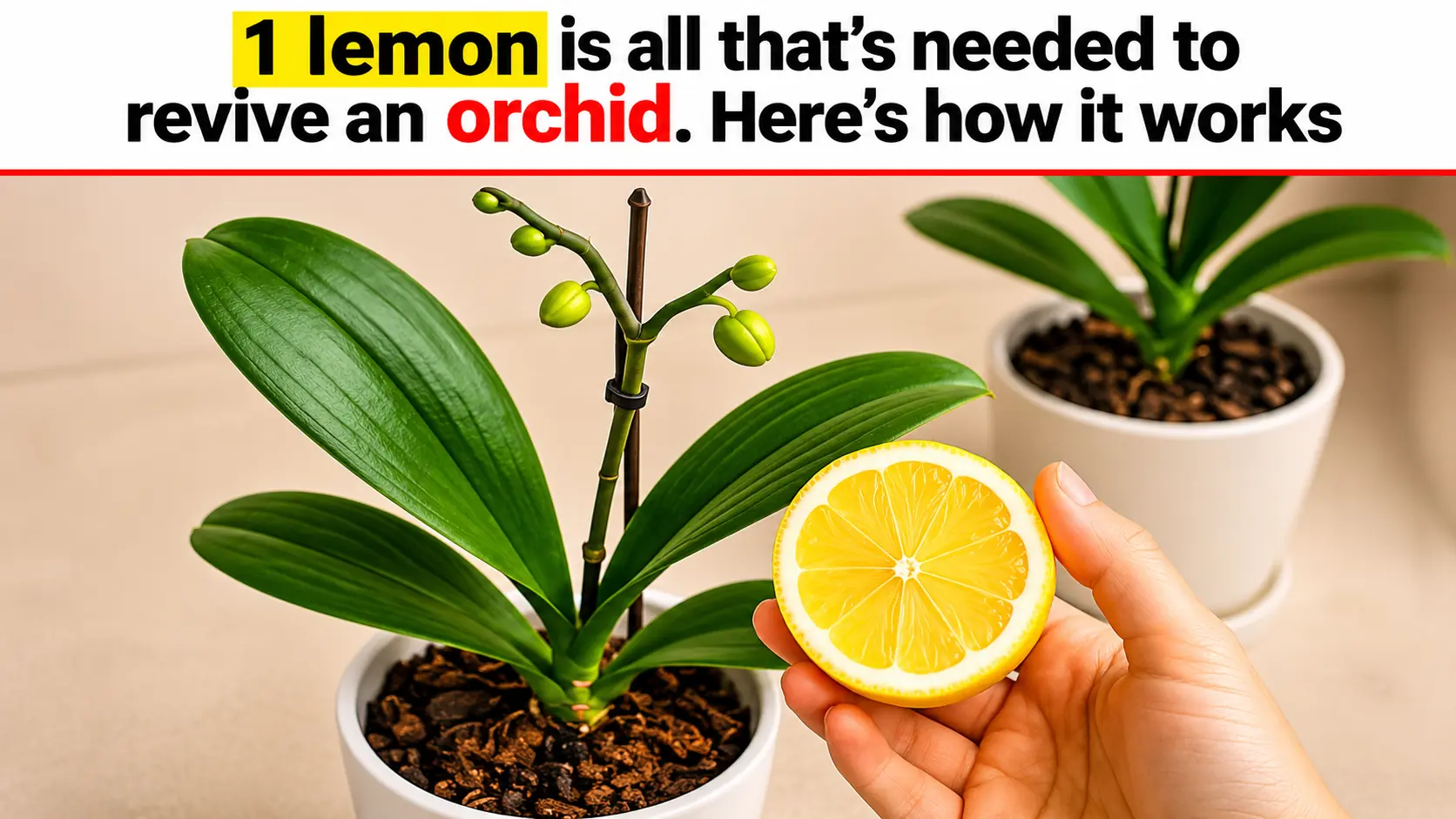
Orchids are admired for their stunning flowers, elegant appearance, and exotic charm. They are among the most popular indoor plants, but keeping them healthy and beautiful can sometimes be difficult, especially for beginners.
Many orchid owners experience common problems such as drooping leaves, yellow foliage, weak roots, and flowers that refuse to bloom. These issues can become frustrating when regular watering and care do not produce the expected results.
Fortunately, there are natural gardening methods that may help improve an orchid’s growing environment. One surprising household ingredient that attracts attention is an ordinary lemon.
Lemons contain natural acids and small amounts of minerals that can influence water quality and growing conditions. When used carefully, understanding their properties may help gardeners make better decisions about orchid care. Let’s explore why lemons are interesting and what orchids need to flourish.
1. The Surprising Potential of Lemons for Orchids
Lemons contain vitamin C, citric acid, and small quantities of minerals such as potassium and calcium. These natural components make them an interesting subject for gardeners looking into alternative plant-care methods.
Citric acid is particularly important because it can influence the pH level of water. It may also help dissolve certain mineral deposits that accumulate through repeated exposure to hard water.
For orchids, maintaining suitable growing conditions is essential. Mineral build-up can sometimes interfere with the root environment, making water quality an important consideration.
However, lemon juice is not a complete plant fertilizer, and applying it directly to orchid roots can be risky. Excessive acidity may damage sensitive roots and disturb the growing medium. Therefore, it is important to avoid treating lemon as a guaranteed solution.
2. Understanding the Special Needs of Orchids
Orchids are different from many ordinary houseplants. Most popular varieties are epiphytic, meaning they naturally grow attached to trees and other surfaces rather than in traditional garden soil.
This natural growing habit explains why orchids need special care.
They generally require a loose, well-draining growing medium, good air circulation, sufficient humidity, and bright indirect sunlight. Their roots also need access to oxygen to remain healthy.
Most commonly grown orchids prefer slightly acidic conditions, with a suitable pH generally ranging from 5.5 to 6.5.
Providing the right environment, balanced orchid fertilizer, and appropriate watering habits is the foundation of healthy growth and beautiful blooms.