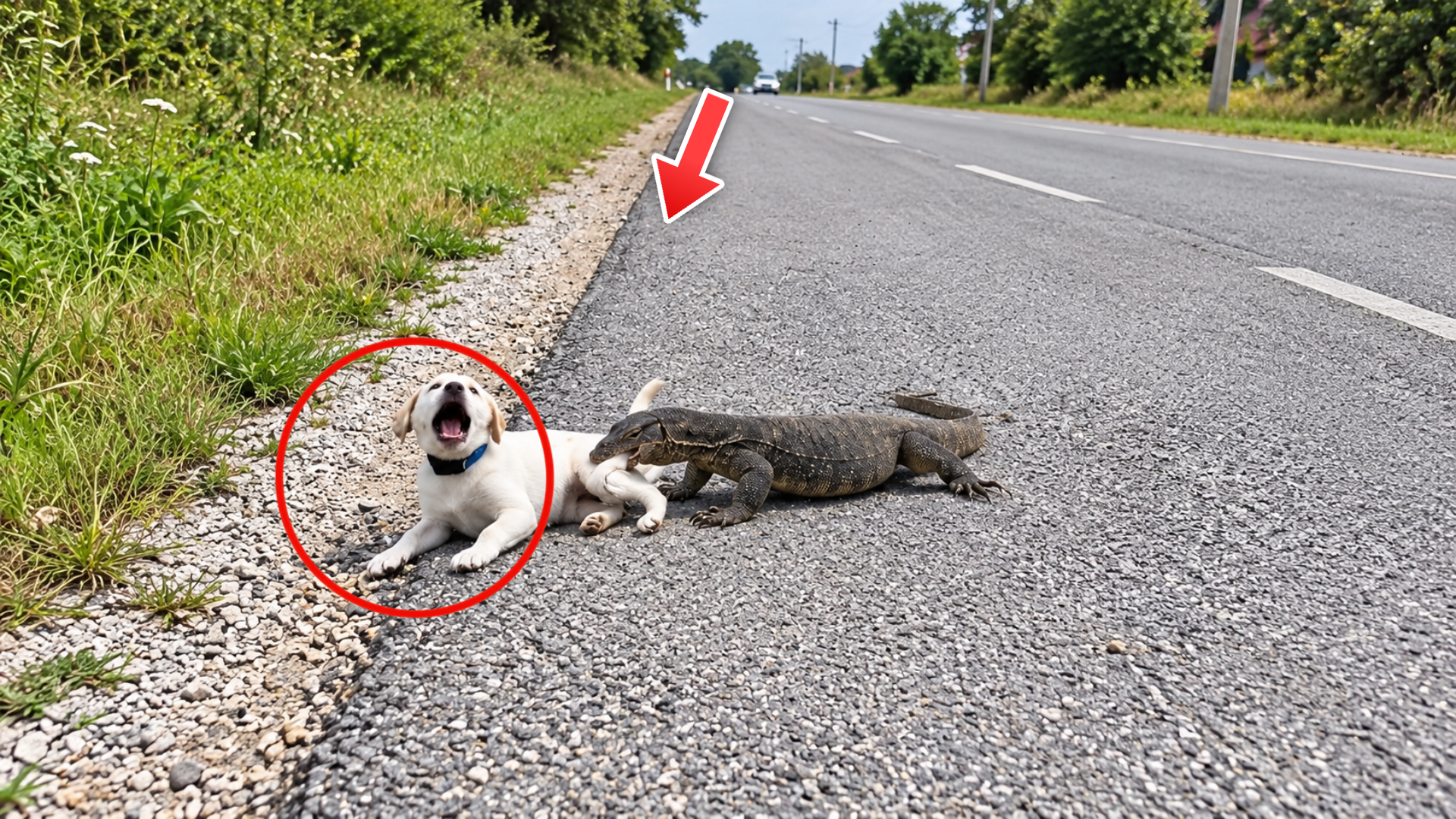
A frightening scene unfolded beside a busy road when a small puppy suddenly found himself in danger from a large lizard.
The lizard had grabbed the puppy by one of his legs and was biting him. The terrified puppy cried and barked loudly, desperately trying to escape and calling for help.
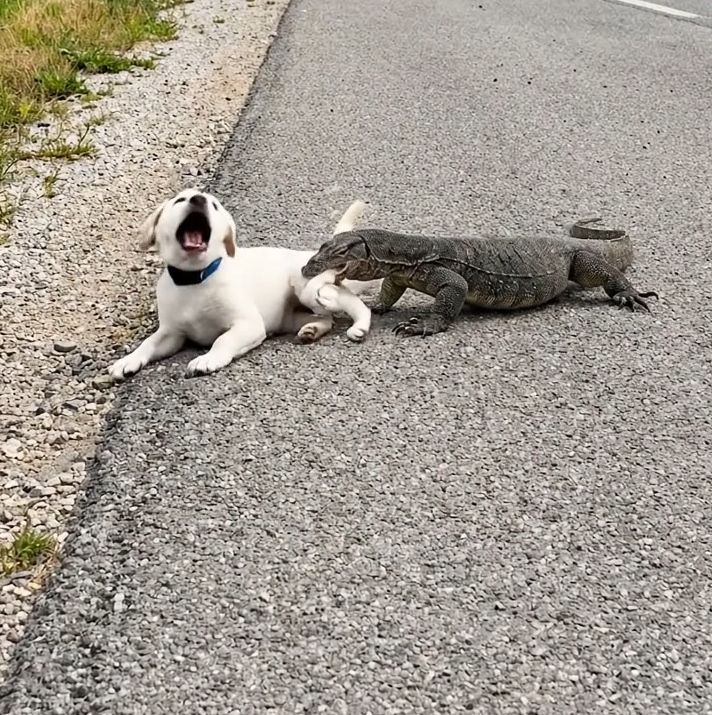
Traffic continued moving along the road, but passing people did not stop. The puppy remained trapped on the roadside, frightened and struggling.
After some time, a blue car pulled over nearby.
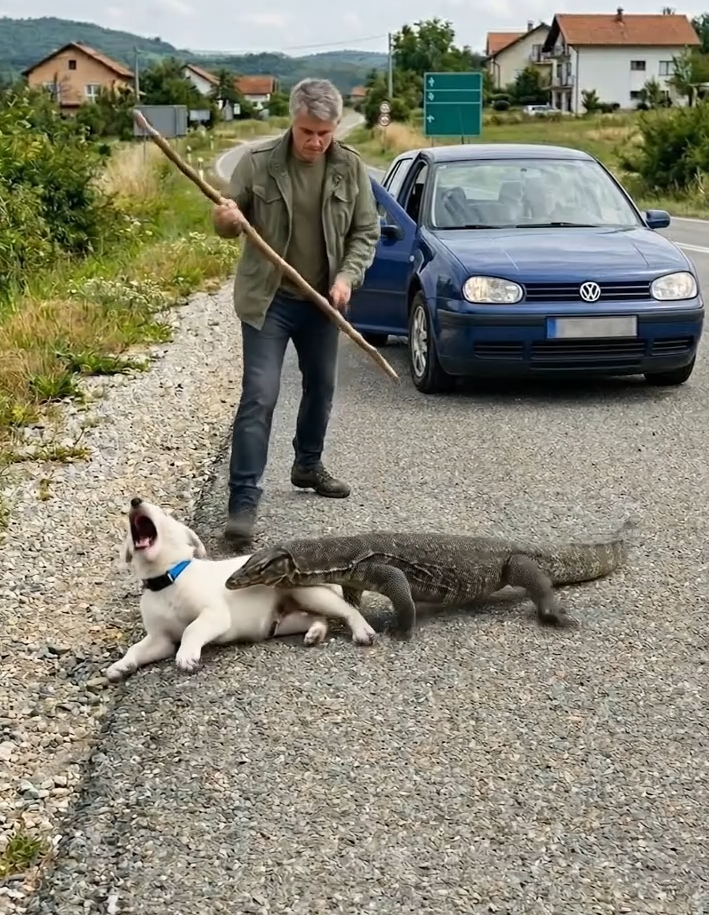
An elderly man stepped out and immediately noticed the puppy in danger. He carefully approached the animals while keeping himself at a safer distance.
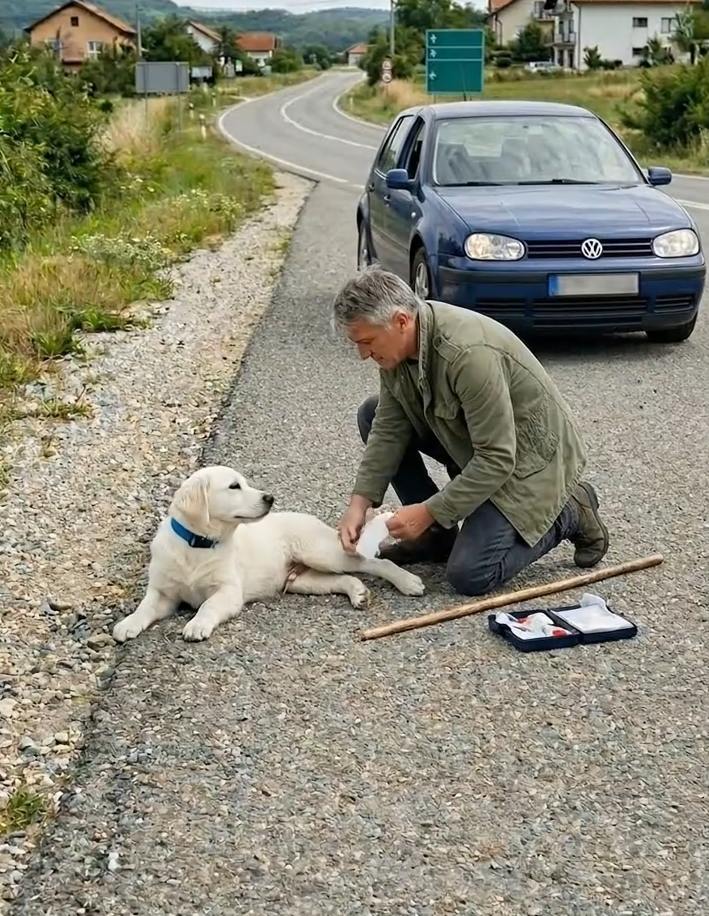
The man picked up a long stick and used it to drive the lizard away from the puppy. After being disturbed, the lizard released the puppy and quickly moved away.
Once the immediate danger had passed, the elderly man checked the puppy’s injured leg. He took out a first-aid kit, gently cleaned the wound, applied appropriate first-aid care, and covered the injured area with a bandage.
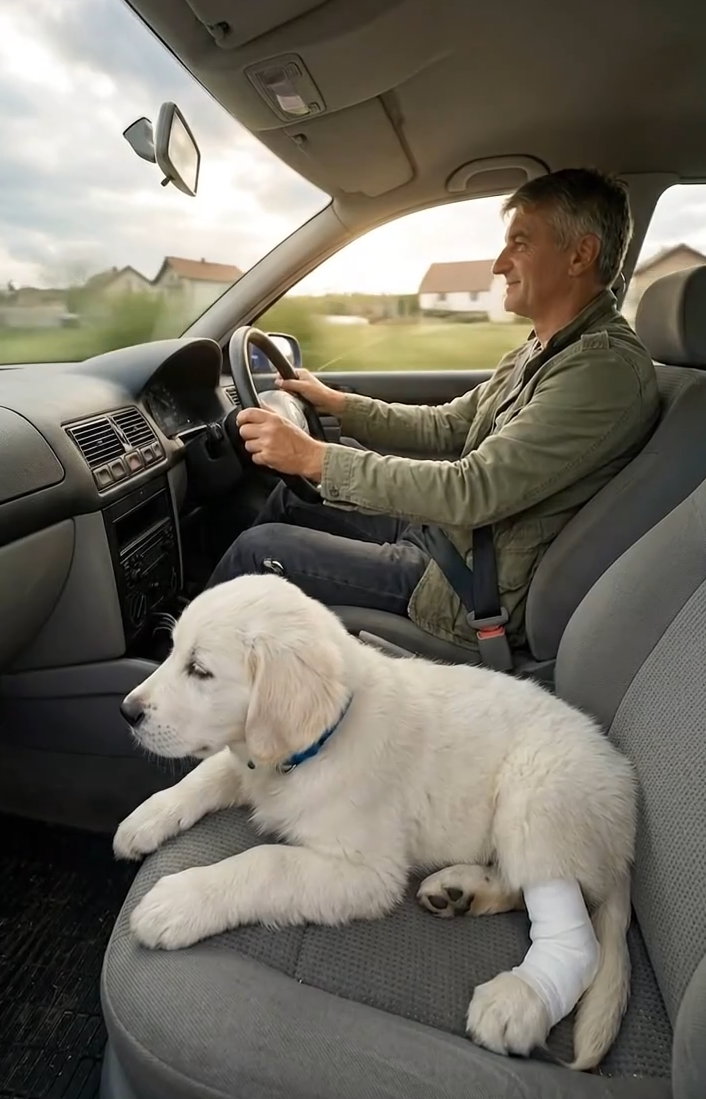
Because the puppy had been bitten, the man understood that first aid alone might not be enough. He carefully placed the puppy in his car and took him home so he could remain somewhere safe and receive further care if needed.
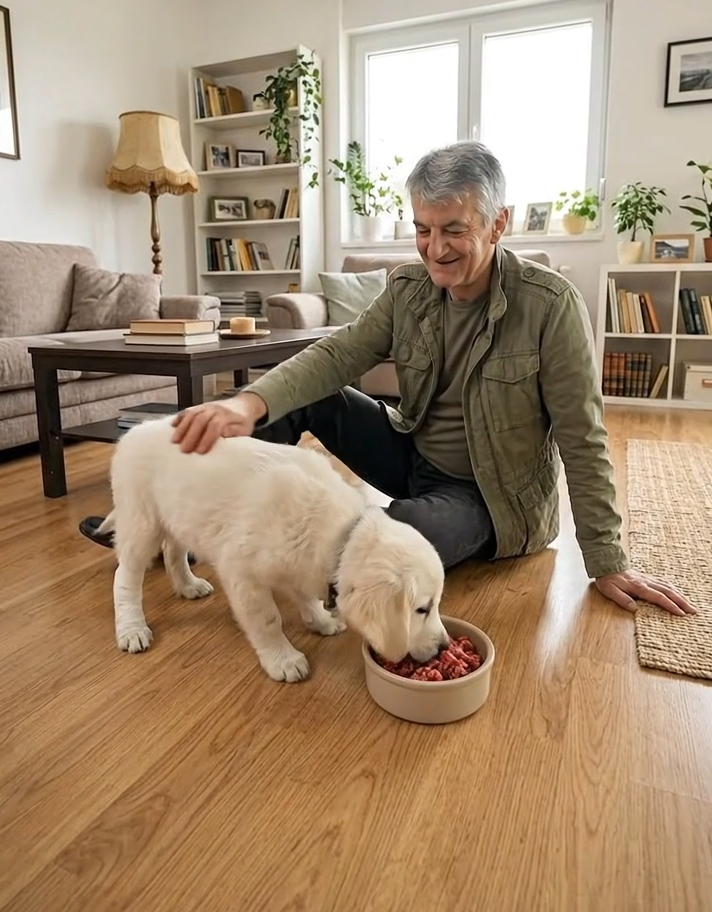
At home, the puppy was given food, fresh water, and a comfortable place to rest. Away from the dangerous roadside, he finally had a chance to recover peacefully.
The rescue gave the frightened puppy more than immediate protection. It gave him a safe place to live and someone willing to care for him.
What to Do If a Dog Is Attacked by a Wild Animal
If you see a dog being attacked by a wild animal, do not grab the animals with your bare hands. A frightened animal may bite or scratch while trying to defend itself.
Keep a safe distance and contact local animal rescue or wildlife professionals whenever possible. If you need to intervene because the animal is in immediate danger, avoid putting yourself between the animals and use a safe method to create distance rather than attempting to handle the wild animal directly.
After the animal is separated, check for bleeding and seek veterinary care as soon as possible. Bites from wild animals can cause serious wounds and infection even when the injury looks small.
Do not give human medicines unless a veterinarian specifically recommends them. Keep the injured dog calm and prevent it from licking or worsening the wound.
Most importantly, remember that wild animals should not be approached unnecessarily. The safest rescue protects the dog, the rescuer, and the wild animal.