“We need a million dollars.”
My mother stood in the middle of my apartment and said those words as though the nineteen years between us had never existed.
“And you’re going to give it to us,” she continued, “because Celestine is still your sister.”
Those were the first words Leonora had spoken to me in almost twenty years.
There was no apology. No greeting. Not even a question about how my life had turned out.
I was thirty-five, standing beside the rain-covered windows when my concierge called to say that a couple downstairs claimed to be my parents. I had allowed them to come up because, after all those years, I wanted to know what it would feel like to see them again.
My father placed a thick folder on my coffee table.
“Celestine made a mistake,” he explained. “If the money is replaced before next week’s audit, everything can be handled quietly.”
I stared at the folder.
“And why exactly should I be the one to fix her mistake?”
My mother gave a cold little laugh.
“Because you owe this family.”
I looked at her in silence.
Then my eyes moved down to my left leg.
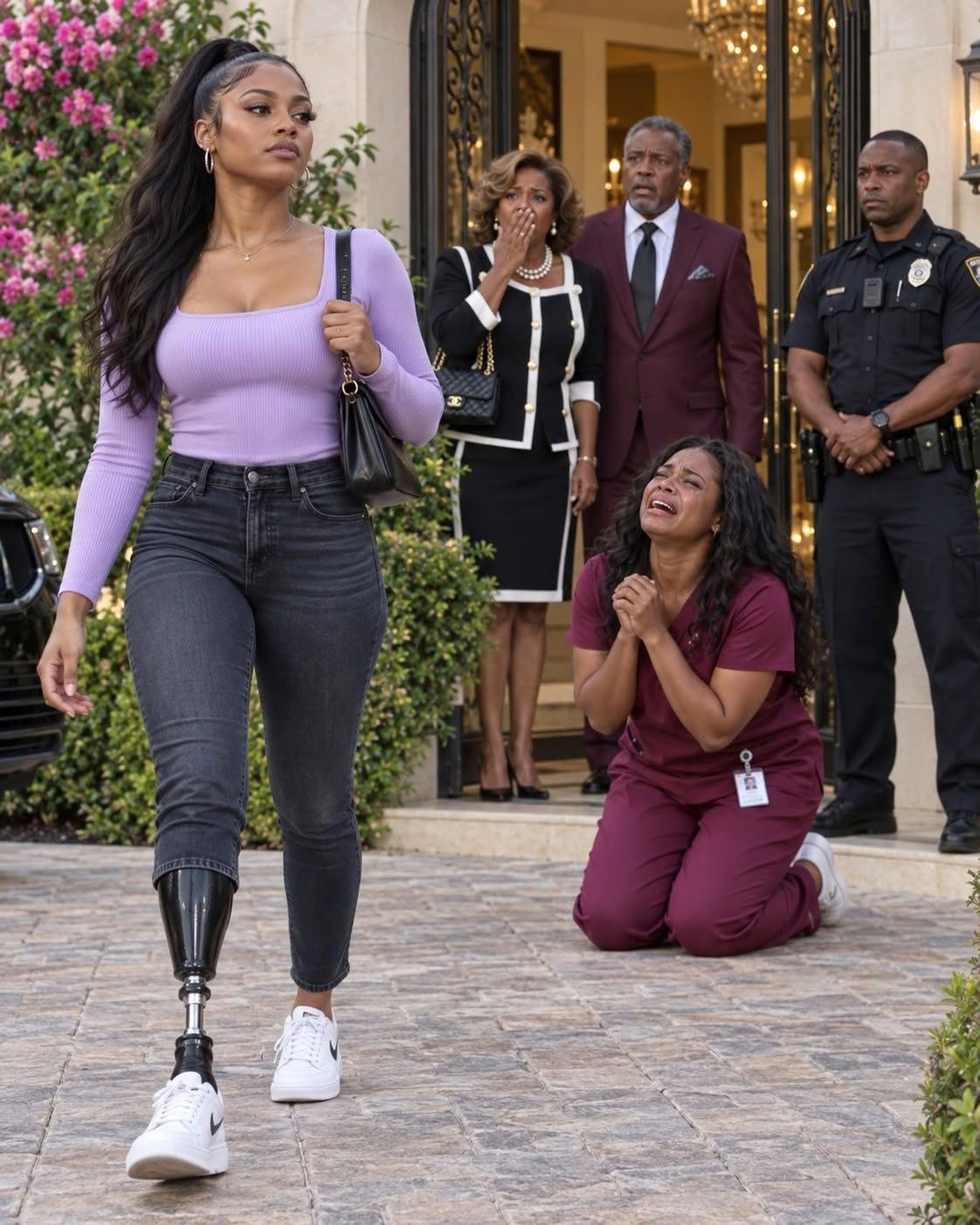
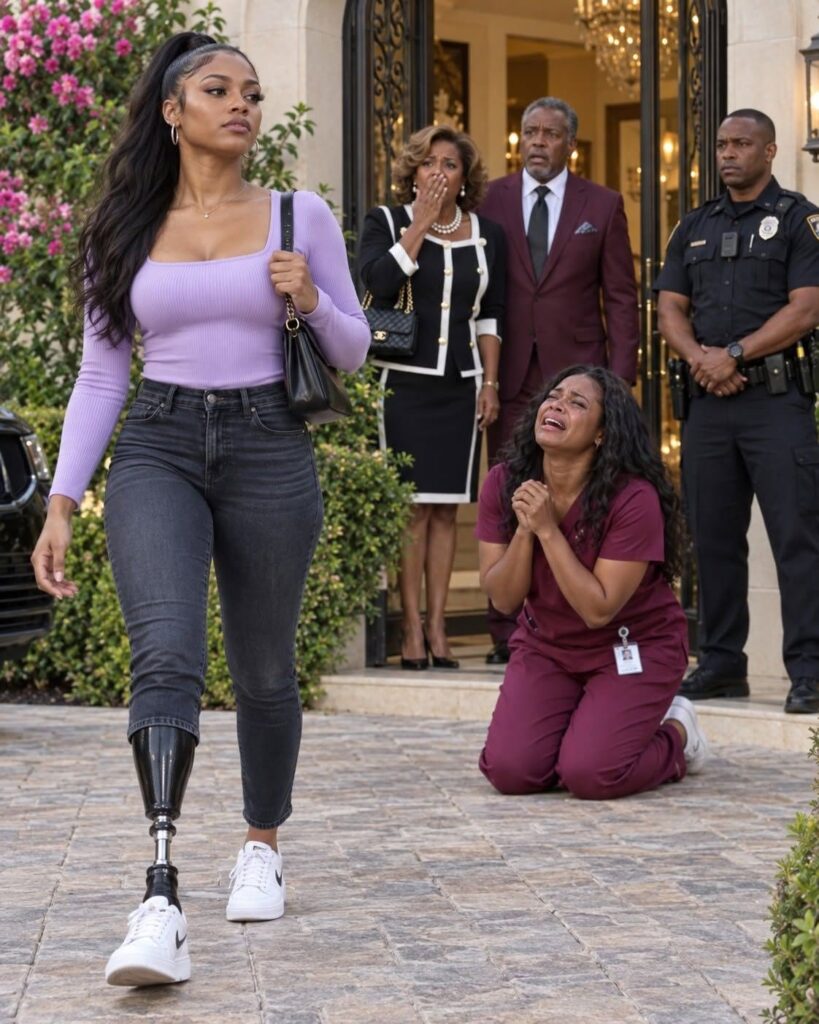
The titanium prosthetic was visible beneath my trousers. I had never made an effort to hide it. Not for business meetings, photographs, or anyone else.
I tapped it twice with my fingers.
“I owe you?”
The color immediately disappeared from my mother’s face.
I was ten years old when doctors discovered cancer in my leg. The disease was aggressive, and within weeks, surgeons had amputated my leg above the knee.
I still remember waking up in the hospital afterward. The light seemed strange, and I could hear voices coming from the hallway.
I reached beneath the blanket.
When I realized what was missing, I began crying for my mother.
I was ten. I needed her.
But when she finally arrived hours later, she didn’t hug me. She didn’t sit beside my bed.
She stood at the foot of it, staring at the empty space beneath the blanket.
Then she asked a question I have never forgotten.
“What are we supposed to do with you now?”
I was only ten years old, but something inside me broke that day.
From then on, I stopped feeling like her daughter. I became the problem, the complication, the child everyone had to make adjustments for.
Meanwhile, Celestine remained the center of their world.
She received their attention, their protection, and their unconditional love.
And I learned the hardest lesson of my childhood: in my family, I was never the daughter they wanted to fight for.