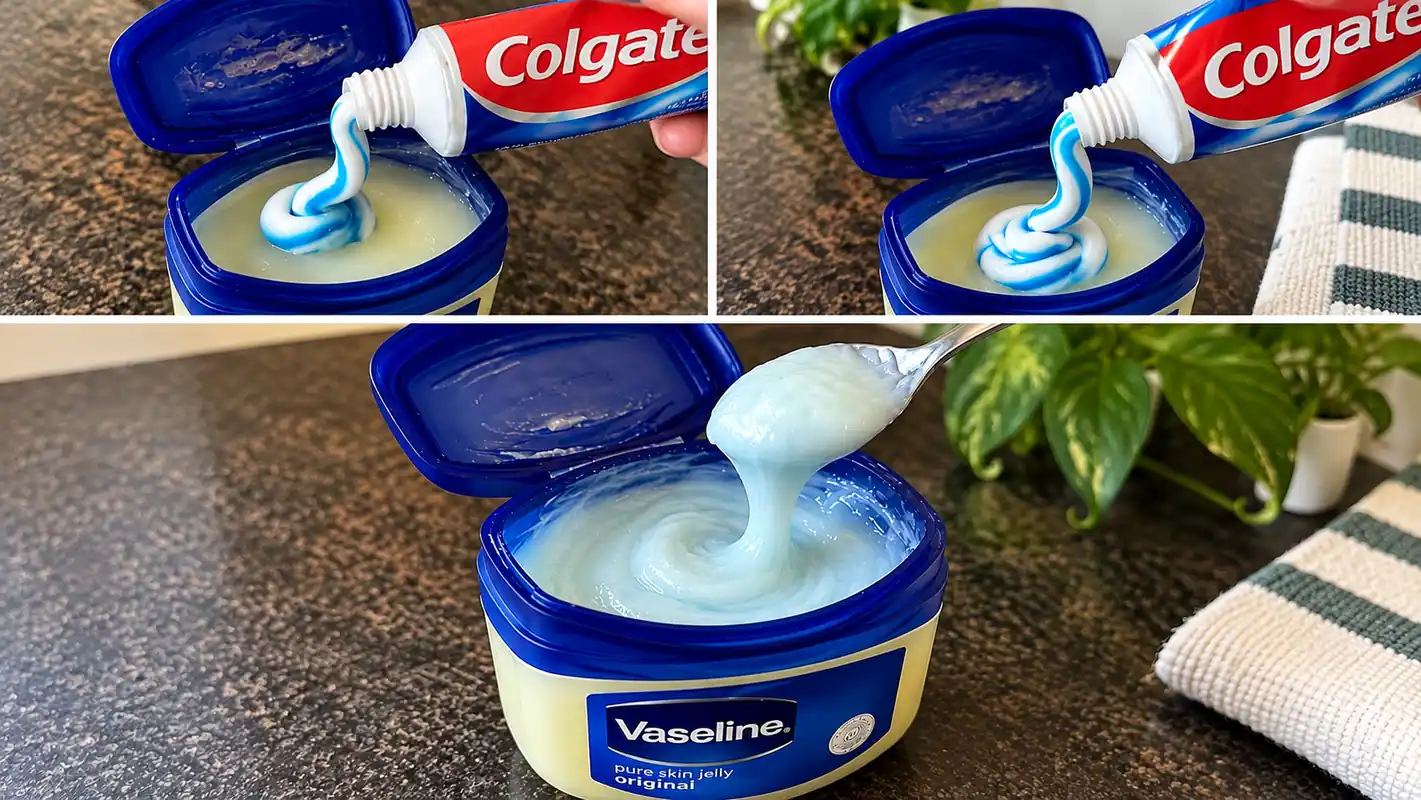
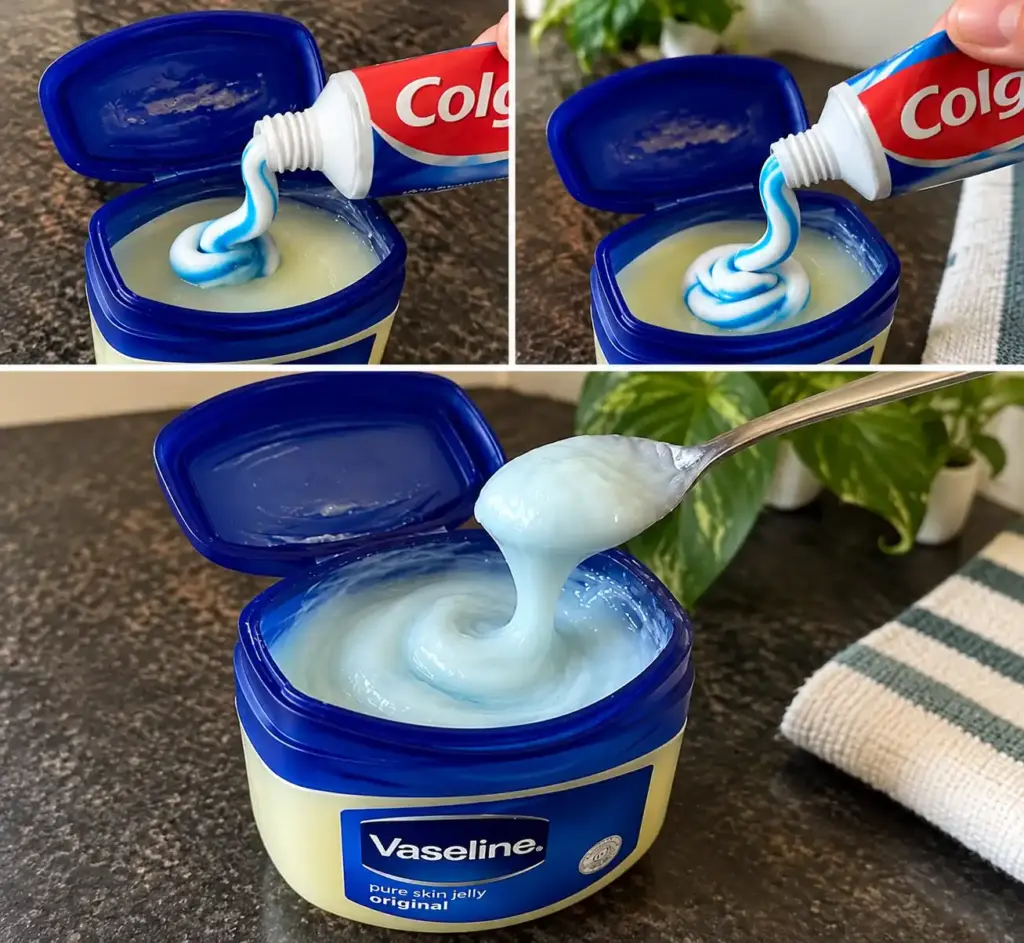
Vaseline and toothpaste are two common household products that are normally used for completely different purposes. Vaseline, or petroleum jelly, is widely known for protecting and moisturizing dry skin, while toothpaste is designed primarily for cleaning teeth and maintaining oral hygiene. However, many people have become interested in combining these two products for simple beauty and household uses.
Vaseline is especially useful because it creates a protective layer over the skin. This barrier helps lock in moisture and can make dry, rough, or cracked skin feel softer and more comfortable. It is commonly applied to areas such as the hands, heels, elbows, knees, and lips. Vaseline can also help protect minor cuts and scrapes from excessive dryness while the skin naturally heals.
Toothpaste contains ingredients that help clean and polish teeth, but some people use it as a home remedy for cleaning certain household surfaces. When combined with Vaseline, the mixture may create a thick paste that can be used for limited cleaning purposes. However, toothpaste is not specifically formulated for skincare, so applying it directly to the face or sensitive skin may cause irritation, redness, or dryness.
If you decide to experiment with the mixture, it is best to use a very small amount and avoid areas around the eyes, lips, and broken skin. Always perform a small patch test first, especially if you have sensitive skin. Stop using the mixture immediately if you experience burning, itching, redness, or discomfort.
For skincare, Vaseline by itself is generally the safer and more reliable option for moisturizing and protecting dry skin. The toothpaste-and-Vaseline combination should not be considered a medically proven treatment for acne, dark spots, wrinkles, scars, or other skin conditions.
Overall, Vaseline remains a simple and affordable household product with useful moisturizing and protective properties. Toothpaste has its own important role in oral hygiene, but using it on the skin should be approached carefully. Understanding the purpose and limitations of each product can help you avoid unnecessary irritation while making better choices for your everyday skincare routine.