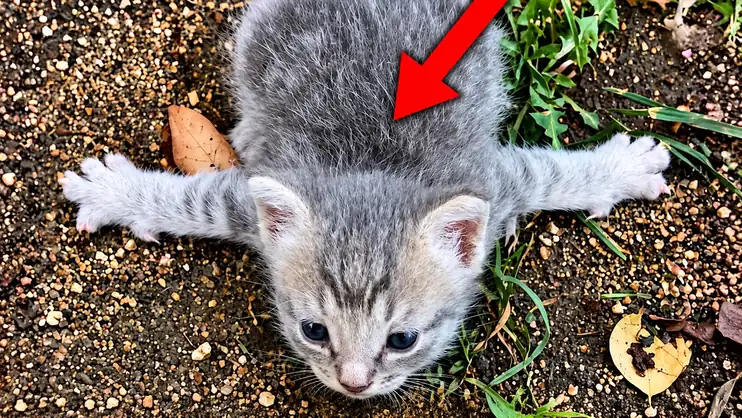
A tiny kitten named Melody once struggled to move across the pavement, dragging herself forward because her front legs could not support her body properly. To anyone who saw her, it appeared that she might have suffered a serious injury. However, her remarkable journey would soon reveal a different explanation and prove how love, patience, and proper veterinary care can transform a vulnerable animal’s life.

Melody was discovered alone in North San Diego County, California. Thankfully, a compassionate passerby noticed her difficult movements and contacted Love Your Feral Felines, a rescue organization dedicated to helping vulnerable kittens. The rescue team quickly arranged veterinary care, hoping to discover what was preventing the little kitten from walking normally.
After examining Melody, veterinarians diagnosed her with Swimmer Syndrome, a rare developmental condition that can affect kittens and puppies during their early growth. The condition causes the legs to extend outward instead of resting beneath the body, making standing and walking extremely difficult.

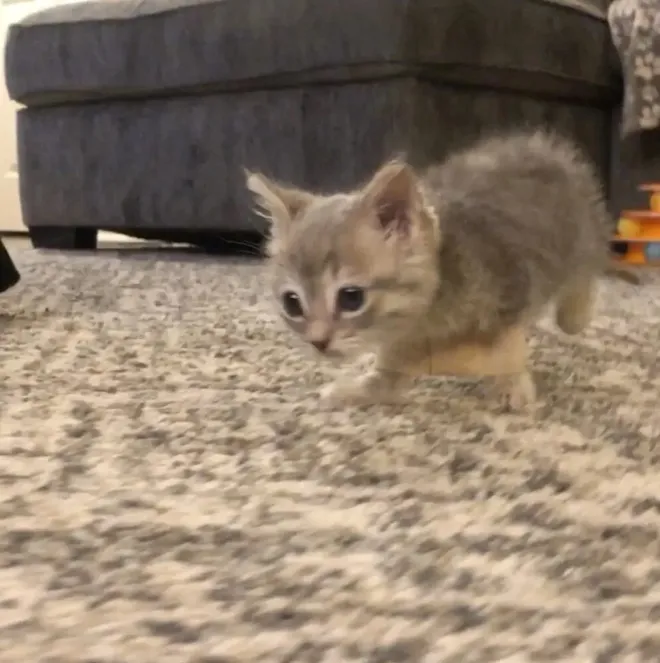
Foster caregiver Heather Thomas welcomed Melody and helped her begin the challenging road to recovery. Under veterinary guidance, her front legs were gently supported with soft bandages to encourage a more natural position. Daily rehabilitation focused on improving balance, strengthening muscles, and helping her develop better coordination.
Progress required time and patience, but Melody gradually began showing encouraging signs. One evening, her caregiver noticed something wonderful: instead of concentrating on every movement, Melody was happily playing with her foster siblings. She chased toys, explored her surroundings, and joined the other kittens in their playful adventures.
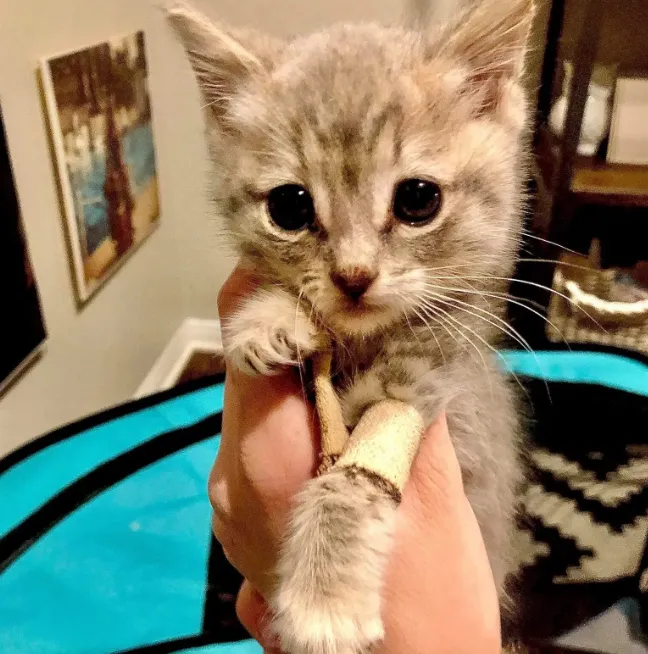
Over the following weeks, Melody became stronger and more confident. Her left front leg developed normally, while her right leg retained a slight outward position. Her loving foster family affectionately called it her “fancy foot.” Despite this small difference, Melody learned to run, jump, climb furniture, and use her litter box independently.
Her transformation demonstrated that a physical difference does not necessarily prevent an animal from enjoying a happy, active life. The dedication of rescuers, veterinarians, and foster caregivers gave Melody the opportunity to thrive.
Melody’s story is also an important reminder that unusual movements in young kittens should never be ignored. Early veterinary evaluation and appropriate treatment can make a meaningful difference.
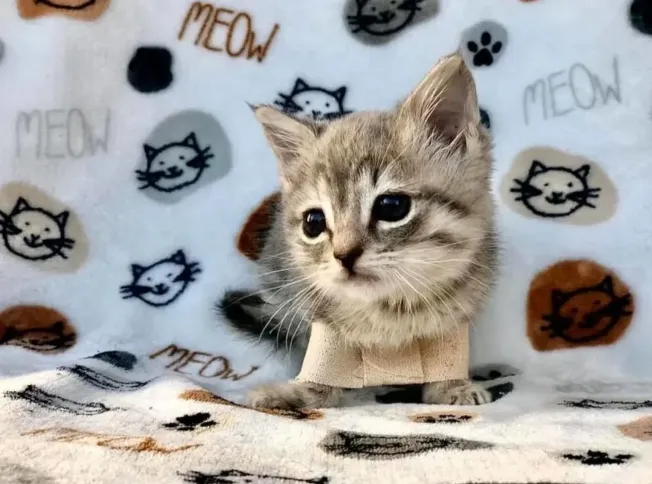
What began as a heartbreaking sight on a pavement became a beautiful story of resilience and compassion. Melody’s journey proves that even the smallest acts of kindness can change a life forever, giving a helpless kitten a second chance filled with comfort, confidence, and love.