After my father passed away, I inherited our family farm, a vast stretch of land that had belonged to our family for generations. At first, it seemed like a wonderful inheritance. But in reality, it felt more like a burden filled with grief, memories, and questions I had never thought to ask.
The farm was more than just property. It held our family’s history. I remembered the early mornings in the fields, rain tapping against the old tin roofs, and my father’s quiet presence throughout the farmhouse.
But there was another part of its history that had always remained unexplained: the bitter silence between our family and our neighbors, the Walters.
Growing up, I was never told why we avoided them. It was simply an unspoken rule. We stayed on our side of the fields, and they stayed on theirs. Sometimes there were distant, unfriendly nods. More often, we pretended the other family didn’t exist.
The feud had been part of everyday life for so long that I had stopped wondering how it began.
Everything changed the day after my father’s funeral.
I returned to the farmhouse alone. Inside, everything seemed frozen in time. The dishes were untouched, the furniture remained exactly where it had always been, and the familiar smell of my father’s daily routine still lingered in the rooms.
As I moved around the kitchen, I reached for an old jar sitting on a high shelf. It slipped from my hand, struck the counter, and rolled to one side.
Behind it was an envelope.
My name was written across the front in my father’s unmistakable handwriting.
My heart skipped a beat.
Before I could open it, something outside caught my attention. I walked toward the window and suddenly froze.
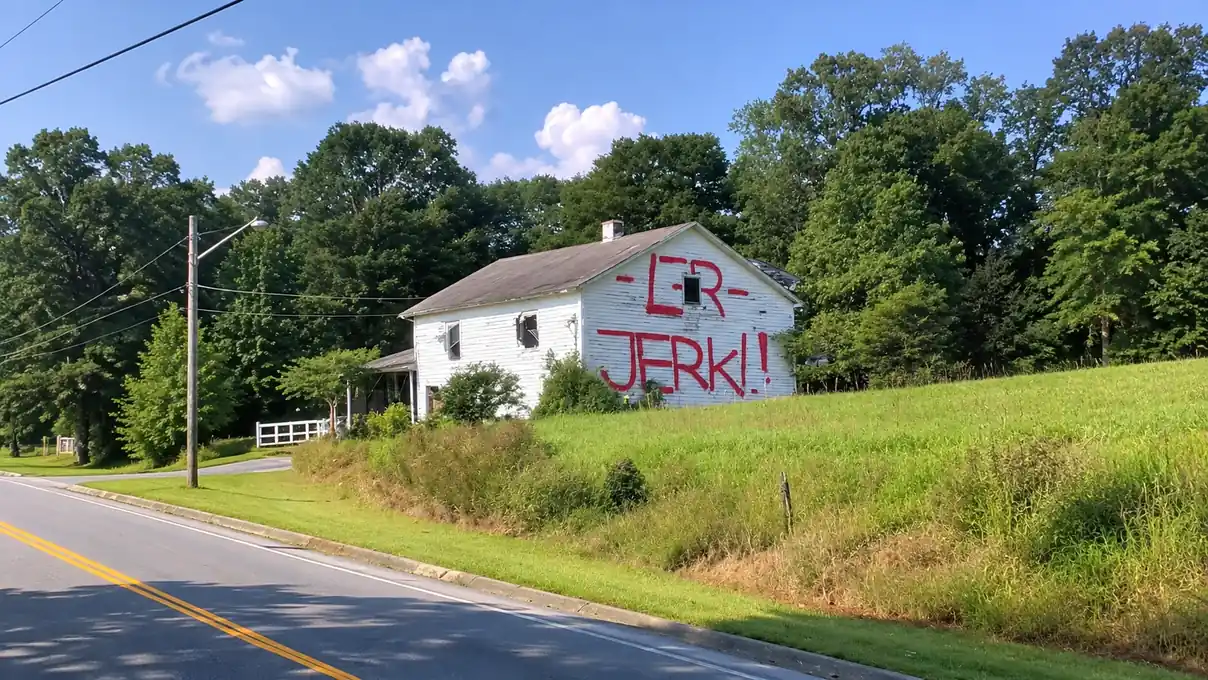
Bright red paint had been smeared across the farmhouse wall. The message was impossible to miss:
LIAR. THIEF.
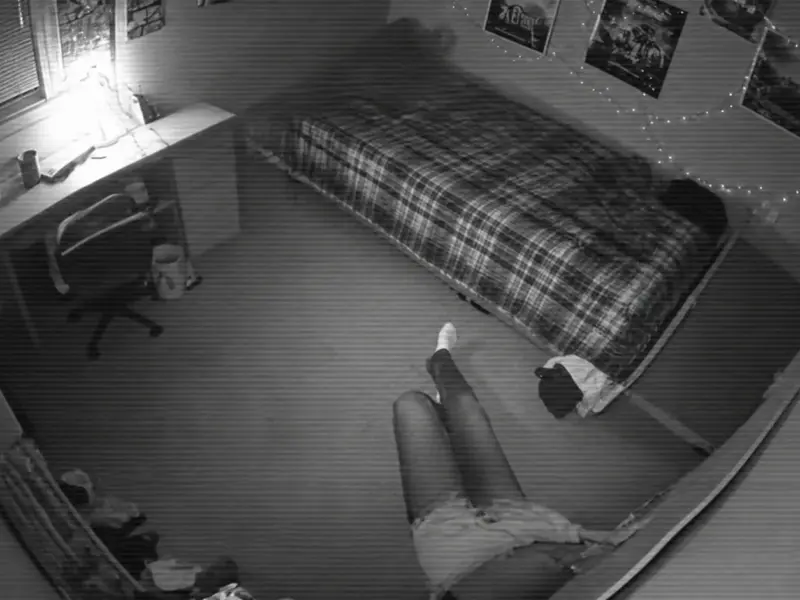
My stomach tightened. I had a strong suspicion about who was responsible, so I checked the old security system. To my surprise, the footage was still available.
There, standing outside my home in the darkness, was a young man named Carlos Walter. He looked furious as he painted the words across the wall, each movement filled with anger that seemed to have been building for years.
I didn’t wait. I got into my car and drove straight to the Walters’ property.
The tension was obvious as soon as I arrived. Walter, the father, stood at the entrance with a guarded expression. Carlos was behind him, looking just as angry as he had in the security footage.
“You ruined our family,” Carlos shouted.
His words hit me harder than I expected.
I had grown up hearing whispers about the feud, but nobody had ever explained what had actually happened. My father always refused to discuss it, ending every conversation before it could go any further.
Now, there was no avoiding the truth.
That evening, I returned to the farmhouse and finally opened the envelope.
What I discovered completely changed how I understood my family. The letter didn’t simply explain the feud. It revealed that the legacy I had inherited was built on a betrayal.
My father confessed that he and Walter had once been close friends. They had dreamed of building the farm together, sharing ownership, and creating a future side by side. Their partnership had originally been based on trust and shared ambition.
But everything changed when my mother became pregnant with me.
Driven by fear, uncertainty, or perhaps his own ambition, my father made a decision he kept secret from everyone. He took the investment money Walter had contributed and registered the entire farm in his own name.
The life our family enjoyed had been built on someone else’s loss.
“I stole what wasn’t fully mine,” he wrote. “And I carried that silence for the rest of my life.”
I read those words repeatedly. Each time, they became harder to accept.
The father I had always considered responsible, dependable, and honest had built our family’s inheritance on a lie.
Suddenly, the hostility between the two families made sense. It wasn’t some meaningless disagreement passed down through generations. There was a real betrayal behind it.
Walter hadn’t simply become bitter. He had lost the future he had worked to build.
And Carlos hadn’t grown up angry without a reason. He had inherited the pain of something that happened long before he could understand it.
The following morning, I crossed the field with my father’s letter in my pocket.
The land between our two homes looked exactly as it always had. The grass, the wind, and the familiar landscape were unchanged. Yet everything felt different now, as though knowing the truth had changed the meaning of the ground beneath my feet.
When Walter opened the door, I went straight to the point.
“This should have been yours,” I said quietly. “My father took it from you.”
Then I placed the farmhouse keys in his hand.
For several moments, nobody spoke. Walter stared at the keys as if he couldn’t believe what was happening. His face carried years of anger, disbelief, and sadness.
Carlos stood behind him, watching silently.
“I’m returning it,” I added. “All of it.”
Walter shook his head slightly, struggling to process what I had just told him. But I wasn’t there to argue or defend my father’s actions. I wanted to make things right.
The silence between us was filled with everything our families had left unsaid for decades.
Finally, Carlos stepped forward.
“I thought you were just like him,” he said quietly. “I was wrong.”
It wasn’t forgiveness, and I didn’t expect it to be. But for the first time, there was an acknowledgment of the truth. That alone meant more than I had imagined.
In the days that followed, nothing changed overnight. Decades of resentment couldn’t disappear after one conversation. But something important had finally happened: the secret was no longer hidden.
We began speaking to one another, cautiously at first, then with greater honesty.
Walter didn’t immediately accept the farm back, but he no longer closed the door on the possibility. Carlos, who had once approached me with nothing but anger, began asking questions instead of making accusations.
And I finally stopped feeling trapped in a family story I had never understood.
I came to realize that the farm had never been just a piece of land. It was the result of choices, including decisions my father had celebrated and others he had regretted but never found the courage to correct.
In the end, I learned something that changed how I viewed inheritance.
It isn’t only about what we receive from the people who came before us. It is also about deciding which parts of their legacy we are willing to carry forward and which mistakes we refuse to repeat.
That hidden letter did more than reveal an old secret. It brought an entire cycle of resentment into the open.
It couldn’t erase the past or undo the damage, but it gave both families something they had been missing for decades: a chance to stop living under the weight of a lie.