Standing up is something most cats do without anyone giving it a second thought. But for Abby, that simple movement represented weeks of treatment, patience, and determination.
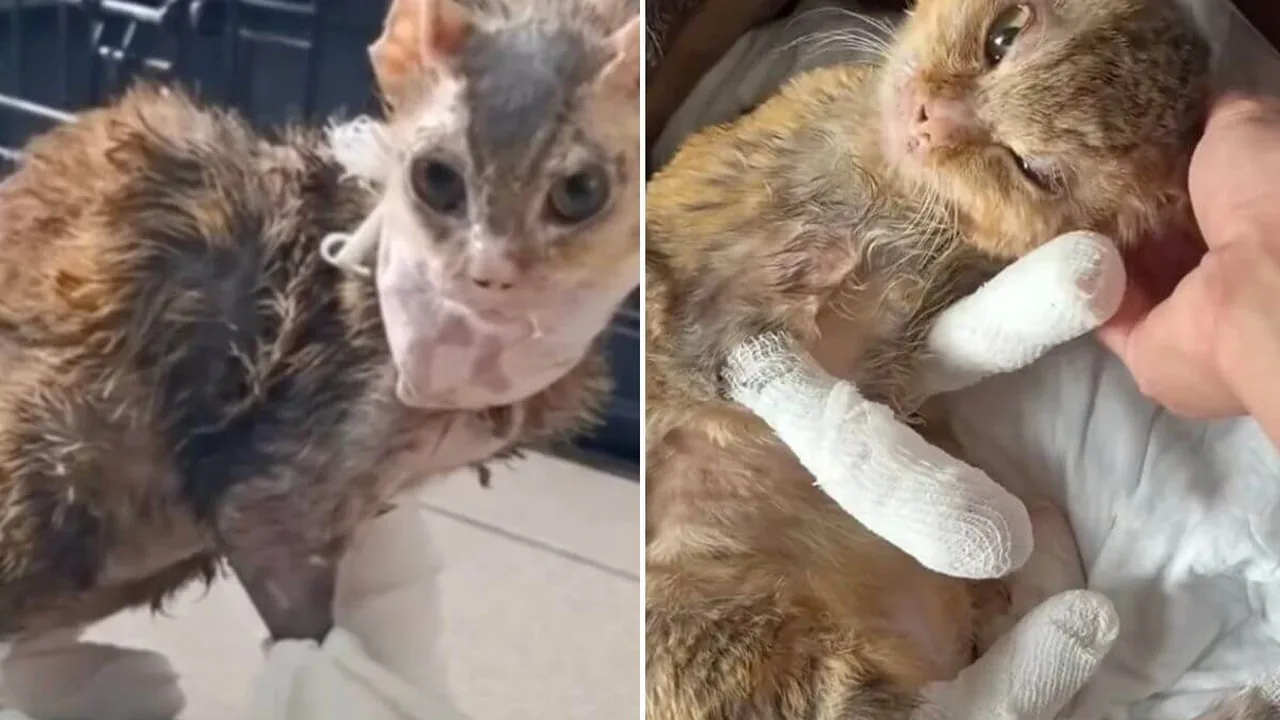
The three-year-old stray had been found severely dehydrated, unable to eat independently, and barely able to move. After spending days outdoors with serious burns, she needed help with almost every basic part of daily life.
Her rescuers decided to seek further medical care in Moscow, hoping another veterinary team could give her a chance.
Slowly, signs of improvement began to appear. She gained weight, learned to lie on her stomach again, and eventually managed to stand on her own.
But just when her recovery seemed to be moving forward, another medical emergency threatened her progress.
Her Rescuers Sought Another Chance in Moscow
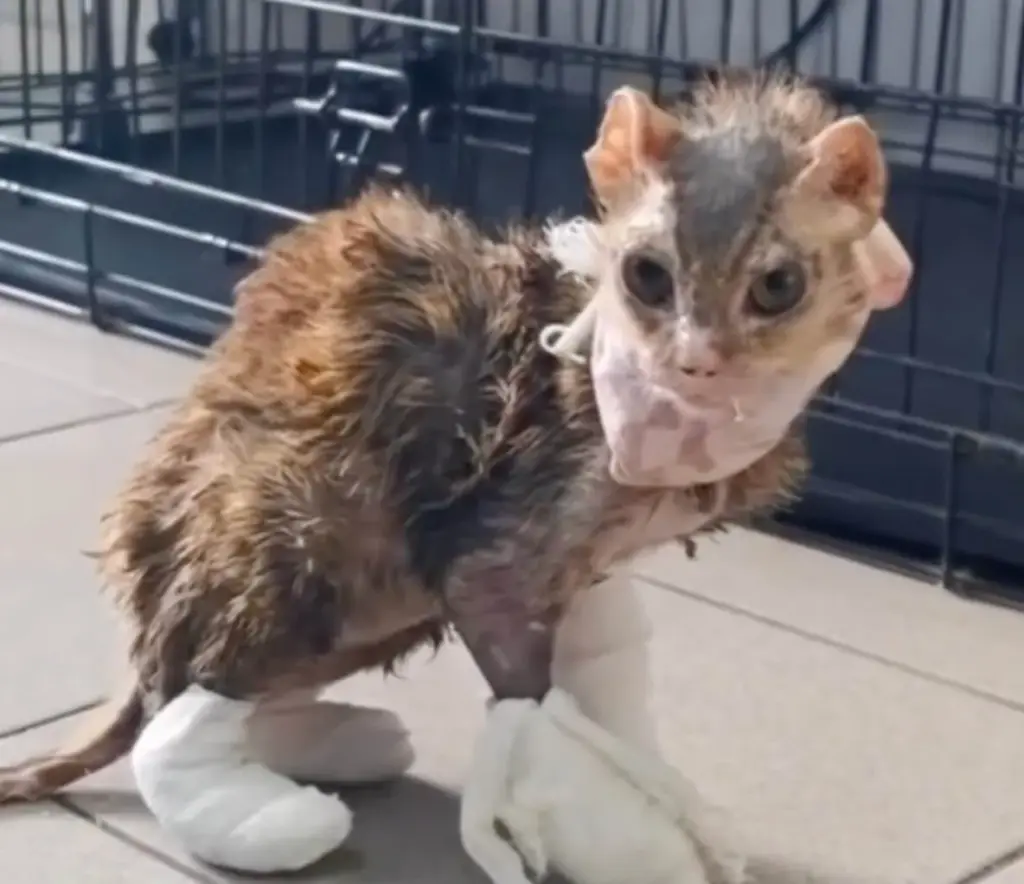
Abby was discovered in Ryazan on May 18 after spending several days outside with severe burns.
Her rescuers were determined to find the best possible treatment, so they arranged for her to receive additional veterinary care in Moscow.
By the sixth day of her rescue, Abby had reached the city and was admitted to intensive care.
The video account describes the difficult waiting period:
“The answer did not come quickly.”
Abby was in a fragile condition. She couldn’t eat on her own, and even the smallest movements were difficult.
Her veterinary team began assessing her needs and planning the treatment that could give her the best chance of recovery.
Daily Care Came Before Her First Steps
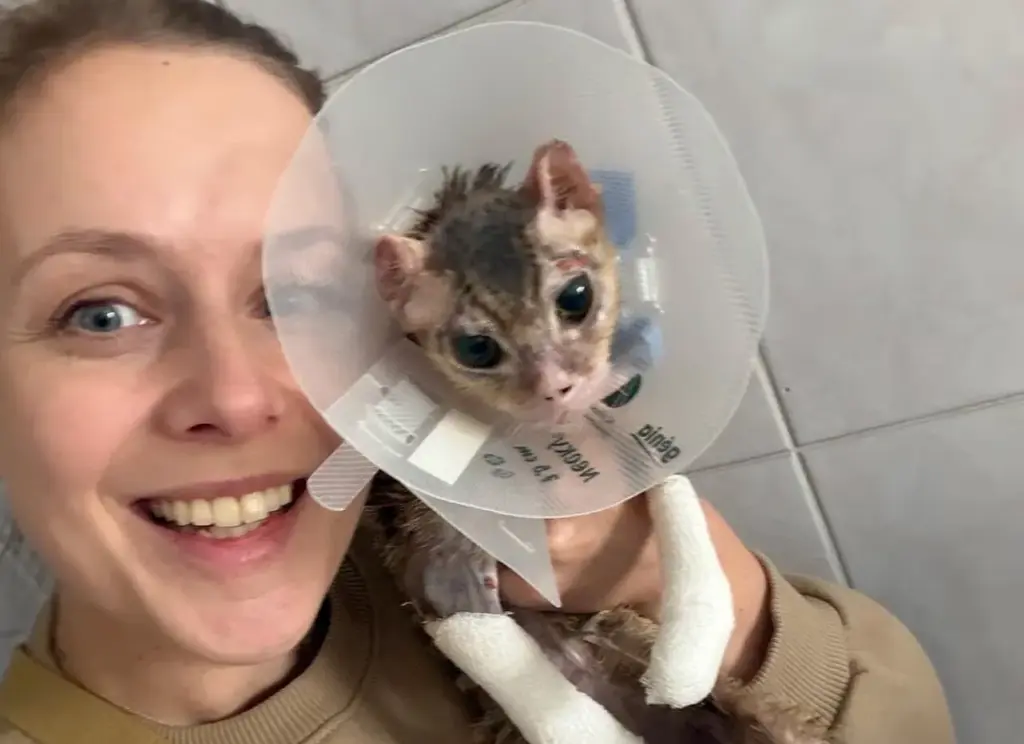
At the hospital, Abby received wound treatment, pain relief, fluids, and nutrition through a feeding tube.
Veterinarians also removed damaged tissue and continued caring for her burns, which required repeated attention.
Burn injuries can be extremely painful and are particularly vulnerable to infection, making consistent veterinary treatment essential.
For Abby, recovery was not going to happen overnight. Her caregivers had to focus on stabilizing her condition and helping her body heal.
Then came the first encouraging changes.
She gained approximately 280 grams and gradually learned to lie on her stomach again.
Soon afterward, she managed to stand.
It was a remarkable moment for a cat who had arrived barely able to move. Although her treatment was far from over, she had regained the ability to support herself on her feet.
A Feeding Tube Supported Her While She Could Not Eat Enough
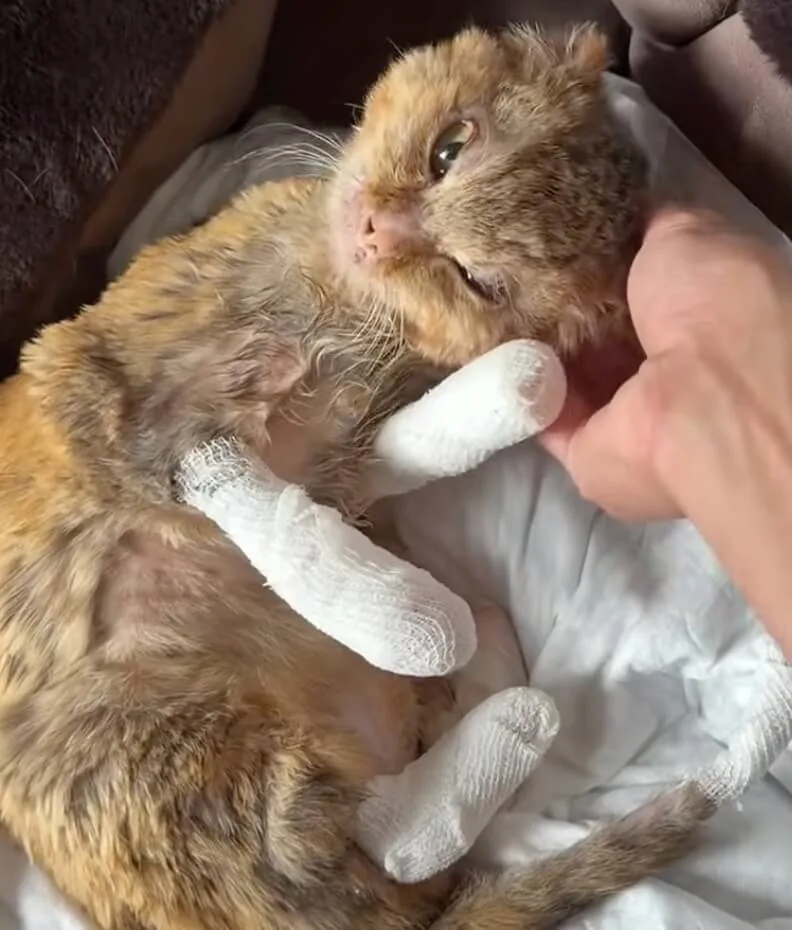
Abby’s injuries were only part of the challenge. She also needed proper nutrition while she was unable to eat independently.
A feeding tube helped provide the nourishment her body required during those difficult weeks.
International Cat Care explains that feeding tubes may be necessary when illness or injury prevents cats from consuming enough food on their own.
For Abby, this support allowed her caregivers to focus on her recovery without relying entirely on her ability to eat independently.
Her weight was improving, and she had taken her first steps toward standing again.
But she still needed close medical supervision.
Then, on the 27th day, her condition suddenly deteriorated.
Another Emergency Sent Abby Back Into Intensive Care
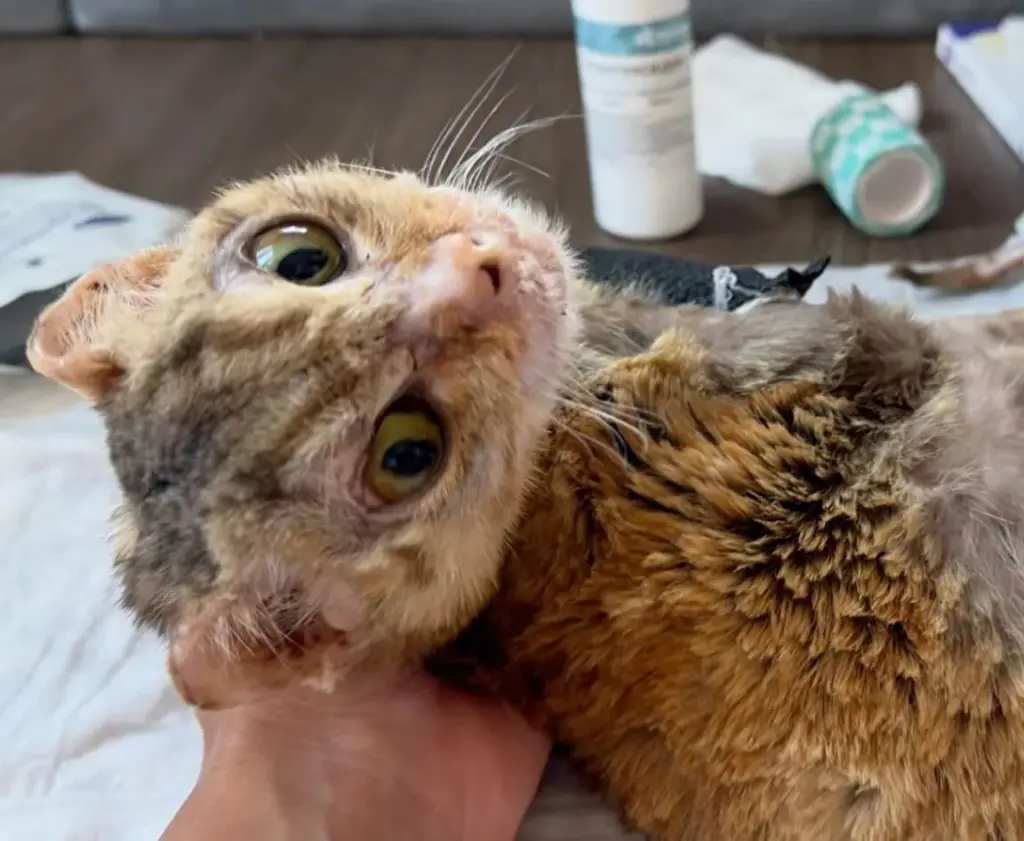
Abby stopped eating and could no longer maintain her body temperature.
Blood tests reportedly raised concerns about a possible severe infection. Her condition required another emergency response, and she was rushed back into intensive care.
The veterinary team provided additional treatment, including a blood transfusion, albumin, new antibiotics, and emergency support.
After weeks of gradual progress, Abby was facing another serious challenge.
Fortunately, she survived the setback.
By day 32, her condition had stabilized enough for her to leave the hospital and return to her caregiver’s home.
She still needed ongoing treatment, but she could continue recovering in a familiar and comfortable environment.
At Home, Familiar Cat Habits Began Returning
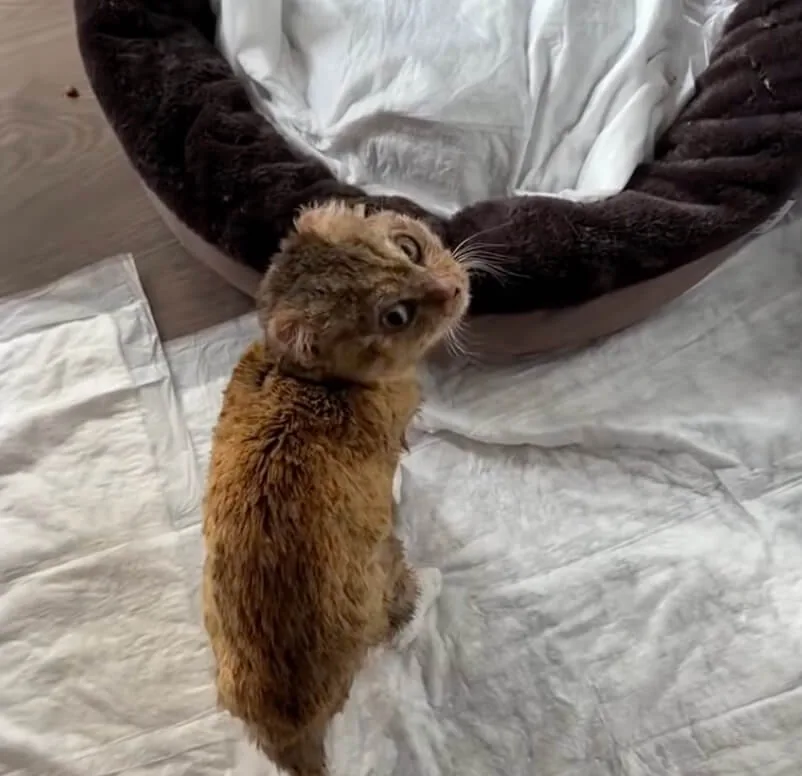
Once Abby was back home, another encouraging change appeared.
She began grooming herself again.
It was an ordinary habit, but after spending weeks depending on others for almost everything, it was a meaningful sign of progress.
VCA Animal Hospitals notes that cats who are unwell often stop grooming themselves properly.
Abby’s return to this familiar behavior was another welcome development, although her wounds still needed attention.
Her recovery also came with challenges. At times, she resisted treatment, making her caregivers’ work more demanding.
But gradually, her independence continued to improve.
Then came another important milestone.
Abby began eating on her own.
After relying on feeding support, she could finally enjoy her meals without needing the same assistance.
She also started spending time watching the outside world through a window.
Her days were slowly becoming more familiar again. She could eat, groom herself, and quietly observe everything happening around her.
By Day 90, Abby Had Come Far and Still Needed Help
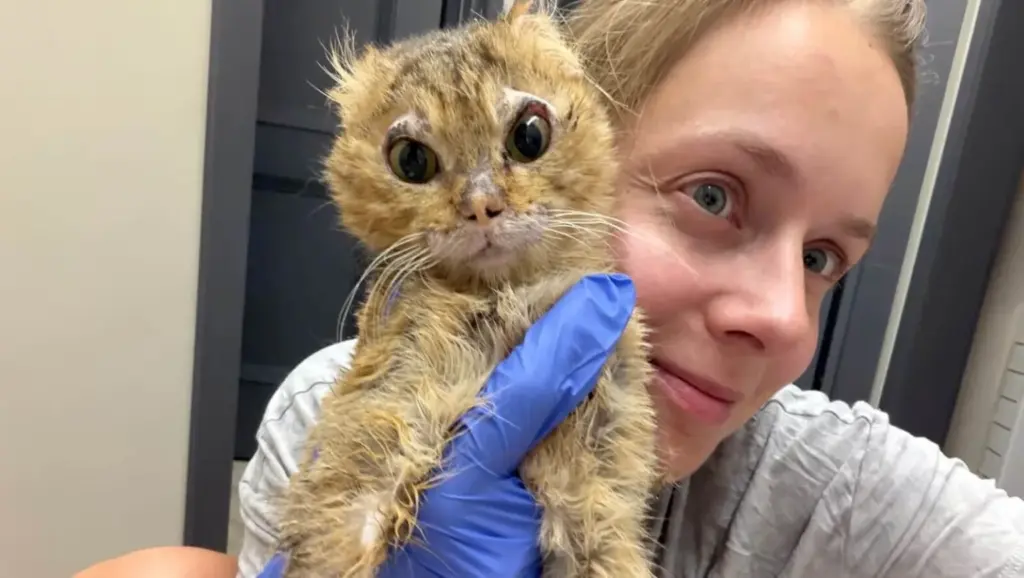
The rescue video follows Abby’s progress over a period of 90 days.
During that time, she went from being unable to move properly to standing, eating independently, and grooming herself again.
Her journey was not a straight path. There were difficult medical treatments, encouraging improvements, and a sudden emergency that required another stay in intensive care.
According to the final update, her wounds still required attention, and her recovery remained ongoing.
At that stage, Abby was staying with her caregiver and had not yet been officially adopted.
She finally had a safe place to continue healing, surrounded by people who were committed to caring for her.
The moment she first stood on her own was only one part of her journey. Her growing independence, appetite, and familiar daily habits showed just how much she had overcome.
Abby still needed help, but she was gradually getting her life back.
Her story is a reminder that recovery sometimes happens through the smallest victories. A few steps, a meal eaten independently, or the return of an ordinary habit can mean everything after a difficult beginning.