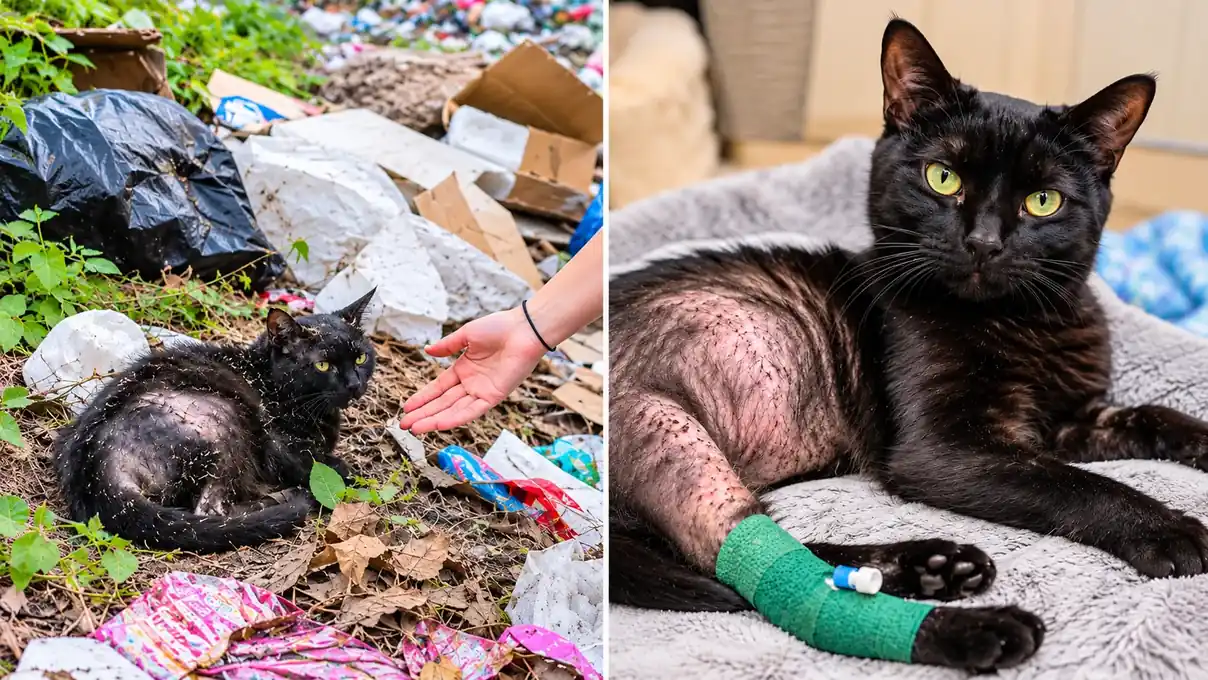
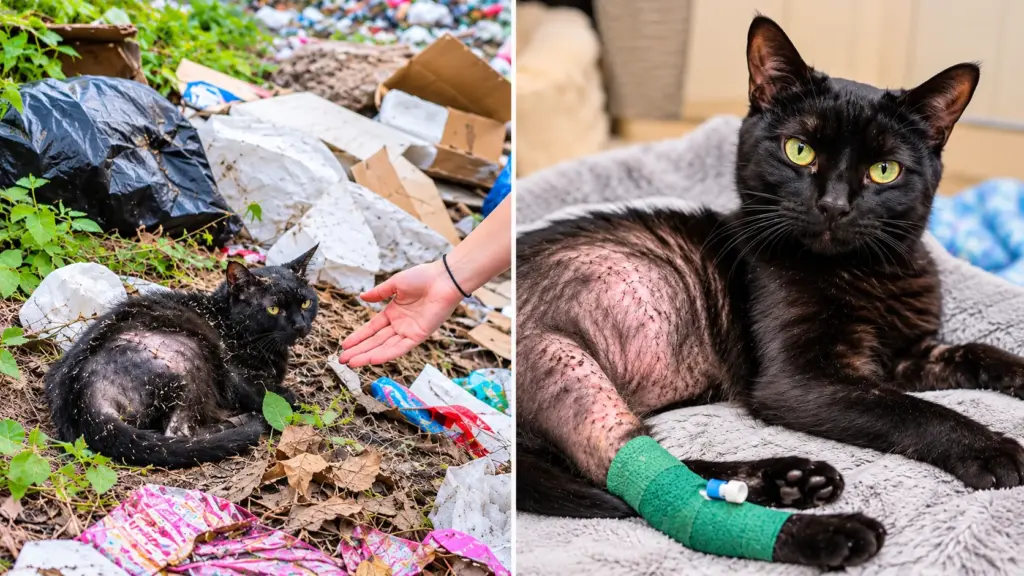
A tiny cat found beside a mountain of garbage seemed unlikely to survive. She was painfully thin, much of her fur was missing, and open wounds covered her skin. Rescuers later named her Poppy.
A local feeder named Elena discovered her while leaving food for stray cats near the dumping site. At first, she mistook the motionless shape between cardboard boxes for discarded cloth. Then she noticed movement and stepped closer. Poppy did not run or hide. She could barely lift her head.
Elena contacted rescuers immediately. Volunteers arrived with blankets and a carrier, gently lifted the fragile cat, and rushed her to a veterinary clinic. Examinations revealed severe neglect, infections, damaged skin, and wounds containing maggots. Poppy needed urgent treatment, wound cleaning, medication, fluids, and close monitoring.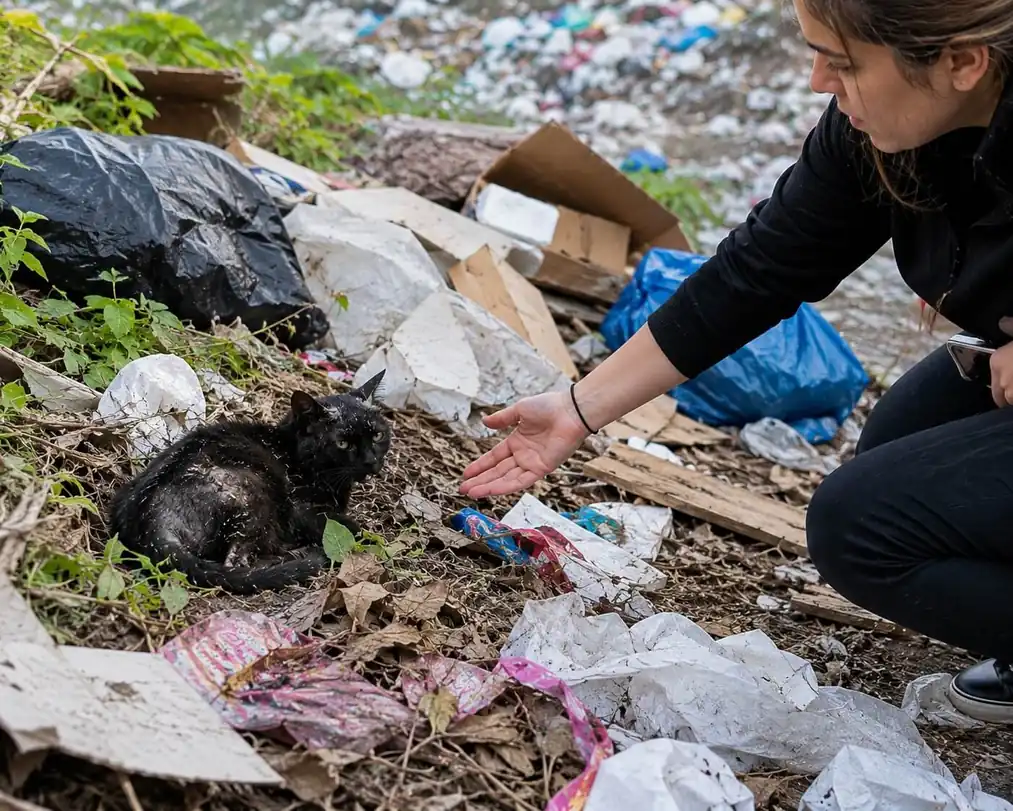
Because her condition was so serious, the team transferred her to a larger animal hospital. Veterinarians also had to address her malnutrition carefully. Despite her weakness, Poppy showed interest in food, giving everyone hope.
Recovery required patience. Her wounds needed regular care, and progress came gradually rather than through an overnight miracle. Her appetite improved, her eyes grew brighter, and she became more alert. Nearly three weeks after her rescue, a technician heard a faint sound: Poppy was purring. To those who had watched her struggle, it was a precious sign that she was beginning to feel safe.
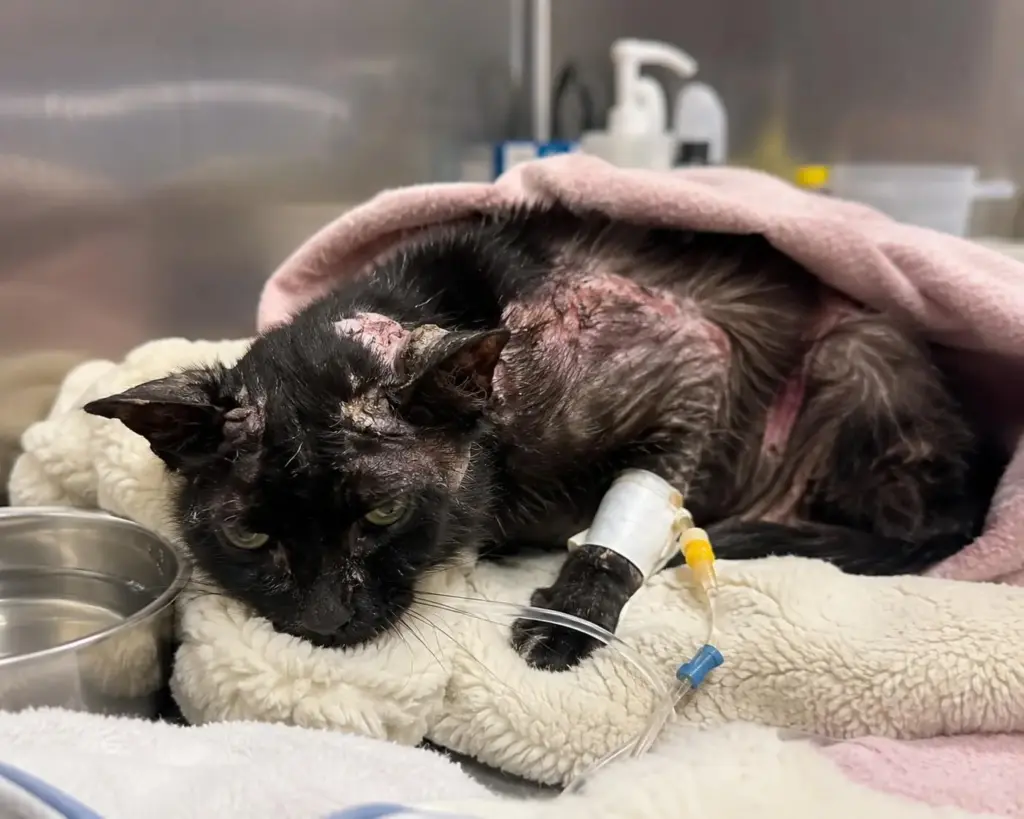
As her health returned, Poppy’s gentle personality emerged. She loved warm blankets, sunny spots, and attention from caregivers. Eventually, she left the hospital for a foster home. She explored cautiously, discovered a comfortable couch, and soon fell asleep.
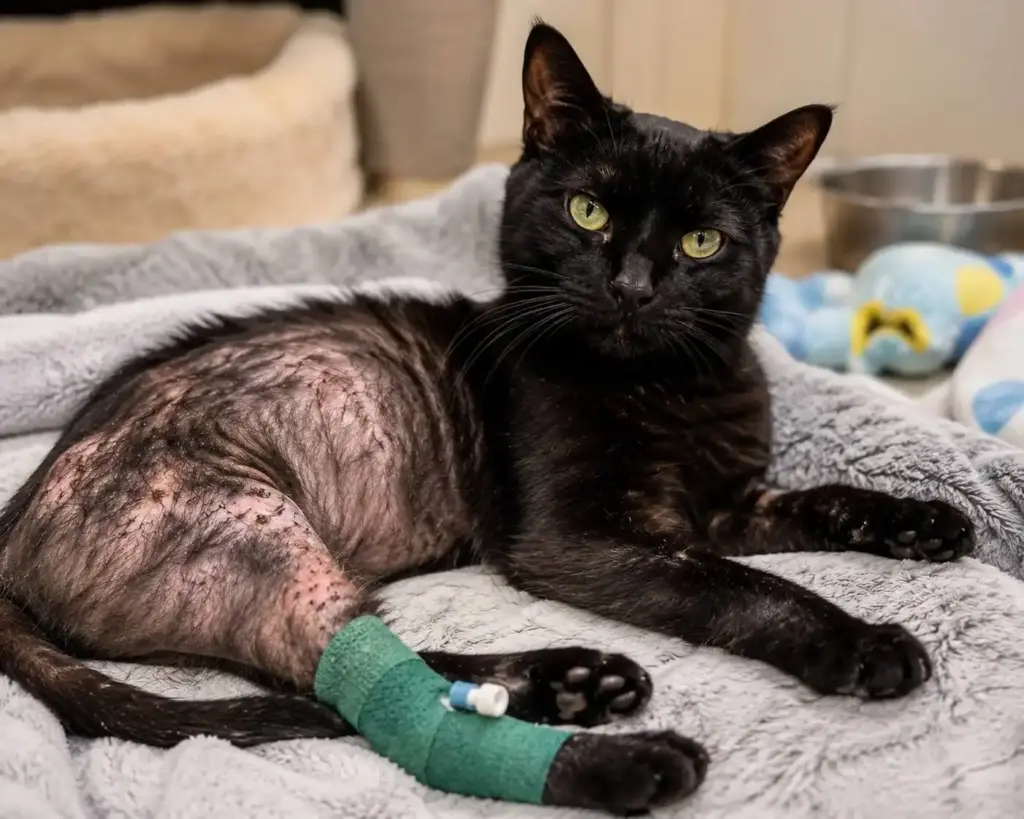
As news of her recovery spread, adoption applications arrived. The rescue team carefully selected a family ready to offer patience, stability, and affection. Poppy finally found a permanent home.
Once abandoned beside rubbish, she now enjoys soft beds, sunny windows, and people who cherish her.
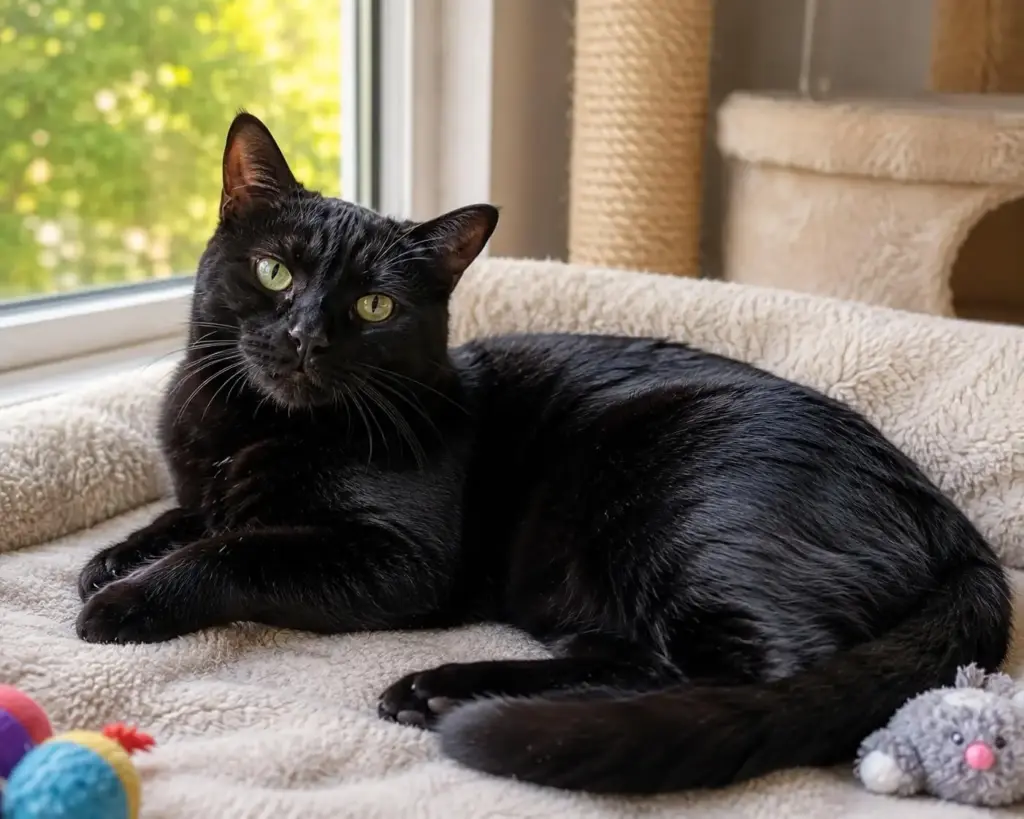
Every small improvement mattered during those uncertain first days. Her journey shows how one person’s decision to stop and help can change an animal’s future. Poppy was never disposable; she only needed someone to notice her and offer a second chance.