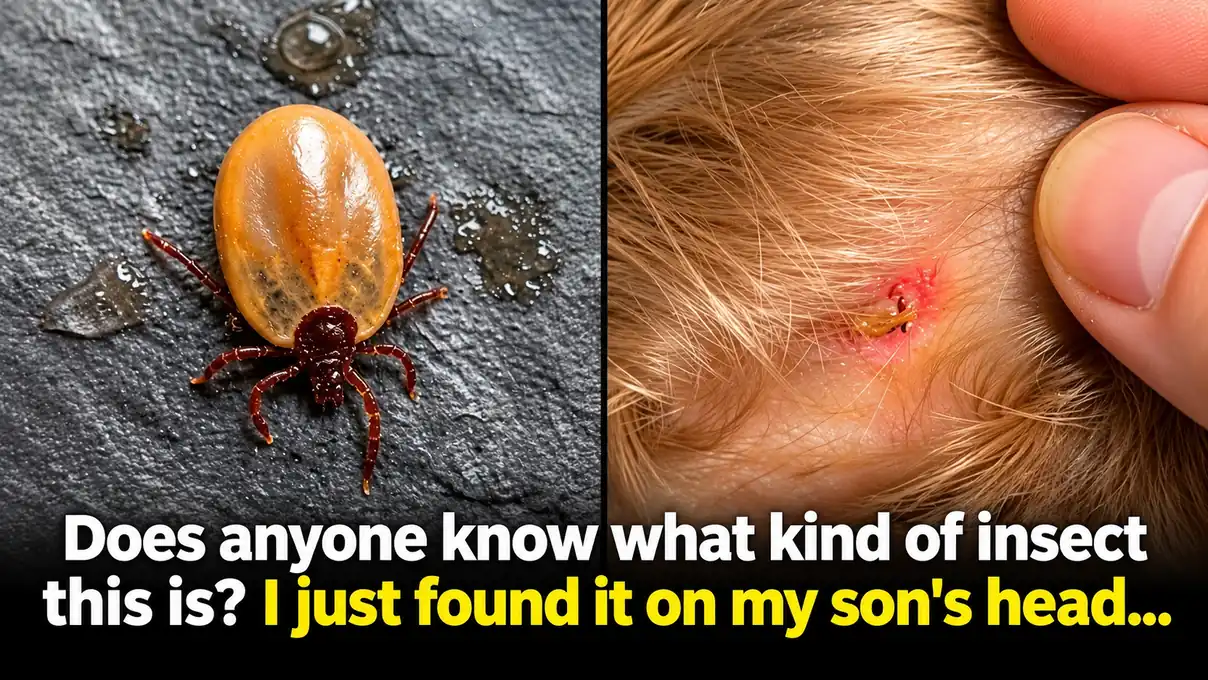
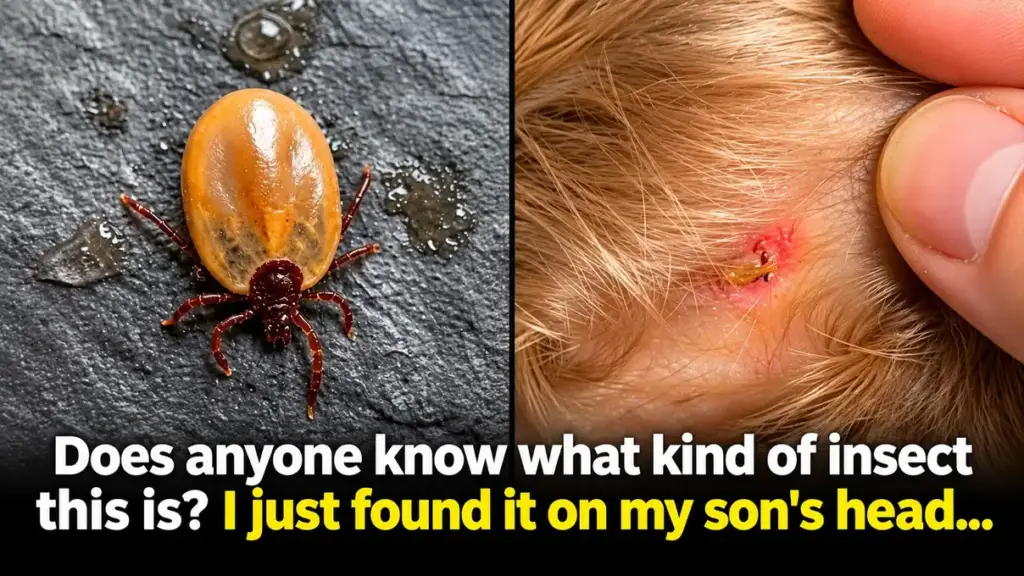
Parents often examine their children for scratches, bruises, and insect bites after they have spent time playing outdoors. However, sometimes they discover something that requires extra attention: a small tick attached to the skin. These parasites are commonly found in gardens, grassy fields, forests, and even public parks.
What Are Ticks?
Ticks are tiny blood-feeding parasites that belong to the arachnid family, making them more closely related to spiders than insects. They survive by attaching themselves to humans or animals and feeding on their blood.
Because of their extremely small size, particularly during their younger stages, ticks can remain hidden on the body for hours without being noticed.
They commonly attach themselves to warm, concealed areas, including the scalp, behind the ears, underneath the arms, around the waist, and behind the knees. Children are especially exposed because they frequently play in places where these parasites may live.
Most tick bites cause mild irritation, itching, or temporary redness. However, certain species can transmit bacteria, viruses, and other microorganisms that may cause infections.
Why Can Tick Bites Become Dangerous?
The biggest concern is that some ticks carry disease-causing organisms that can enter the body during feeding. Depending on the region, infected ticks may spread illnesses such as Lyme disease, Rocky Mountain spotted fever, and ehrlichiosis.
Not every tick bite leads to an infection. The risk depends on the tick species, whether it carries a disease, and how long it remains attached.
After removing a tick, parents should carefully observe their child’s condition. Symptoms that deserve attention include spreading redness around the bite, fever, headaches, unusual tiredness, muscle pain, and swollen lymph nodes. If these signs appear, medical advice should be obtained promptly.
How to Remove a Tick Properly
Using fine-tipped tweezers is generally the recommended removal method. Carefully grip the tick as close to the skin as possible and pull upward with steady, even pressure. Do not twist, squeeze, or crush its body.
After removal, wash the affected area with soap and water and clean your hands thoroughly.
Avoid attempting to remove ticks using petroleum jelly, nail polish, alcohol, or heat. These traditional approaches are not recommended.
Parents should note the date of the bite and monitor the affected area during the following weeks. Taking a photograph can also help document any changes that may require medical evaluation.