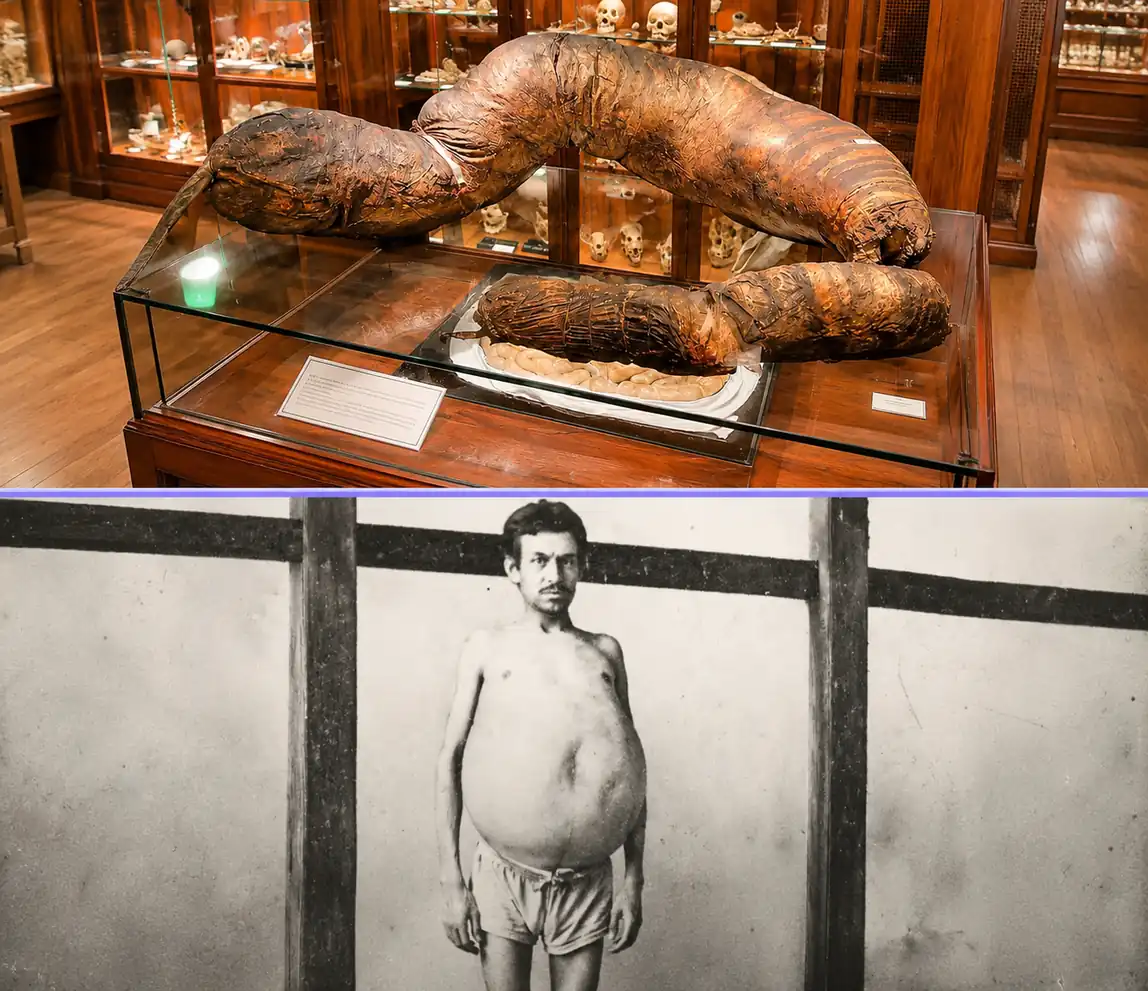
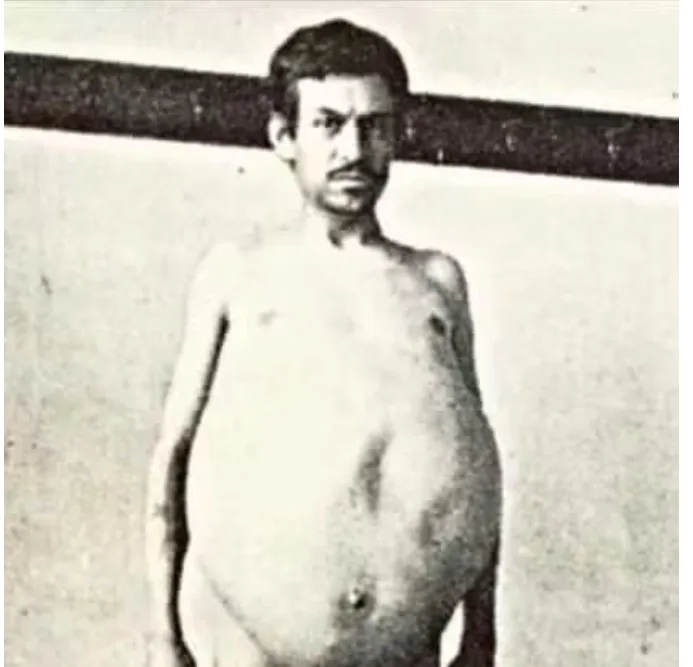
Joseph Williams became known as the “Balloon Man” because of his unusually swollen abdomen, a condition that made his life increasingly difficult from an early age. His heartbreaking story began when he was just two years old, after his mother noticed that his stomach was growing larger and he was struggling to pass stool normally.
As Joseph grew older, his condition became progressively worse. By the age of 16, he could sometimes spend several weeks without having a bowel movement. During the final period of his life, he reportedly went almost an entire month without being able to empty his bowels.
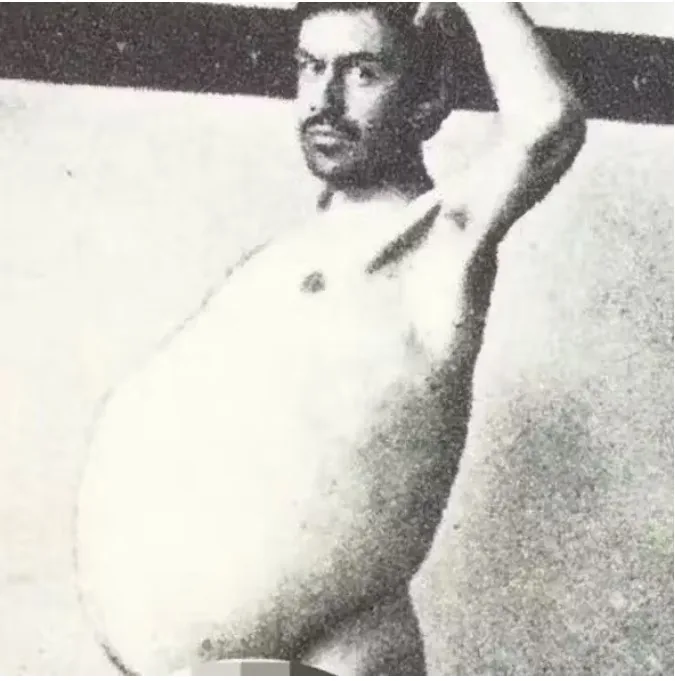
Despite these challenges, Joseph tried to maintain an ordinary life. He worked different jobs, including positions as a messenger and factory employee. However, his enormous abdomen eventually attracted unwanted attention. He became part of a sideshow attraction, where curious visitors paid money to see his unusual appearance.
What many spectators considered a strange physical attraction was actually the result of a serious medical condition. Eventually, Joseph could no longer tolerate the discomfort and sought medical assistance. Doctors were astonished by his appearance and documented his condition through photographs.
Unfortunately, medical science in 1892 had not advanced enough to provide him with an effective surgical solution. After returning home without receiving the treatment he desperately needed, Joseph died several months later at just 29 years old.
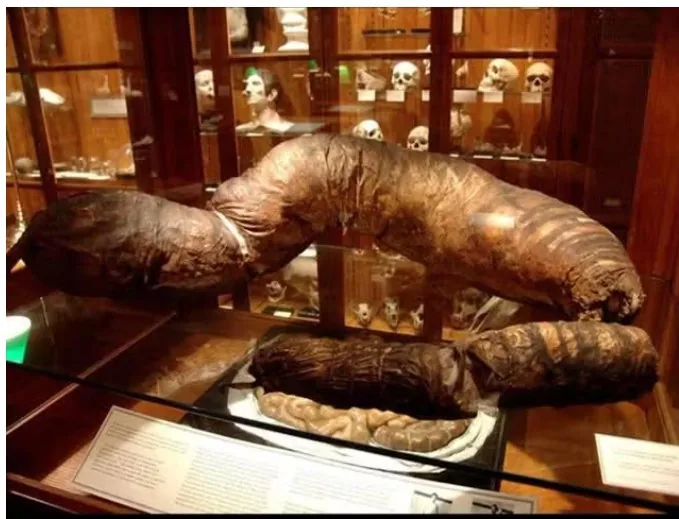
The most shocking details emerged during his autopsy. Doctors discovered that his colon measured approximately two and a half meters in length and contained nearly 18 kilograms of accumulated fecal matter. The enormous buildup had become so extensive that it pushed his internal organs upward toward his chest.
Today, medical experts believe Joseph suffered from Hirschsprung’s disease, a rare congenital condition in which nerve cells responsible for controlling intestinal movements are missing from part of the bowel. Without these nerves, the affected section cannot function properly, causing waste to accumulate.
Modern medicine can usually identify this condition shortly after birth, and surgery allows most affected children to lead healthy lives.
Remarkably, Joseph’s preserved colon remains at the Mütter Museum in Philadelphia, where his extraordinary medical case continues to educate doctors and medical researchers about the importance of early diagnosis and treatment.