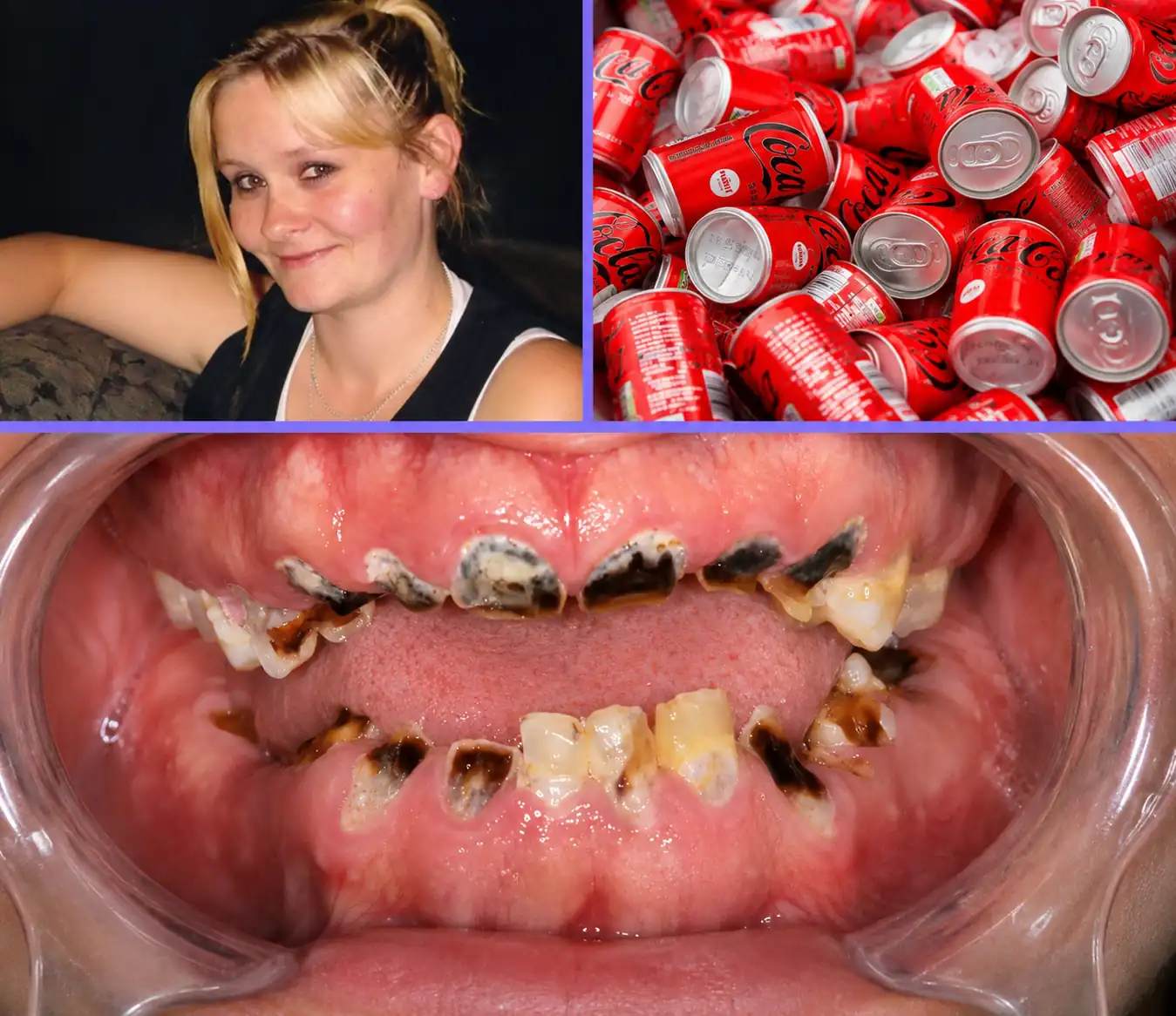
Natasha Harris, a mother of eight from New Zealand, developed an extraordinarily dangerous habit that eventually became a major factor in her death. She reportedly consumed between six and ten liters of Coca-Cola every single day, an amount that could expose her body to more than a kilogram of sugar and almost 1,000 milligrams of caffeine within just 24 hours.
Her family purchased four large 2.5-liter bottles of the popular soft drink daily. Natasha’s routine began immediately after waking up, and her dependence was so intense that she even kept a bottle beside her bed to drink throughout the night. Coca-Cola had become such a constant part of her life that going without it was extremely difficult.

According to her partner, when Natasha ran out of the drink, she experienced noticeable withdrawal symptoms, including shaking, irritability, and tremors. Her family gradually witnessed her health declining, but the seriousness of her condition became increasingly apparent as time passed.
Natasha frequently suffered from vomiting, struggled with low energy, and barely ate regular meals. One of the most visible consequences of her excessive consumption was severe dental deterioration. Her teeth became badly damaged by decay, eventually resulting in tooth loss.
Tragically, on February 25, 2010, Natasha died at just 30 years old. The cause of death was recorded as cardiac arrhythmia, a potentially life-threatening condition involving an irregular heartbeat.
Three years later, in 2013, coroner David Crerar examined the circumstances surrounding her death. After reviewing the available evidence, he concluded that Natasha’s extraordinary Coca-Cola consumption had played a substantial role in creating metabolic disturbances that contributed to the fatal heart rhythm problem.
The coroner also believed that her death was unlikely to have occurred in the same circumstances, or at that particular time, if she had not consumed such enormous quantities of the beverage.
Coca-Cola disputed aspects of the conclusions, emphasizing that other health conditions and contributing factors also needed consideration.
Nevertheless, Natasha’s heartbreaking story attracted widespread attention and raised serious concerns about the consequences of excessive sugary and caffeinated drink consumption.
Her experience became a powerful reminder that even an everyday beverage can become dangerous when consumed in extreme quantities. What may begin as an ordinary habit can gradually develop into something harmful, especially when it replaces proper nutrition and healthy daily routines.
Natasha’s death remains a tragic warning about the importance of moderation and recognizing when an unhealthy habit is putting someone’s life at risk.