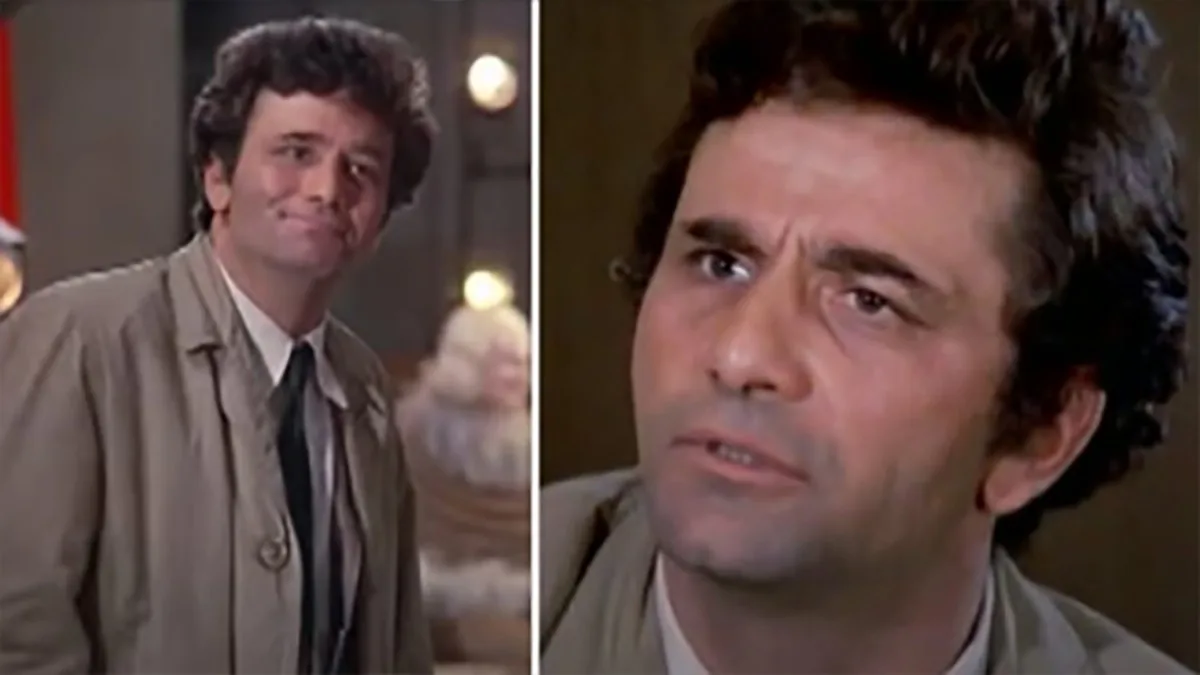
For millions of television viewers, Peter Falk will always be remembered as the brilliant detective Columbo, the seemingly absent-minded investigator whose sharp instincts and unforgettable personality made him one of television’s most beloved characters.
With his wrinkled raincoat, cigar and familiar habit of returning with “just one more thing,” Columbo became a legendary figure in television history. His unusual investigative methods kept audiences guessing, and even the cleverest criminals rarely managed to escape his attention.
The series became particularly popular during the 1970s and continued returning to television screens through occasional productions until 2003.
Unlike the typical detectives portrayed on television, Columbo was not wealthy, glamorous or intimidating. He appeared to be an ordinary, slightly disorganized police officer. Yet beneath that humble exterior was an exceptionally intelligent investigator who regularly defeated powerful and influential criminals.
The character became so popular that Peter Falk received four Emmy Awards for his unforgettable performance.
However, behind the success of one of television’s greatest detectives was a much more complicated personal life. According to authors Richard Lertzman and William Birnes, who explored the actor’s life in their biography Beyond Columbo, Falk struggled with several personal issues.
Their account described an actor who enjoyed drinking, smoking and socializing, while also making claims about his behavior as a husband and father. Despite his enormous professional achievements, his private relationships were not always easy.
His Early Life and Marriage
Peter Falk’s life was unusual from the very beginning. When he was only three years old, doctors discovered that he had retinoblastoma, a rare form of eye cancer. The condition required surgeons to remove his right eye, and he wore a glass prosthetic eye for most of his life.
Interestingly, the artificial eye contributed to the distinctive squint that later became one of his most recognizable physical features.
Despite this childhood medical challenge, Falk remained active and enjoyed playing sports. Baseball and basketball were among his favorite activities.
During a 1997 interview with Cigar Aficionado, he shared a funny memory from his high school years.
He recalled an incident during a baseball game when an umpire ruled him out at third base, even though Falk believed he had safely reached the base. Frustrated by the decision, he removed his artificial eye, handed it to the umpire and jokingly told him to try seeing the situation through it.
The unexpected gesture made everyone laugh.

As he grew older, Falk began pursuing his interest in acting, eventually earning his breakthrough role in the 1960 crime film Murder, Inc. His portrayal of notorious killer Abe Reles earned him his first Academy Award nomination.
The following year, he appeared alongside Bette Davis in Pocketful of Miracles, receiving another Oscar nomination.
His acting career continued to grow, and he eventually became one of the most recognizable television performers of his generation.
His earnings reflected his enormous popularity. During the height of Columbo, Falk reportedly received approximately $250,000 for each episode, making him one of television’s highest-paid actors at the time.
Unfortunately, his success on screen did not necessarily translate into happiness at home.
In 1960, Falk married his college sweetheart, Alyce Mayo. The two had met while studying at Syracuse University and had been together for approximately 12 years before exchanging wedding vows on April 17, 1960.
Alyce reportedly endured difficulties in their marriage, including allegations of her husband’s infidelity. After 16 years together, however, their relationship eventually came to an end.
The couple adopted two daughters, Catherine and Jackie.
Jackie occasionally appeared alongside her famous father at public events but eventually chose to live a more private life.
Catherine later became a private investigator, although her relationship with Peter became increasingly difficult over the years.
One particularly painful disagreement involved a lawsuit she filed after her father reportedly stopped contributing toward her college expenses.
During a 2011 interview with Inside Edition, Catherine explained that she felt people viewed her unfairly because of the dispute.
She believed many assumed she was simply interested in obtaining money from her famous father.
His Relationship With His Daughter Became Increasingly Complicated
Things reportedly became even more difficult after Peter married actress Shera Danese.
Catherine claimed that her father’s new marriage affected her ability to maintain a close relationship with him. She alleged that visiting his home became difficult and that she felt increasingly separated from her father.
The situation created further tension between Catherine and Shera.
Their disagreement would eventually become part of the public discussion surrounding Peter Falk’s final years and the circumstances surrounding his death.
Peter Falk’s Heartbreaking Final Years
Sadly, the beloved actor’s health gradually deteriorated as he grew older.
Peter Falk passed away in June 2011 at his Beverly Hills home, aged 83. He had been diagnosed with Alzheimer’s disease, and his death was primarily attributed to pneumonia, with complications associated with Alzheimer’s disease.
According to his physician, Dr. Stephen Read, Falk’s cognitive condition became noticeably worse following hip surgery in 2008.
His dementia progressed to such an extent that he reportedly no longer remembered portraying the character that had made him internationally famous.
For fans who had spent decades watching him bring Columbo to life, this was an especially heartbreaking detail.
The man who had once memorized complicated scripts, uncovered fictional murder mysteries and entertained millions had gradually lost memories of one of the greatest achievements of his career.

His health struggles were particularly difficult considering that he had already overcome a serious medical condition during childhood.
After losing his right eye to retinoblastoma at just three years old, he had to wear a prosthetic eye throughout his life. According to accounts of his early career, one talent agent even discouraged him from expecting much success in acting because of his appearance.
Falk ultimately proved that prediction wrong.
He built an extraordinary career, earned multiple awards and became an international television icon.
When news of his passing spread, tributes arrived from across the entertainment industry.
Legendary filmmaker Steven Spielberg, who had worked with Falk early in his career, expressed his admiration by saying that he had learned more about acting from Peter than from anyone else during that stage of his professional life.
His daughters also remembered him for his intelligence, humor and wisdom.
However, Catherine’s memories of her father’s final years were filled with sadness.
She told Inside Edition that she had not been given the opportunity to say goodbye to him. She alleged that she had been kept away from her father during the last years of his life and only learned about his death several hours after he passed away.
Catherine also raised accusations concerning her father’s new wife and the family’s circumstances during his final years.
Shera Danese responded through her attorney, Troy Martin, who stated that Peter’s final resting place should be about Peter rather than his estranged adopted daughter.
The disagreement added another painful chapter to an already complicated family history.
Today, Peter Falk remains widely remembered for his remarkable contribution to television. His portrayal of Columbo continues to entertain new generations, and his four Emmy Awards reflect the extraordinary talent he brought to the screen.
Yet his story also reminds us that even the most celebrated entertainers can experience difficult personal struggles.
Behind the familiar raincoat, cigar and clever detective was a man whose final years were marked by illness, fading memories and family disagreements. And perhaps the saddest part of his story is that, according to his doctor, he eventually lost the memory of the very role that made him a legend.