On March 6, 1981, a courtroom in Lübeck, Germany, became the scene of one of the most shocking acts of revenge in modern European history. Marianne Bachmeier, a grieving mother, entered the courtroom carrying a secret that nobody around her suspected.

During the trial of the man accused of murdering her seven-year-old daughter, Anna, Marianne suddenly reached into her handbag, pulled out a loaded pistol and fired at 35-year-old Klaus Grabowski.
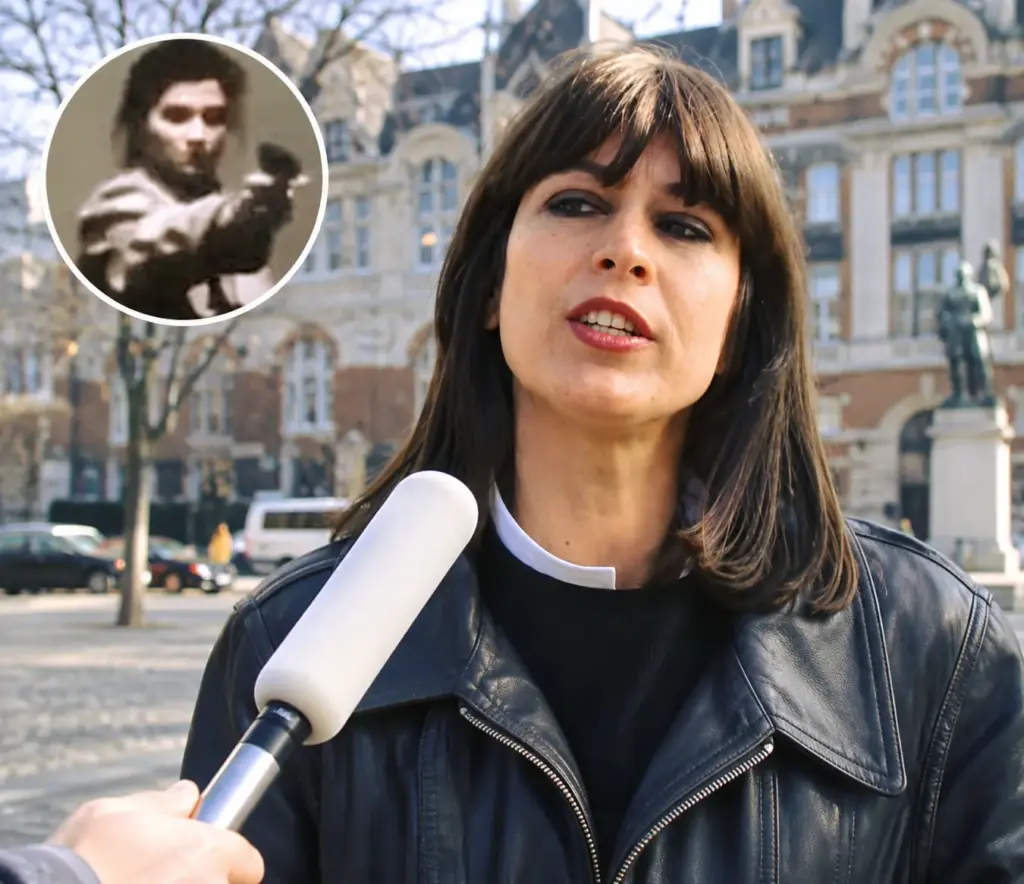
Within seconds, the courtroom was thrown into chaos. Grabowski was struck by seven bullets and collapsed to the floor, where he died. Marianne immediately dropped the weapon and was taken into police custody. Despite what she had done, she showed little visible regret.

The incident quickly became an international sensation. Newspapers began referring to her as the “Revenge Mom,” while people across Germany debated whether her actions were understandable or an unforgivable act of violence.
Even decades later, the case continues to raise difficult questions about grief, justice and the limits of revenge.
The tragedy that changed Marianne’s life had begun months earlier, when she lost her beloved daughter.
On May 5, 1980, her world was completely shattered.
At the time, Marianne was a single mother struggling to make a living by operating a pub in Lübeck, a city in northern Germany. Her own childhood had been marked by painful experiences, and her family background was complicated.
Her father had reportedly belonged to the Waffen-SS, an organization associated with Nazi Germany. Marianne also experienced serious trauma while growing up, including sexual assaults by several men.
She became pregnant for the first time at just 16 and decided to place the baby for adoption because she was unable to raise the child alone. At 18, she became pregnant again and made the same difficult decision.

In 1973, she gave birth to her third child, a daughter named Anna. This time, Marianne chose to raise the little girl herself as a single parent.
Anna was described by people familiar with her as a cheerful, friendly and outgoing child. However, her young life would soon end in a horrific crime.
## The Horrific Murder of Seven-Year-Old Anna
In May 1980, Marianne and Anna reportedly had an argument. The little girl decided not to attend school that day and instead began walking toward a friend’s home.
Unfortunately, she never reached her destination.
During her journey, she encountered Klaus Grabowski, a 35-year-old local butcher who kidnapped her and took her to his apartment.
Grabowski kept Anna there for several hours, sexually abused her and eventually strangled her to death.
After committing the terrible crime, he placed the child’s body inside a box and concealed it near a canal.
He later returned to the location intending to bury her body. However, his plans were interrupted when police arrested him that same evening at a pub he regularly visited.

His fiancée had reportedly informed the authorities about his involvement.
The investigation revealed that Grabowski already had a criminal history involving sexual offenses against two young girls.
He had previously been imprisoned for those crimes and, while serving his sentence in 1976, had voluntarily undergone surgical castration.
Two years later, he began hormone treatment in an attempt to reverse the effects of the procedure so that he could maintain a relationship with his fiancée.
Although Grabowski confessed to killing Anna, he denied sexually abusing her.
During the court proceedings, he made disturbing claims about the little girl, attempting to shift responsibility for his actions onto his victim.
He alleged that Anna had threatened to demand money from him and expose inappropriate behavior if he refused.
According to his version of events, he had killed her because he feared she would blackmail him.
The court did not accept his explanation.
However, hearing the accused man speak about her murdered daughter in such a manner reportedly pushed Marianne into an overwhelming state of anger, grief and helplessness.
She struggled to accept what had happened and became increasingly furious as the trial continued.
## Marianne Brings a Gun Into the Courtroom
On March 6, 1981, the third day of Grabowski’s trial, Marianne made a decision that would permanently change her life.
She somehow managed to bring a loaded Beretta M1934 pistol into the courtroom, passing the security arrangements without being stopped.
Once inside, she approached the proceedings and suddenly removed the weapon from her handbag.
She aimed at Grabowski and fired eight shots.
Seven of the bullets struck him, leaving him fatally wounded. He collapsed in front of the courtroom and died at the scene.
The shocking shooting left everyone present horrified.
After firing the weapon, Marianne dropped the pistol and reportedly shouted words expressing her anger over the murder of her daughter. She also said that she had hoped to shoot him in the face but had instead hit him in the back.
Witnesses later recalled that she called Grabowski a pig immediately after the shooting.
Police officers quickly arrested Marianne inside the courtroom.
She was initially accused of murder, and the case attracted enormous attention from the media around the world.
## Her Trial and the Message She Wrote for Anna
Marianne’s own trial took place in 1982.
During the proceedings, she claimed that she had acted in a dreamlike state, explaining that she had imagined her daughter being present in the courtroom.
However, expert witnesses questioned this explanation.
According to their testimony, Marianne appeared to have practiced handling the firearm, suggesting that the shooting had been carefully prepared rather than being an entirely spontaneous reaction.
Doctors also examined her mental condition during the legal proceedings.
At one point, she was asked to provide a handwriting sample. Instead of simply writing a few ordinary words, Marianne produced a deeply emotional message:
“I did it for you, Anna.”
She also drew seven small hearts alongside the sentence. Many people interpreted the hearts as a symbolic reference to the seven years her daughter had lived.
If convicted of the most serious charges, Marianne could have faced life imprisonment.
Her actions had already divided public opinion. Some people considered her a grieving mother driven beyond her limits by an unimaginable tragedy. Others believed that taking the law into her own hands could never be justified.
The media quickly gave her the nickname “Revenge Mom,” and her story became one of the most widely discussed criminal cases in Germany.
## Public Sympathy Turned Into Controversy
Initially, many newspapers presented Marianne as a devoted mother who had acted out of overwhelming love and grief for her murdered child.
She received considerable public sympathy, and many people believed she deserved understanding rather than harsh punishment.
However, as journalists began examining her personal history, a more complicated picture emerged.
Reports about her previous relationships, her decision to place her first two children for adoption and her lifestyle as a pub owner began appearing in newspapers.
These revelations changed how some members of the public viewed her.
Rather than seeing her only as a heartbroken mother, people began discussing her personal history and questioning the circumstances surrounding her actions.
In 1983, a court found Marianne guilty of premeditated manslaughter and illegal possession of a firearm.
She received a six-year prison sentence but was released after serving approximately three years.
Her punishment created another major public debate.
A survey conducted by the Allensbach Institute revealed how divided people remained. Approximately 28 percent considered the six-year sentence appropriate, while 27 percent believed it was too severe. Another 25 percent felt that the punishment was not harsh enough.
The different opinions demonstrated just how emotionally complicated the case had become for the German public.
## Life After Prison and Her Final Years
After leaving prison, Marianne eventually moved away from Germany.
She relocated to Nigeria, where she married a German teacher. Their marriage did not last, and the couple divorced in 1990.
Following the separation, she moved to Sicily, Italy, hoping to begin another chapter of her life.
However, her health eventually deteriorated.
Marianne was diagnosed with pancreatic cancer and decided to return to her hometown of Lübeck in Germany.
Although many years had passed since the courtroom shooting, her actions remained a subject of public discussion. Newspapers continued revisiting the case throughout the 1990s.
In 1994, approximately 13 years after the incident, Marianne gave a rare interview on German radio.
During the conversation, she discussed the difference between the murder of an innocent child and the circumstances surrounding her own daughter’s death. She referred to Grabowski’s account of the crime and explained how deeply disturbed she had been by his descriptions of what happened to Anna.
Her comments revealed that the events had continued to affect her long after the trial and imprisonment.
In another interview with German television broadcaster Das Erste in 1995, Marianne acknowledged that she had deliberately shot Grabowski.
She explained that she had thought carefully about her decision and wanted to stop him from continuing to spread what she believed were lies about her daughter.
## Marianne Bachmeier’s Death
On September 17, 1996, Marianne Bachmeier died in a hospital in Lübeck after battling pancreatic cancer.
She had reportedly hoped to spend her final days in Sicily, the place where she had lived after leaving Germany. Unfortunately, her illness prevented her from returning there.
After her death, Marianne was laid to rest beside her daughter, Anna, in a cemetery in Lübeck.
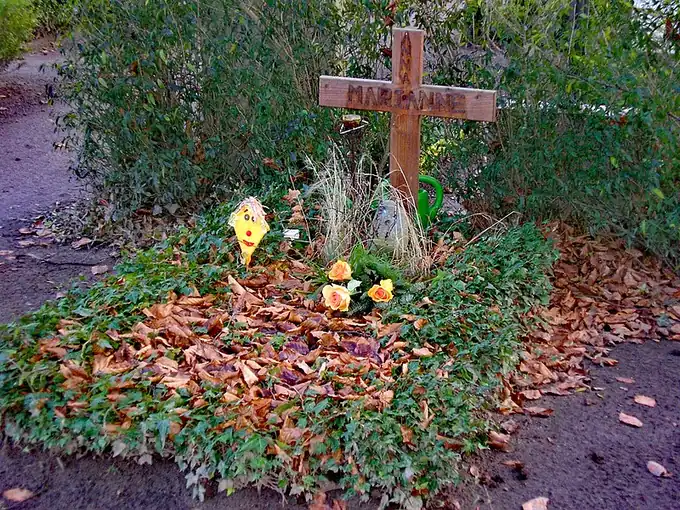
Their final resting place brought mother and daughter together again after years of separation.
The story of Marianne Bachmeier remains one of the most controversial cases in German criminal history.
For some, she represents a mother whose grief and anger became unbearable after the brutal loss of her child. For others, her actions remain a troubling example of vigilante justice and the dangers of replacing the legal system with personal revenge.
Regardless of how people interpret her decision, the tragedy began with the loss of an innocent seven-year-old girl whose life was taken far too soon.
And decades later, the questions surrounding justice, grief and revenge continue to make this case unforgettable.