Instead, the 50-year-old remains unconscious in a hospital, where she is in critical condition and continues to rely on a ventilator as doctors work to treat the effects of the lethal drug pentobarbital.
Pike received two doses of the barbiturate during the attempted execution. However, according to documents filed by her attorneys, complications involving the IV lines may have caused the medication to enter the tissue around her veins instead of properly entering her bloodstream.
Four days after the failed execution, Pike remained unconscious in a heavily secured hospital room while doctors continued treating her.
Her attorney, assistant federal defender Stephen Ferrell, discussed her condition during an appearance on CNN’s State of the Union.
According to Ferrell, physicians were still trying to clear the two doses of pentobarbital from Pike’s system.
“She remains in the hospital on a ventilator, critically ill,” he said.
He added that doctors still did not know what her long-term prognosis would be and that several more days might be needed before they could determine what recovery might look like.
Ferrell also said he had no knowledge of Pike regaining consciousness after the execution attempt.
Her arm reportedly “turned purple”
Pike’s legal team has warned that the consequences of the failed execution could be long-lasting.
Her attorney said it remains uncertain whether she will make a full recovery.
“We don’t know what the prognosis is, as in the long-term prognosis,” Ferrell explained. “She may not fully recover.”
He added that the defense had not yet been told what Tennessee officials intended to do next.
Pike’s lawyers have also described serious injuries to her arms following the procedure. They said her arms were swollen, burned and blistered, with one arm reportedly appearing to “turn purple.”
According to her attorneys, Pike could be heard crying, whimpering and breathing heavily while officials attempted to administer the drugs.
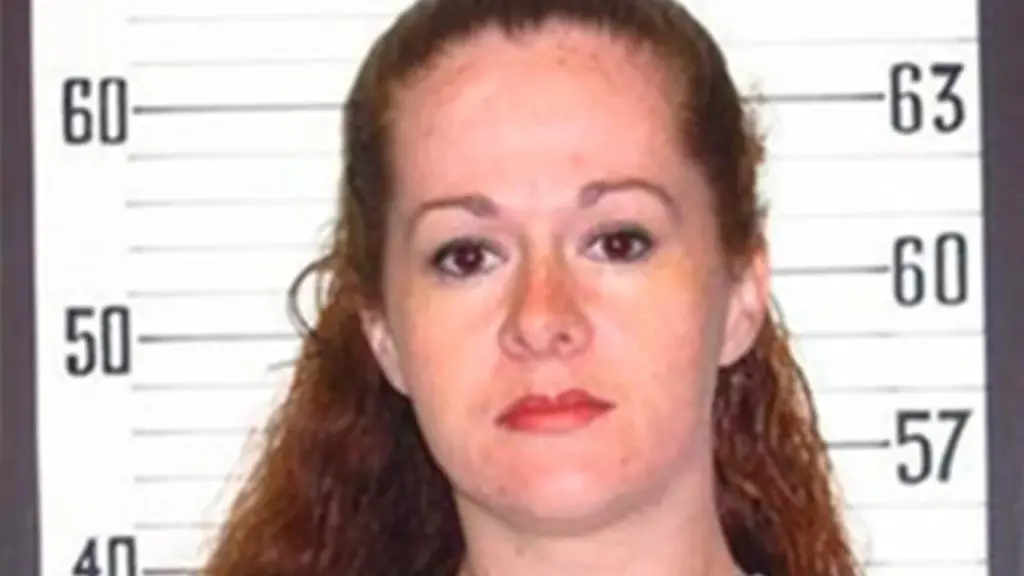
At one point, she reportedly told the execution team, “My arm feels like it’s about to burst open.”
She later asked, “Does this happen like that?”
Defense attorney Randy Spivey has strongly criticized the execution process.
He said members of the execution team spent roughly an hour attempting to establish a usable IV line and reportedly struggled to locate a suitable vein.
Spivey said he counted at least seven needles being inserted into Pike’s left arm. He also claimed one of the needles appeared bent when it was removed after an unsuccessful attempt.
Why the drug may have entered the surrounding tissue
Dr. Joel Zivot, an Atlanta-based professor of anesthesiology and surgery who was brought in by Pike’s defense team, believes the IV lines may have failed during the procedure.
According to his assessment, the veins may have ruptured, causing the IV catheter to move outside the vein.
If that happened, the pentobarbital could have entered the tissue surrounding the vein rather than traveling directly through the bloodstream.
Zivot said that could explain the severe burning and injuries reported by Pike’s attorneys.
His conclusion is that the medication did not reach Pike’s bloodstream in a large enough amount to cause death.
He explained that when the state’s intended amount of pentobarbital successfully enters circulation and reaches the brain, it is capable of causing death. Since Pike survived the procedure, he believes the drug did not reach her bloodstream in the necessary concentration.
How doctors are treating the drug exposure
There is no specific antidote that simply reverses pentobarbital poisoning.
Treatment generally focuses on intensive medical support while the patient’s body processes and eliminates the drug.
Because Pike remains critically ill, doctors can use mechanical ventilation to help maintain her breathing.
Medical teams can also continuously monitor blood pressure, heart activity, oxygen levels and the functioning of vital organs. Fluids and medications may be administered when necessary to support circulation and blood pressure.
In extremely serious cases involving barbiturate poisoning, physicians may also consider procedures such as hemodialysis.
Hemodialysis filters the blood and has been used in certain cases of severe pentobarbital poisoning to help remove the drug from the body.
Defense asks governor to change her sentence
Pike’s attorneys are now asking Tennessee officials to replace her death sentence with life imprisonment.
Ferrell argued that, at minimum, Governor Bill Lee should commute Pike’s sentence.
He said the execution attempt had subjected Pike to a deeply traumatic ordeal and pointed to previous reasons her legal team had already raised in support of commuting her sentence.
Her defense team has also asked the public and media to respect Pike’s privacy while she remains hospitalized.
A spokesperson for her attorneys said they appreciated people respecting her privacy during the difficult situation.
The case that led to Pike’s death sentence
Pike and her boyfriend, Tadaryl Shipp, were convicted in connection with the torture and killing of 19-year-old Colleen Slemmer at a job-training facility in Knoxville in 1995.
Pike was only 18 years old when the crime occurred. Shipp was 17.
Shipp received a life sentence with the possibility of parole.
Pike has never denied her involvement in Slemmer’s killing. However, supporters and defense advocates have argued that several circumstances should be considered, including Pike’s young age at the time of the crime, mental health issues and a history of severe sexual abuse beginning during her childhood.
The failed execution has now placed Tennessee’s execution procedures under intense scrutiny.
Tennessee corrections system faces questions
The controversy has also resulted in increased attention on the Tennessee Department of Correction.
Frank Strada, commissioner of the Tennessee Department of Correction, is stepping down this month as an independent investigation examines the circumstances surrounding the failed execution.
Tennessee Governor Bill Lee has ordered the review to determine what went wrong during the procedure and why the state was unable to complete the execution as planned.
For now, Pike remains hospitalized and critically ill.
Her doctors have not yet been able to provide a clear long-term prognosis, while her legal team continues to push for her death sentence to be changed to life imprisonment.
The failed execution has raised serious questions about the state’s procedures, medical involvement and what happens next for Pike.