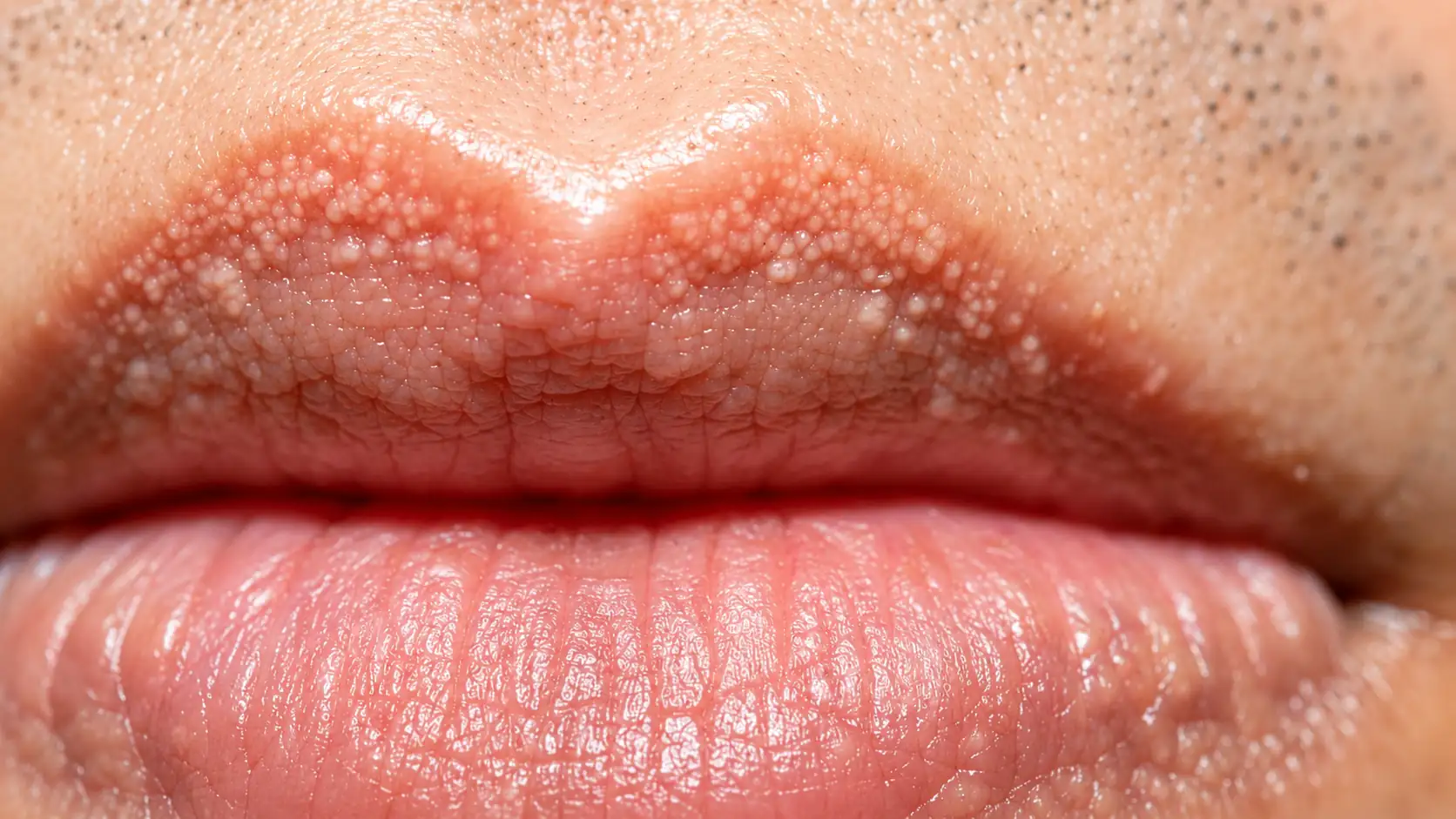
White bumps on the lips or in sensitive areas of the skin can naturally cause concern, especially when they appear suddenly or look unfamiliar. However, many small white or pale bumps are harmless and may simply be related to normal skin structures, blocked pores, irritation, or temporary changes in the skin.
Because the lips and intimate areas contain delicate skin, they can be more sensitive to moisture, friction, personal-care products, hormones, and other environmental factors.
Understanding the possible causes can help you avoid unnecessary worry. At the same time, persistent, painful, changing, or unusual bumps should be assessed by a healthcare professional because several different skin conditions can look similar.
1. Visible Oil Glands or Fordyce Spots
One common explanation for tiny white or yellowish bumps around the lips is visible sebaceous glands, often referred to as Fordyce spots.
These are small oil glands that occur naturally in the skin. In some people, they are simply more noticeable than in others.
Fordyce spots are generally harmless, noncontagious, and not caused by poor hygiene or an infection. They may become more visible during adolescence or adulthood as hormonal changes affect the skin.
They typically do not cause pain or itching and often require no treatment.
Some people may seek treatment for cosmetic reasons, but a dermatologist should determine whether treatment is appropriate.
2. Blocked Pores
Small white bumps can sometimes develop when oil, dead skin cells, and other material become trapped in a pore.
This can happen more easily when the skin produces excess oil or is repeatedly exposed to sweat, cosmetics, friction, or other products.
Around the mouth and on nearby skin, blocked pores may appear as tiny raised or pale spots.
In most cases, gentle cleansing and avoiding heavy or irritating products can help.
Trying to squeeze the bumps is generally not a good idea because doing so can irritate the skin and potentially lead to inflammation or infection.
3. Milia
Milia are tiny, firm, white bumps that form when keratin becomes trapped beneath the outer layer of the skin.
They are common and can occur in people of different ages.
Milia are usually painless and harmless. They often appear on the face, although their exact location can vary.
Some eventually disappear without treatment. When persistent milia are bothersome cosmetically, a dermatologist can safely remove them.
It is better not to pick or squeeze them at home because this can damage the surrounding skin.
4. Skin Irritation
Sensitive skin can develop small bumps after being exposed to something irritating.
Possible triggers include harsh soaps, scented products, lip balms, detergents, excessive washing, sweat, or repeated rubbing.
The affected area may also feel dry, itchy, burning, or uncomfortable.
If irritation is responsible, symptoms often improve after the suspected trigger is removed.
Using gentle, fragrance-free products and avoiding unnecessary rubbing can give the skin time to recover.
5. Hormonal Changes
Hormones can influence oil production and the overall appearance of the skin.
During puberty, for example, increased oil production can make pores and small glands more noticeable.
Hormonal fluctuations can also affect the skin at other stages of life.
These changes do not necessarily indicate an illness. However, if new bumps appear suddenly and continue to worsen, a healthcare professional can help determine the cause.
6. Blocked Hair Follicles
In areas where hair grows, small bumps may develop when hair follicles become blocked.
Oil, sweat, dead skin cells, friction, and other factors can contribute to follicle blockage.
The bumps may appear pale, white, or skin-colored and can sometimes resemble pimples.
Wearing breathable clothing, keeping the area clean and dry, and avoiding unnecessary friction may help reduce irritation.
Persistent or painful bumps should be evaluated rather than repeatedly squeezed or picked.
7. Minor Bacterial-Related Skin Problems
Some bumps can develop when bacteria contribute to inflammation around a pore or hair follicle.
These changes may be more likely in warm, moist areas or where repeated friction occurs.
Depending on the cause, the area may become red, tender, swollen, or develop a small amount of drainage.
Mild cases may improve with appropriate skin care, but worsening redness, increasing pain, pus, swelling, or fever can indicate an infection that needs medical attention.
8. Reaction to Personal-Care Products
Products used on the lips or sensitive skin can sometimes cause irritation or an allergic reaction.
Potential triggers include scented soaps, cosmetics, lip products, lotions, detergents, shaving products, and intimate hygiene products.
A reaction may produce small bumps along with redness, itching, dryness, burning, or swelling.
If a new product was introduced shortly before the bumps appeared, stopping that product may help determine whether it is responsible.
For sensitive skin, fragrance-free products are often a better choice.
9. Heat and Sweat
Hot weather and excessive sweating can contribute to temporary skin bumps.
When sweat becomes trapped against the skin, particularly in areas with limited airflow, irritation and small bumps may develop.
Tight clothing can make the problem worse by increasing heat, moisture, and friction.
Keeping the affected area cool and dry, changing out of sweaty clothing, and choosing breathable fabrics may help the skin recover.
10. Normal Skin Renewal
Skin is constantly shedding old cells and producing new ones.
Sometimes this process can make the surface appear temporarily uneven or textured.
Small pale bumps may become noticeable during periods of dryness, irritation, or changes in the skin’s normal renewal process.
These changes are often temporary and may resolve as the skin returns to its usual state.
Gentle cleansing and regular moisturizing can help maintain the skin barrier.
11. More Noticeable Sebaceous Glands
Sebaceous glands produce oil that helps protect and moisturize the skin.
In some people, these glands are naturally more visible, particularly in areas where the skin is thin.
They may appear as tiny pale or whitish spots.
Their visibility can vary with age, hormones, skin type, and lighting.
When these spots are stable and symptom-free, they are often simply a normal feature of the skin rather than a medical problem.
12. Mild Allergic Reaction
A small bump can sometimes be part of an allergic skin response.
The reaction may occur after contact with a particular cosmetic, soap, detergent, medication, or another substance.
Allergic reactions can cause bumps, itching, redness, swelling, or irritation.
Identifying the trigger is an important part of preventing future reactions.
If swelling develops around the lips, mouth, or throat, particularly with difficulty breathing or swallowing, urgent medical attention is required.
13. Excess Moisture
Some parts of the body naturally remain warmer and more humid than others.
When moisture becomes trapped against the skin for prolonged periods, the skin barrier can become irritated.
Small pale or raised bumps may appear as a result.
This can be more noticeable with tight clothing, excessive sweating, or prolonged periods of moisture exposure.
Keeping the skin dry and allowing adequate airflow can help reduce the problem.
14. Blocked Sweat Glands
Heat and sweating can sometimes contribute to blocked sweat ducts.
This may result in small bumps that can be white, clear, or skin-colored.
They often appear after excessive sweating or exposure to hot and humid conditions.
Cooling the skin, reducing sweating when possible, and avoiding heavy products that may further block the skin can help.
These bumps commonly improve once the skin cools down.
15. Friction
Repeated rubbing can irritate sensitive skin and contribute to small bumps.
Friction may come from tight clothing, exercise, shaving, repetitive movement, or rough fabrics.
The affected skin may become raised, irritated, red, or uncomfortable.
Reducing the source of friction and giving the skin time to recover can often improve the problem.
Soft, breathable fabrics may be particularly helpful in areas prone to irritation.
16. Keratin Buildup
Keratin is a natural protein that helps form and protect the skin.
Sometimes keratin can become trapped beneath the surface, creating small firm bumps.
Milia are one example of this process.
These bumps are generally harmless, although they can remain visible for some time.
Avoid aggressive scrubbing or attempting to remove them with sharp objects, as this can cause injury and infection.
17. Changes in Weather and Environment
Changes in temperature and humidity can influence the skin.
Cold weather may cause dryness and cracking, while heat and humidity can increase sweating and irritation.
These environmental changes can make small bumps or uneven skin texture more noticeable.
Using gentle skincare products, maintaining adequate skin moisture, and protecting sensitive areas from excessive irritation can help.
18. Viral Skin Conditions
Some viral skin conditions can produce small bumps, particularly in sensitive areas.
However, viral conditions are different from harmless features such as Fordyce spots or milia and may require specific treatment.
Certain viral conditions can also be contagious.
For this reason, a persistent cluster of new bumps, especially when accompanied by pain, itching, sores, blisters, or other changes, should be evaluated by a healthcare professional rather than self-diagnosed.
19. Delayed Shedding of Dead Skin Cells
The outer layer of the skin continuously sheds older cells.
If dead cells accumulate or shedding becomes uneven, the surface can sometimes develop a rough or bumpy appearance.
Dryness and irritation can make this more noticeable.
Gentle cleansing and moisturizing can support the skin barrier without causing additional irritation.
Harsh exfoliation is generally not appropriate for delicate areas.
20. Natural Differences in Skin
Not every small white bump represents a medical condition.
People naturally have different skin textures, gland visibility, pore sizes, pigmentation patterns, and other physical characteristics.
Some harmless bumps may have been present for years but only become noticeable because of changes in lighting, hormones, skin dryness, or increased attention.
Recognizing normal differences in skin can prevent unnecessary anxiety.
When Should You See a Doctor?
Although many white bumps are harmless, professional evaluation is appropriate when the cause is unclear or the bumps do not improve.
You should consider speaking with a healthcare professional if the bumps:
Continue to grow or multiply
Become painful or very itchy
Bleed or develop sores
Produce pus or other discharge
Become increasingly red or swollen
Appear suddenly and persist
Are associated with fever or feeling unwell
Change significantly in appearance
Occur in a sensitive area and you are concerned they could be contagious
A dermatologist or other qualified healthcare professional can examine the area and determine whether further testing is necessary.
Avoid Self-Diagnosing Sensitive Skin Changes
Many different conditions can look similar, particularly when they appear as tiny white or skin-colored bumps.
Trying to identify a condition solely from online photographs can therefore be misleading.
Avoid squeezing, puncturing, burning, or aggressively scrubbing unexplained bumps.
These actions can damage the skin and potentially introduce bacteria.
A proper examination is the safest way to distinguish a harmless skin variation from a condition requiring treatment.
Final Thoughts
White bumps on the lips or sensitive areas of the body can have many possible explanations.
They may be related to visible oil glands, milia, blocked pores, irritation, sweat, friction, hormonal changes, or other normal variations in the skin.
Most harmless bumps do not require treatment and may remain stable or disappear naturally.
However, new, persistent, painful, rapidly changing, or unusual bumps deserve professional attention, particularly when they are accompanied by redness, swelling, discharge, sores, or other symptoms.
The most important thing is not to panic or assume the worst.
Skin naturally varies from person to person, and many small bumps are simply part of normal skin anatomy. When there is uncertainty, a qualified healthcare professional can provide an accurate diagnosis and recommend the appropriate care.