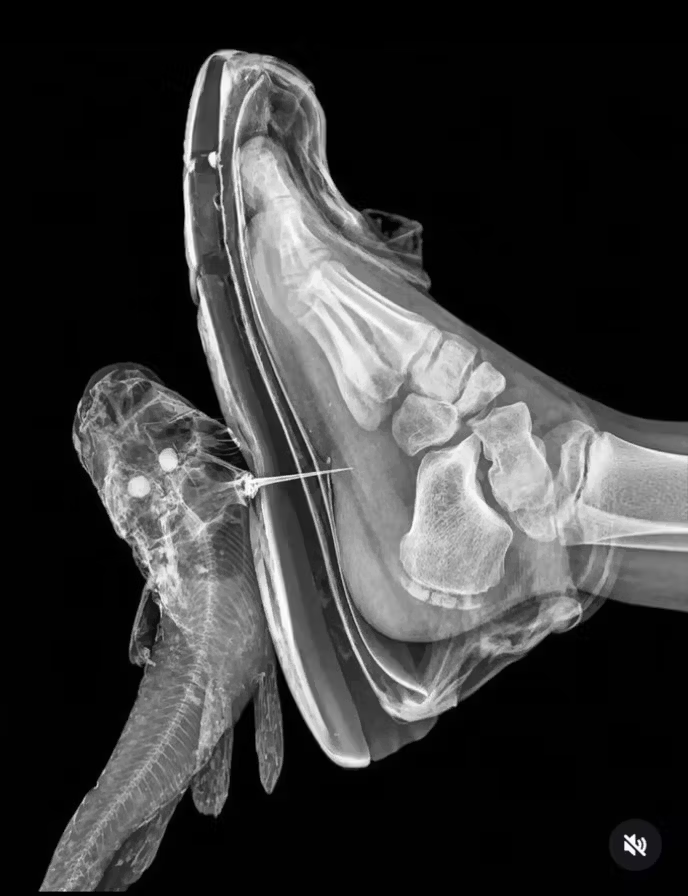
A seemingly ordinary accident at a local fish market turned into a frightening medical emergency for a 35-year-old woman after she accidentally stepped on a fish she could not even identify. What initially appeared to be a minor injury soon developed into a potentially life-threatening infection.
Immediately after the accident, she visited a small hospital nearby, with part of the fish still lodged in her foot. Medical staff performed an X-ray to examine the injury, removed the sharp spine, cleaned and bandaged the affected area, and eventually allowed her to return home. At that moment, there seemed to be no reason to suspect that anything particularly serious would happen.
However, the situation changed dramatically just two nights later. The woman returned to the emergency department complaining of severe pain and noticeable swelling on the bottom of her foot. Doctors examining her discovered that the infection was spreading rapidly. She had developed cellulitis, intense tenderness, and alarming blood-filled blisters around the injured area.
While evaluating her condition, medical professionals noticed an especially important detail in her medical history: she had chronic liver disease.
This information significantly increased their concern. Liver disease can weaken the body’s ability to defend itself against certain dangerous infections. When someone with existing liver damage suffers an injury involving seawater, contaminated water, or marine animals, the consequences can be particularly severe.
One dangerous possibility is a rapidly spreading infection affecting the soft tissues beneath the skin. In serious cases, this can develop into necrotizing soft-tissue infection, a condition in which bacteria destroy surrounding tissue. If the infection enters the bloodstream, it can lead to sepsis, a life-threatening response to infection.
The clinical details point toward a particularly dangerous marine microorganism: *Vibrio vulnificus*. This bacterium is commonly associated with warm coastal waters and can cause severe infections in people with chronic liver conditions. It can enter the body through open wounds exposed to contaminated seawater or marine environments.
What makes this case especially alarming is how quickly an apparently manageable injury can become dangerous. A simple puncture wound from a fish spine may provide an entry point for bacteria that the body struggles to control.
This case highlights an important medical lesson: injuries involving fish, seawater, or marine environments should never be ignored, especially in people with underlying liver disease.
Sometimes, the smallest wound can lead to the most serious complications. Recognizing the warning signs and seeking immediate medical attention can make a critical difference between recovery and a life-threatening emergency.